Richard Opper: Beauty Where it’s Least Expected
Fall 2025 Artist-in-Residence
in Butte, MT
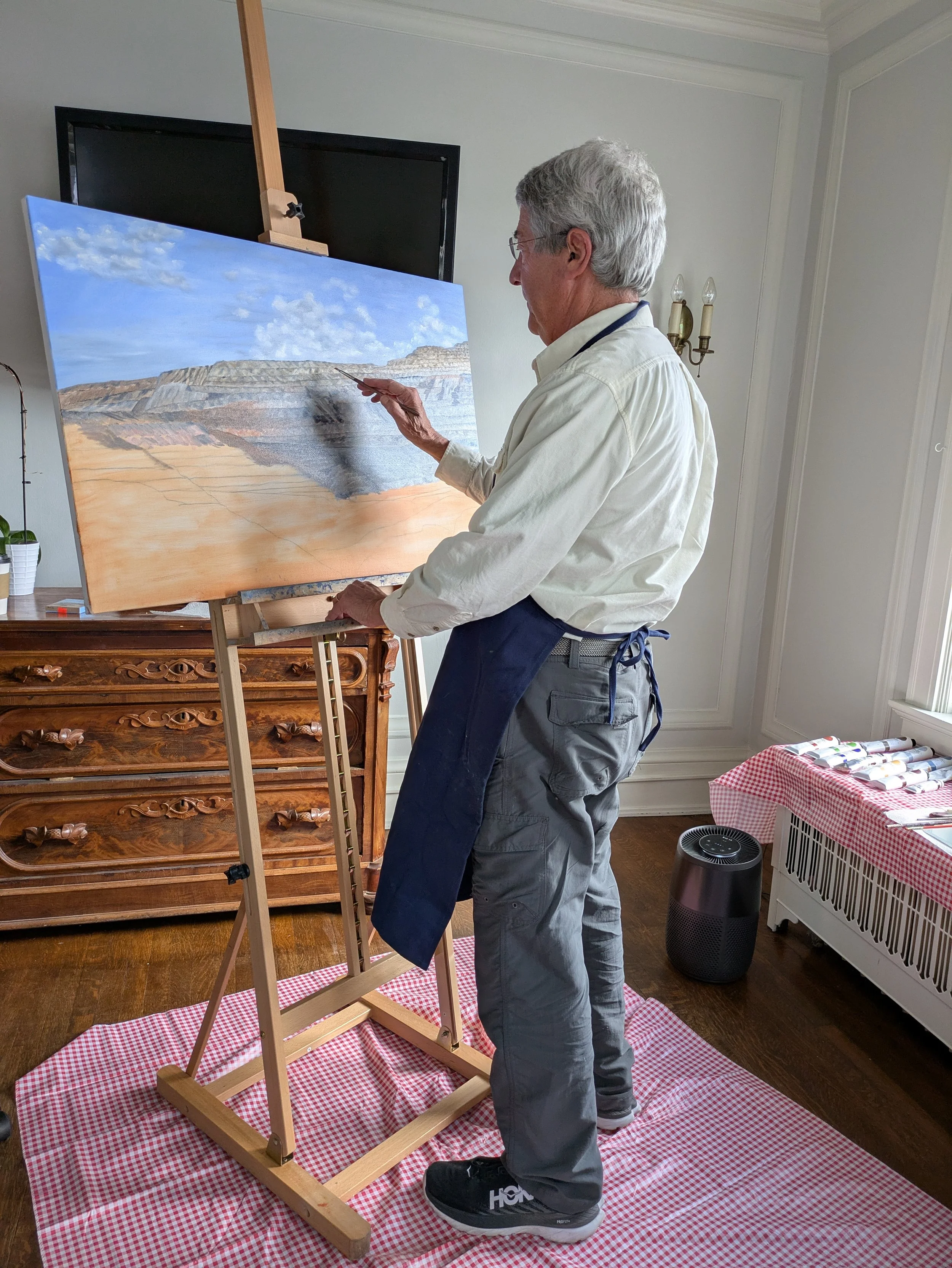
Richard Opper painting in his residency studio in Butte.
Describe your Open AIR Residency experience. For example, how did you spend your time, construct your space, or engage with the community?
Not to brag, but I’m retired. I have ample time to focus exclusively on my painting, my writing, or anything else of my choosing. Yes, you should be jealous of my situation. And yes, I manage to find plenty of creative ways to squander my time on non-productive pursuits. However, Open AIR’s month-long residency in Butte provided the opportunity and the expectation (mostly self-imposed) to produce paintings and was a great motivation to take a break from more frivolous expenditures of time.
My days at the residency generally started with some serious morning reading involving research either about Butte, or about the human soul and the creative impulses that drive us. Next, I would paint for a couple of hours, take a lunch break, and then paint some more in the afternoon. Most days, I would carve out time for some research/writing to prepare for my upcoming artist talk(s). Around 4:00, I would head to the gym for a couple of hours, go out to dinner, and then head back to my room for more reading, painting, thinking, or writing. The month offered the most concentrated and prolonged alone time I’ve had in decades. I used the month to produce paintings and “mine” my inner experiences to learn more about Butte and myself.
Can you share how the residency connected to your ongoing practice or opened new avenues for exploration?
The alone time, at its best, was the perfect marinade for my random thoughts. However, I still found time to draw inspiration from other artists. Early on, one of my fellow artists-in-residents, Olivia Berkey, said that the residency provided the time and space for her to think slower and bigger. That helped me pause, take a deep breath, let go of some of the pressure and expectations I put on myself, and relax into the experience. Eric Jensen, an Open AIR resident in 2024, said he used his time to cultivate a “radical acceptance.” He realized that everything he needed was right in front of him and that there was a whole universe contained within the grove of cottonwood trees outside his window. It was a universe he could only see after emptying himself out. His words resonated with me, though I had to translate them into a phrase that I could more easily access, which was “How can I be open to new things if I’m already full of myself?” Eric’s words inspired me to transcend ego and allow me to see things differently.
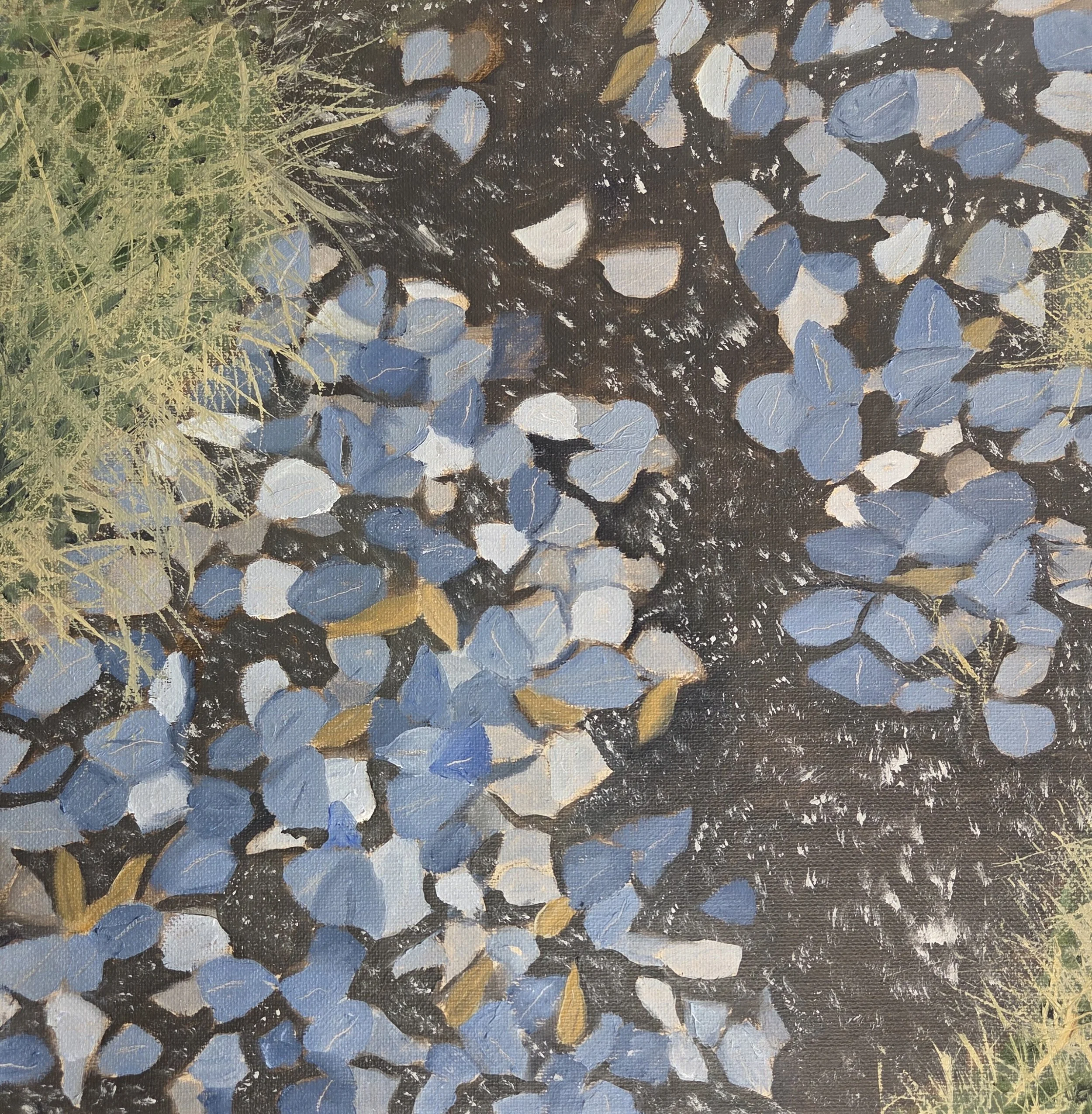
Happy Chaos: Oil, 12” X 12”
How did you immerse yourself in place while in-residence, and how did you receive what your residency site was offering?
This is a painting I did of leaves that had fallen onto the surface of a puddle. Normally, I would have seen the puddle as something to avoid because of the mud. But practicing “radical openness,” I saw the universe contained within the image. One of my objectives was to let Butte happen to me instead of trying to mentally conform Butte into whatever preconceived notions I may have had about the place. Some days, I wandered the streets of the fascinating, complex, and historical area of Uptown Butte.
I talked to people over dinner and at the gym about their experiences of living in a town where resource extraction and the myriad health and environmental impacts associated with it are a given. I found it ironic that people living in the largest federally designated contamination zone (Superfund Site) in the country tended to whine less than people in Missoula do when the Good Food Store runs out of fresh turmeric. (I know, because I can be one of those Missoula whiners.) That observation of the local citizens, accurate or not, as well as the sights, smells, and sounds of Butte in general led me to a dual focus for my work that I tried to capture in my paintings: a sense of irony; and beauty where it’s least expected. That focus surprised me. It developed after I began my residency; I hadn’t packed it with my art supplies when I left Missoula.
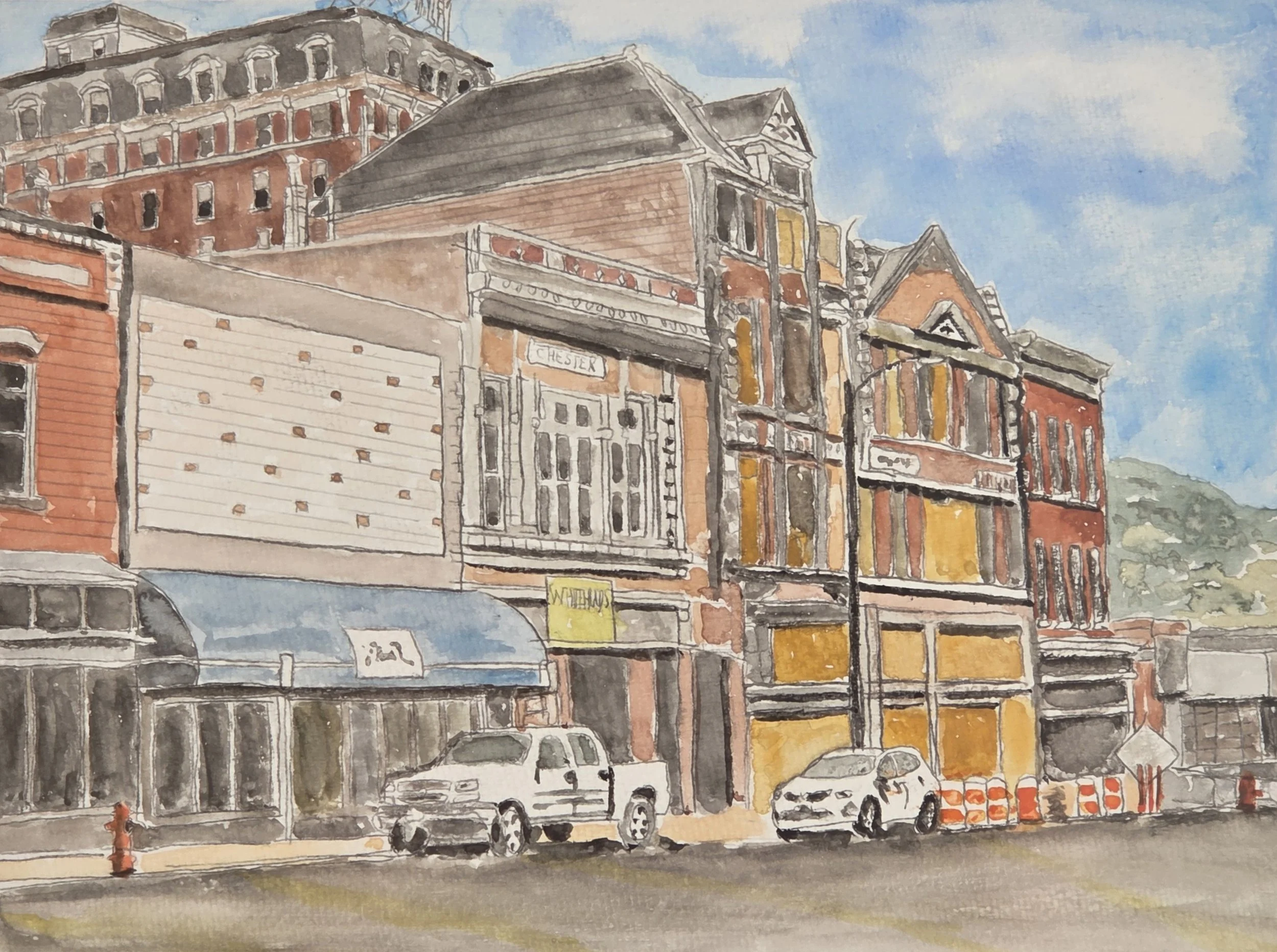
Uptown Butte: Watercolor ~12” X 14”
Was there a particular 'aha' moment during your residency that shaped your creative process or the final outcome?
One day, I took a walk up the hill where a lot of underground mines had once operated. To get there, I passed through the kind of impoverished neighborhood. Suddenly, I came across another scene, and I decided to paint it immediately. The aspen grove was only steps away from the dilapidated homes I had just seen. The trees themselves offered a shock of green in a mostly monotoned landscape. They parted themselves to reveal the sight of one of Butte’s iconic headframes, and I fell in love with the way the breeze played with the flag perched on top of it.
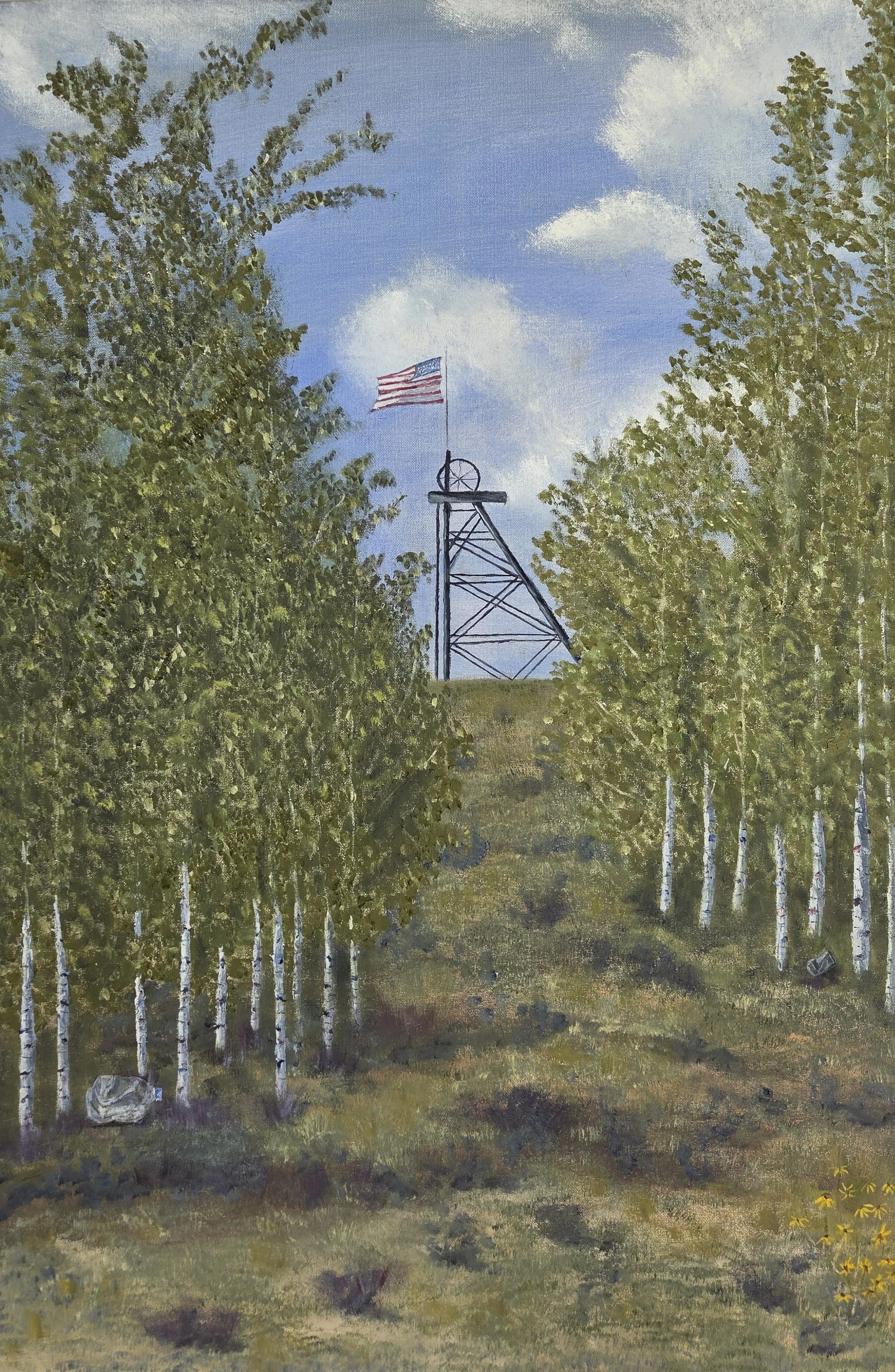
Butte, America: Oil, 24” X 36”
How do you see your work contributing to the larger conversation within your field or community?
My experience with Butte, often through my prior work with its legislators, is that the community has a unique form of in-your-face pride. Only insiders can criticize Butte. It wants neither your understanding nor your pity – only your respect (and where possible, your funding). I’ve never met a community that fights so effectively for itself, and I have grown to admire the hell out of it. For me, this scene, with its unexpected beauty, the irony of its presence in an otherwise denuded area, the bits of trash nestled among the trees, reflects Butte’s pride despite the odds it continues to overcome.
I am sharing my painting of Warms Springs Creek flowing through Durant Canyon near Anaconda, below. I thought it was a beautiful scene, but my connection to the area is more than superficial. This portion of the Warm Springs Creek and its floodplain had been poisoned by toxins washed down from Butte over a century ago.
In a former life, I served as the Director of the Montana Department of Environmental Quality. During my tenure, my staff re-directed the creek to a newly dug ditch packed against the side of the railroad berm. They removed the toxic deposits from the floodplain, replaced it with clean fill, dug a new river channel, and established healthy vegetation in the newly constructed floodplain. The results speak for themselves. I couldn’t have been prouder of the restoration work that was done at this site. Someday, if everything goes according to plan, Warm Springs Creek will destroy much of what was built. It will find its own path as it seeks a new channel of its choosing and carve out portions of the artificially constructed floodplain. That’s what rivers do. Like nearby Butte, it will chart its own course, and more power to it. This painting is a tribute to the work everyone did to clean up the creek.
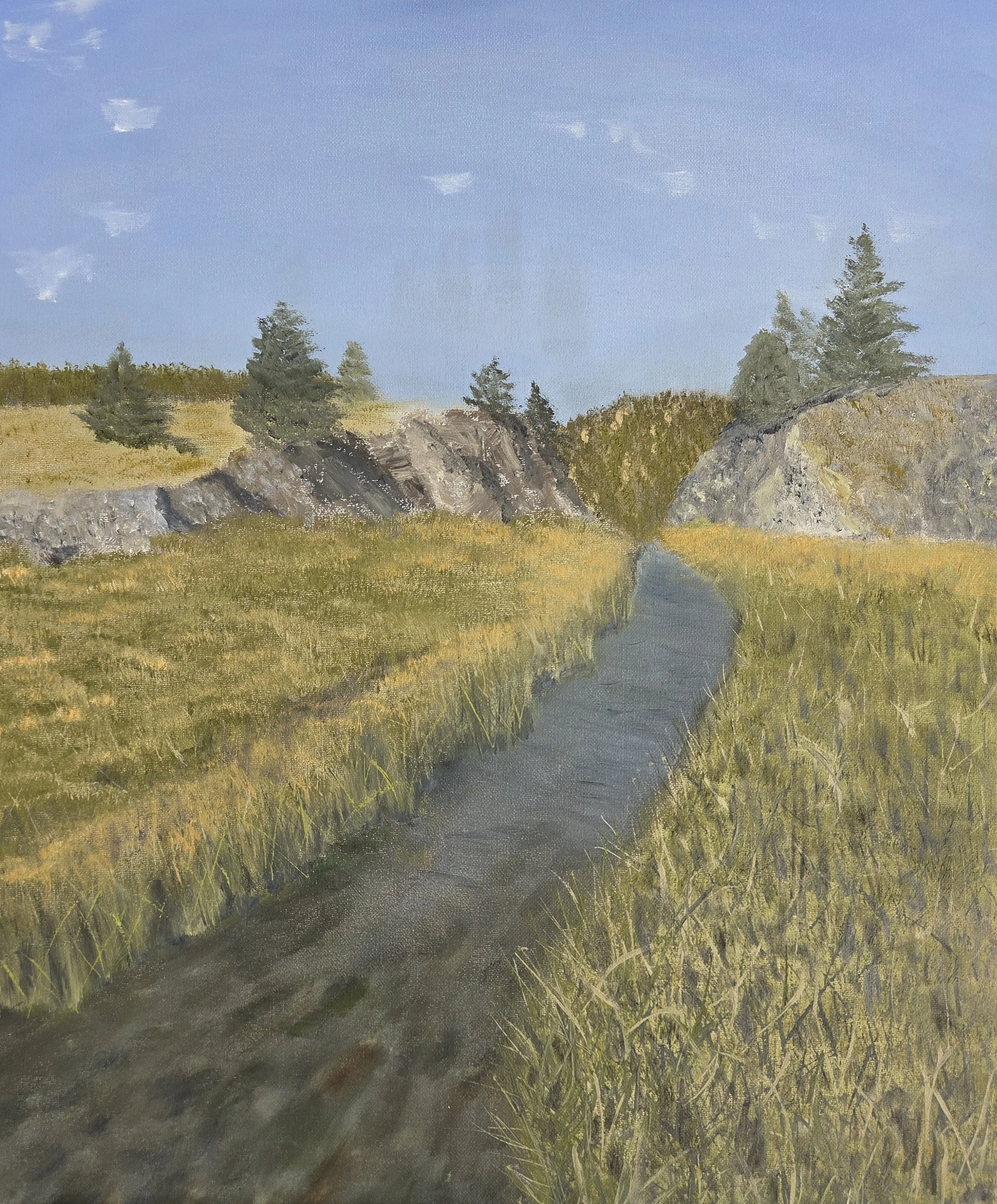
Durant Canyon: Oil, 20” X 16”
Describe a pivotal and deep learning experience that framed your residency.
The final painting I’ll share is the painting I did of the active Continental Pit. The pit is enormous, roughly the same size as the adjacent Berkeley pit, though not as deep. Its headwall looms over Butte and is visible from most areas of town. The mine has clawed its way almost to the interstate. The enormous windows of Butte’s airport look out towards the pit like it’s a piece of showcased artwork.
I am not a fan of man-made scars on our landscape. Much of my work at the Montana Department of Environmental Quality involved cleaning up abandoned mines whose owners fled the state with the mines’ riches and left behind their toxic discards.
Years ago, I had the opportunity to know Butte as a scientist and policymaker. Thanks to my Open AIR residency, it was time to get to know Butte through the eyes of an artist. I began to look at the pit differently. There was beauty in its contours, textures and palette. It was a beauty I wanted to capture.
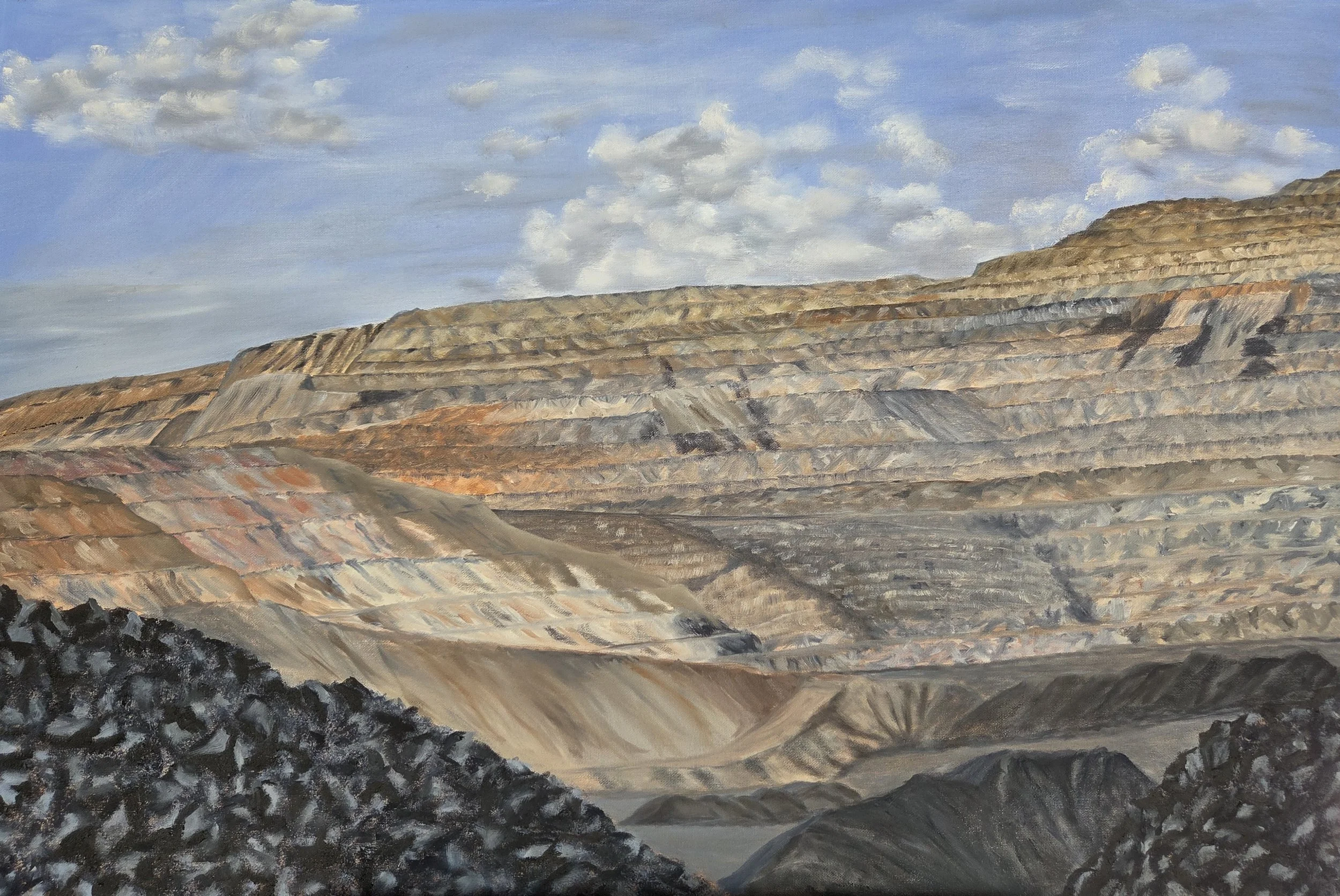
Continental Pit: Oil 2’x3’
I learned more about technique, blending, color, controlled chaos, and many other things from this painting than from anything I’ve previously painted. I was able to see and appreciate the pit’s beauty and use it to expand my art. But first I had to empty myself of any prejudices I might have had before I could receive the gifts the pit had to offer me.
My month in Butte was a rare opportunity, the likes of which I will probably never see again. I will forever be grateful to the people at Open AIR for giving me this chance to further develop my painting. I can’t wait for a year from now when I can see more clearly how the residency ultimately changed my art and my life.
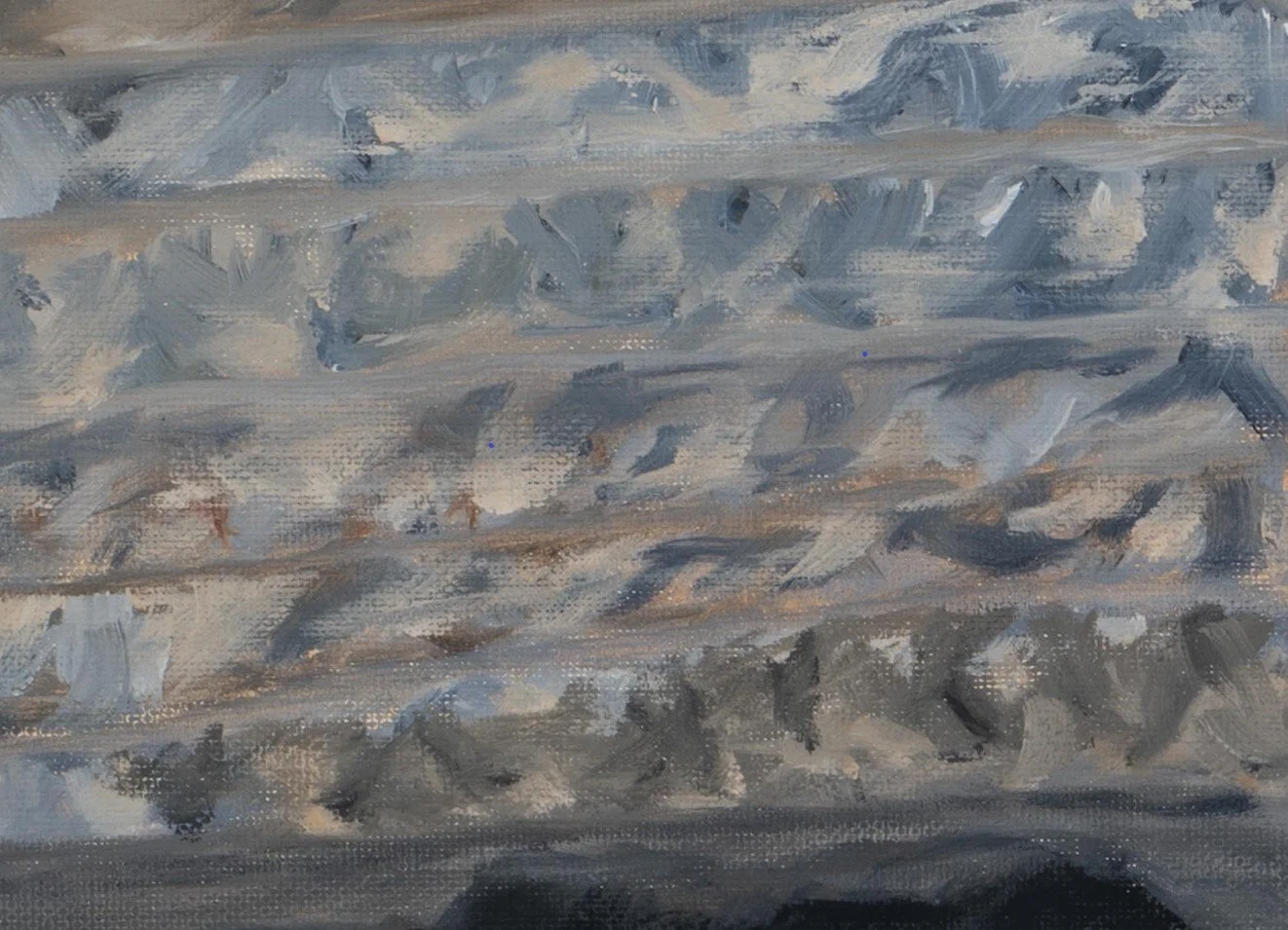
Detail of the larger Continental Pit painting