Amanda Baker: A Multiplicity of Animals
Spring 2025 Artist-in-Residence at Montana Natural History Center
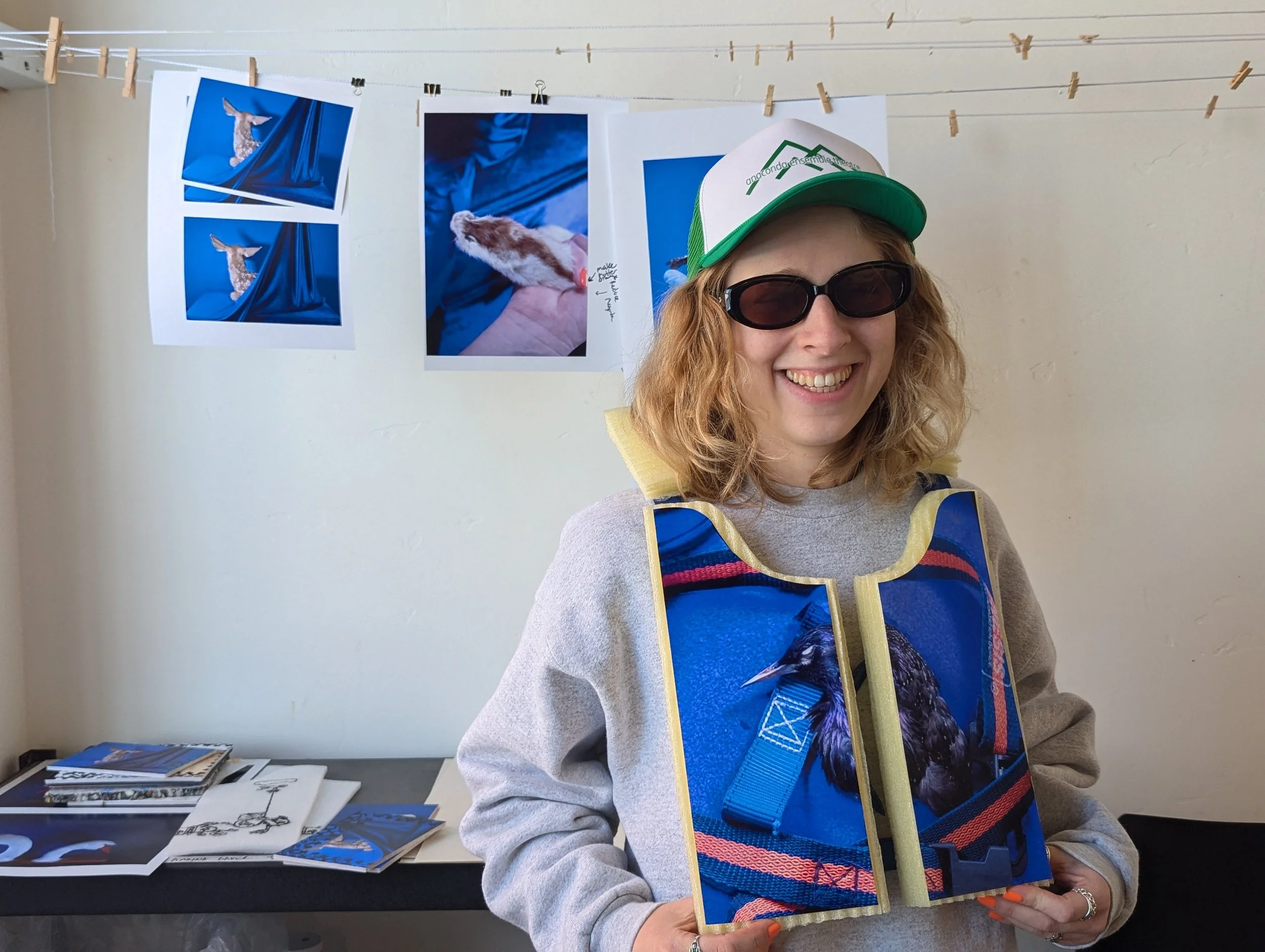
Amanda Baker, Artist-in-Residence at the Montana Natural History Center, wearing one of her “Noaspherian Boyancy Devices.”
Describe your Open AIR Residency experience. For example, how did you spend your time, construct your space, or engage with the community?
At the Open AIR Residency, I felt completely supported to pursue an ambitious creative project. Before attending Open AIR, I was feeling stuck with my work. Having dedicated time, space, and resources to pursue a new project brought me out of a creative rut.
Going into the residency, I was so excited for the opportunity to utilize the taxidermy collection at the Montana Natural History Center (MNHC) because taxidermy and animals are a focal point of my work. What surprised me was all of the additional resources I was able to utilize throughout Open AIR and other amazing organizations like Home ReSource, Giving Art to Missoula (GAM), and Zootown Arts Community Center (the ZACC).
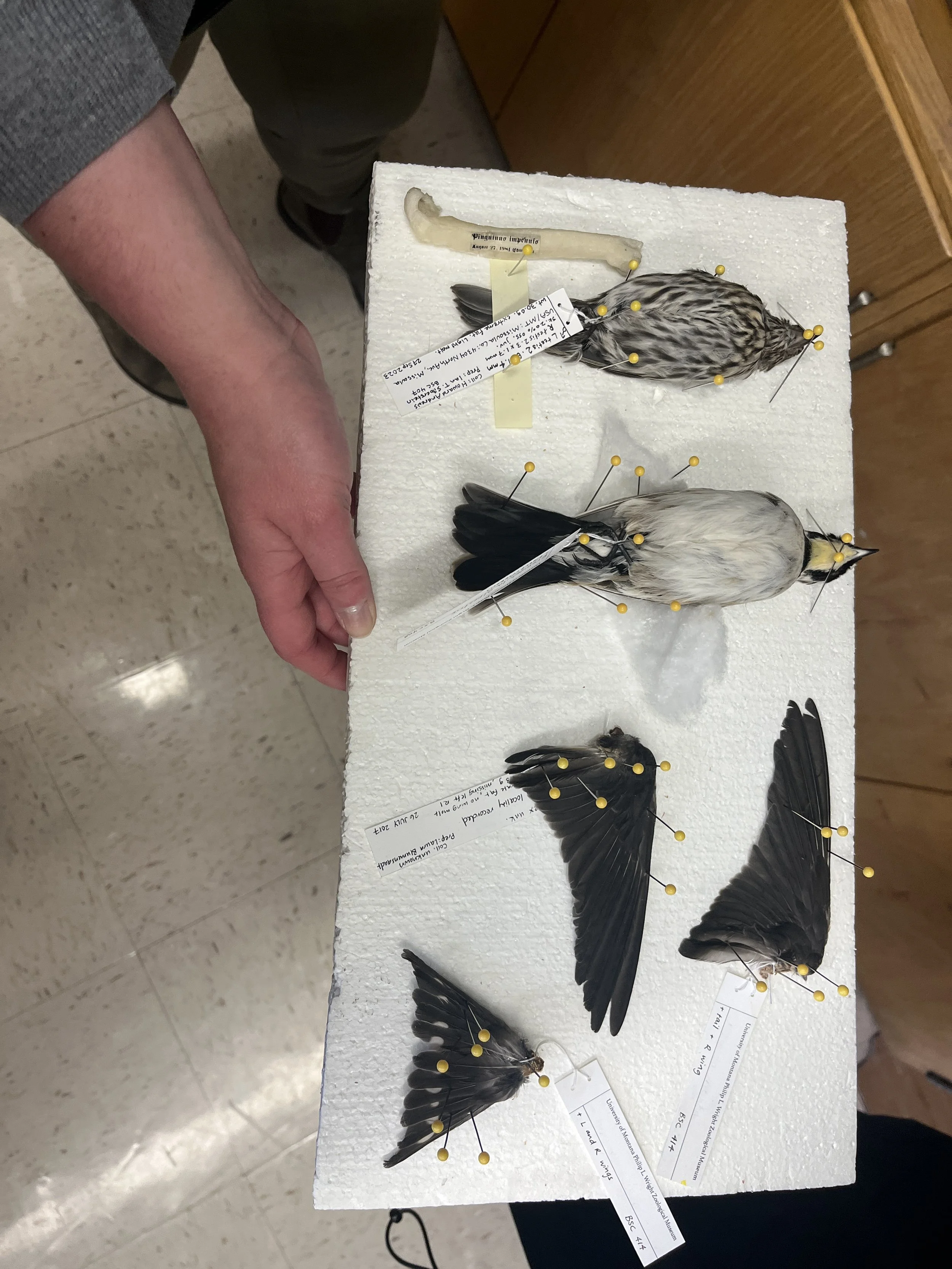
Bird specimen pinnings
Was there anything you didn’t anticipate coming into your residency?
Something that I did not anticipate coming to Missoula was how much inspiration I would find scouring the library and thrift stores for books and imagery. I started taking photographs of all the different representations of animals as I would find them in children’s books, on mugs and glassware, or on textiles. Those photographs were used as source imagery for my project.
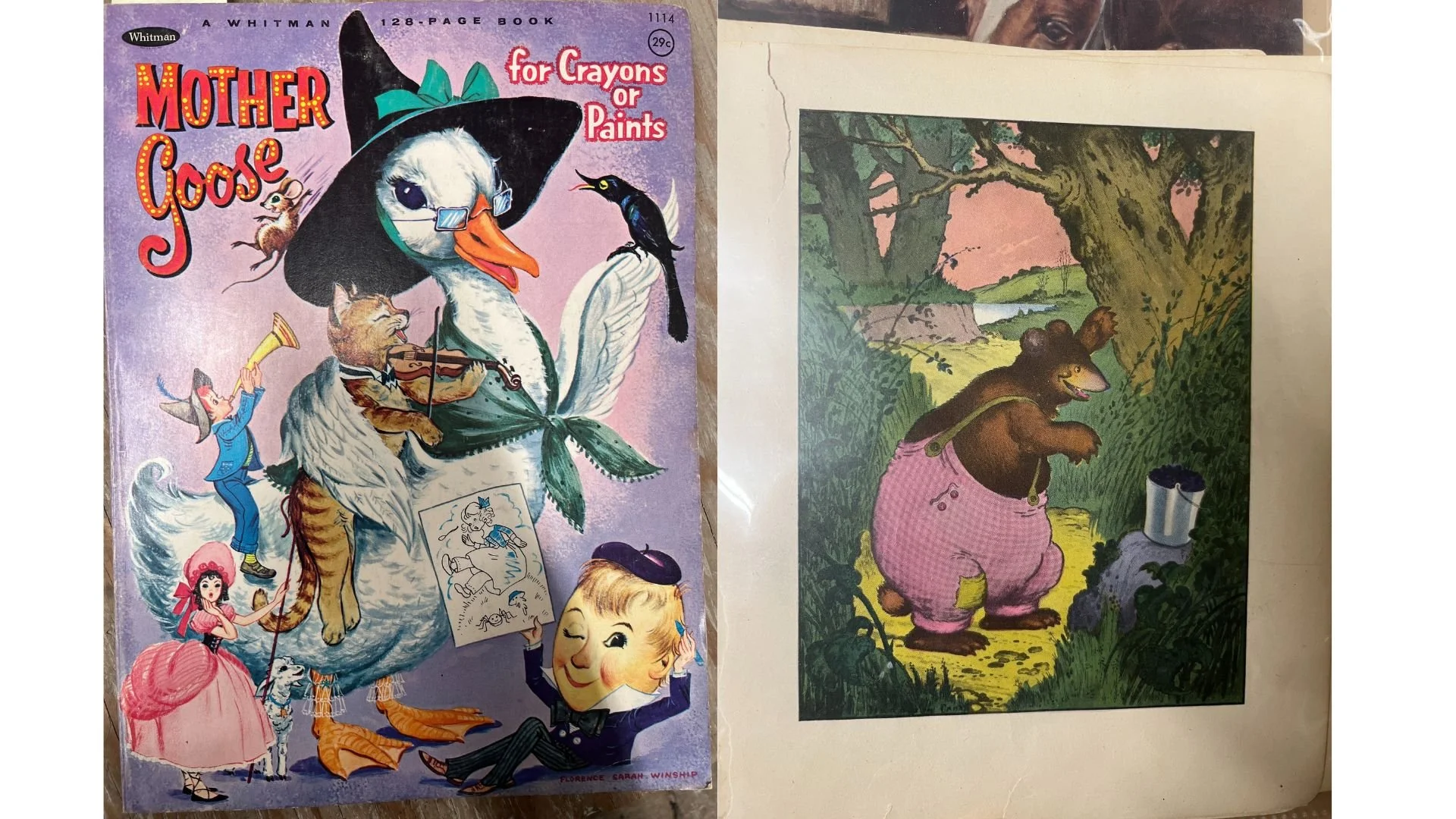
Children’s books photographed around Missoula in thrift and antique shops
A typical day for me in Missoula started at the Natural History Center, where I worked with the collections manager there to select specimens to work with for the day. I would then spend several hours working with my camera, lighting, and staging to shoot the taxidermy specimens. After that, I would head to the ZACC to fabricate and produce my work until the late evening.
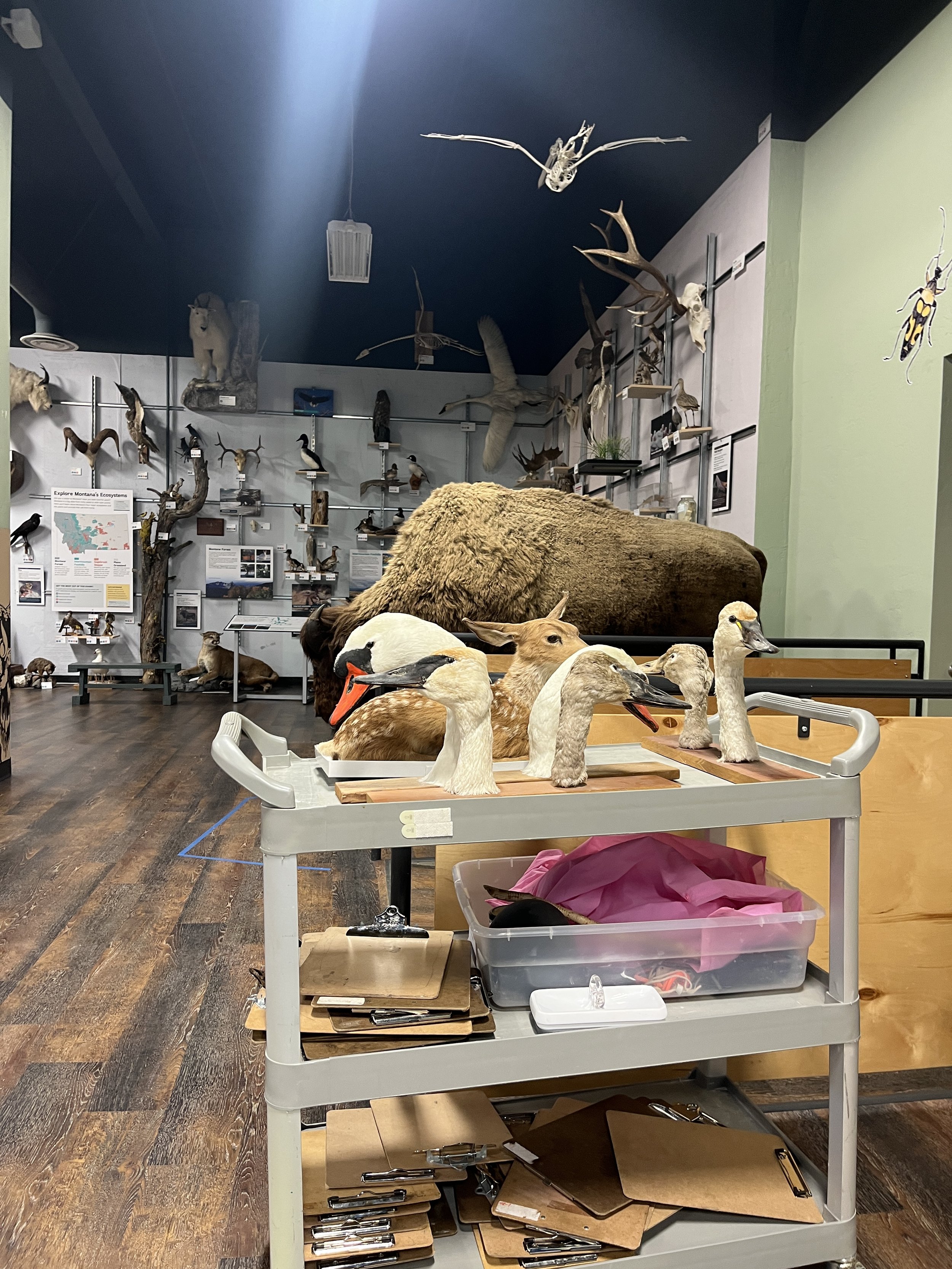
Amanda’s workstation at the Natural History Center
Can you share how the residency connected to your ongoing practice or opened new avenues for exploration?
I went to the Home ReSource to look for project materials. I knew I wanted to make flotation devices, so it was a glorious moment when I found three old life jackets on the shelf. I took them back to my studio, deconstructed them, and used the webbing and neon nylon fabric for my pieces.
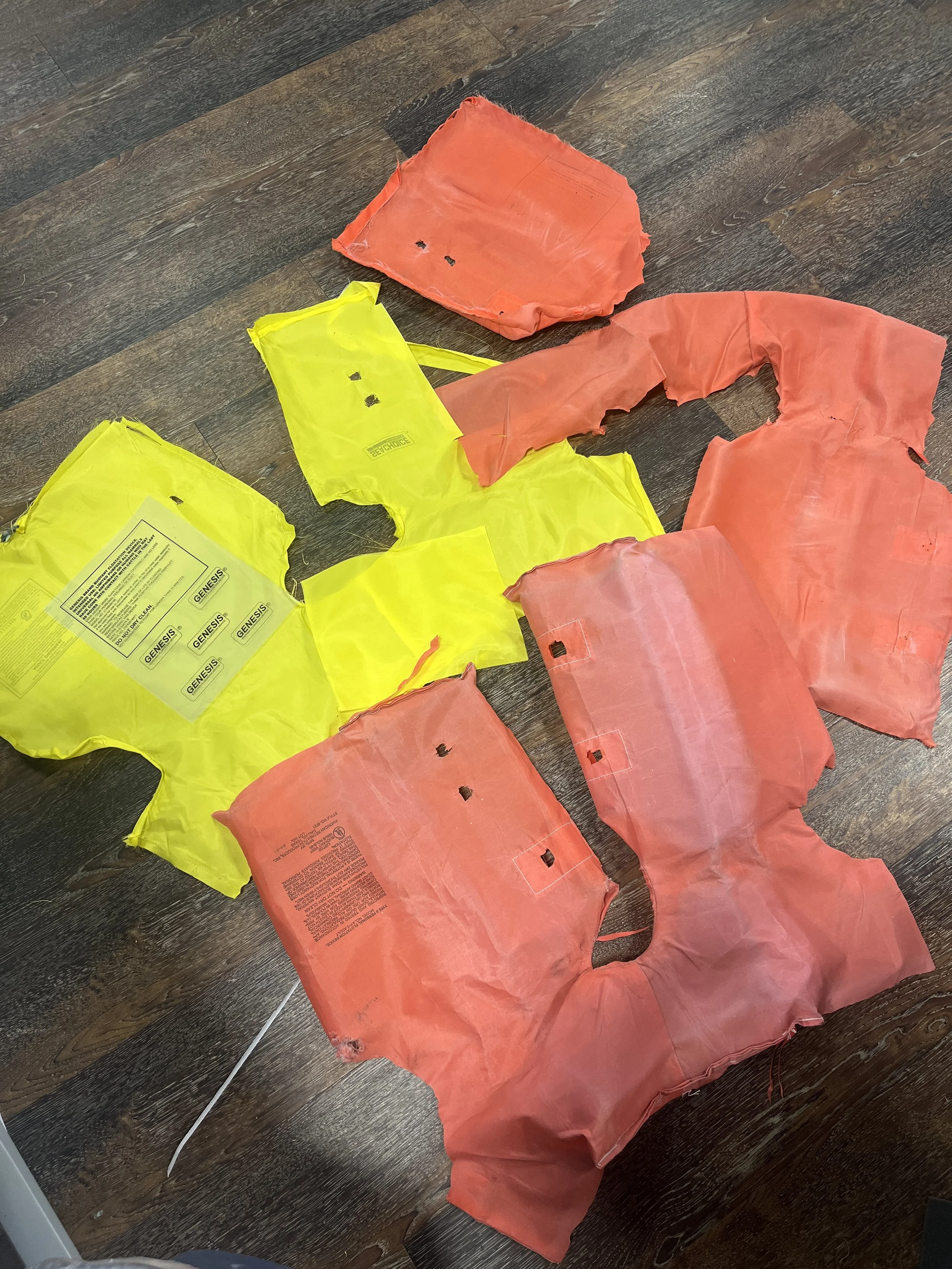
Deconstructed Life-Jackets
What are you reading/ watching/ or listening to?
When I got to Missoula, I read The Wall by Marlen Haushofer. The book is about a woman who is suddenly cut off from the rest of the world by a mysterious invisible barrier and lives the remainder of her days with a cat, a cow, and a dog. This book got my gears turning about how science and speculative fiction can be used in my work. It inspired me to think about a speculative future where water levels have risen, and society has to use creativity and resourcefulness to salvage certain cultural artifacts from the flood.
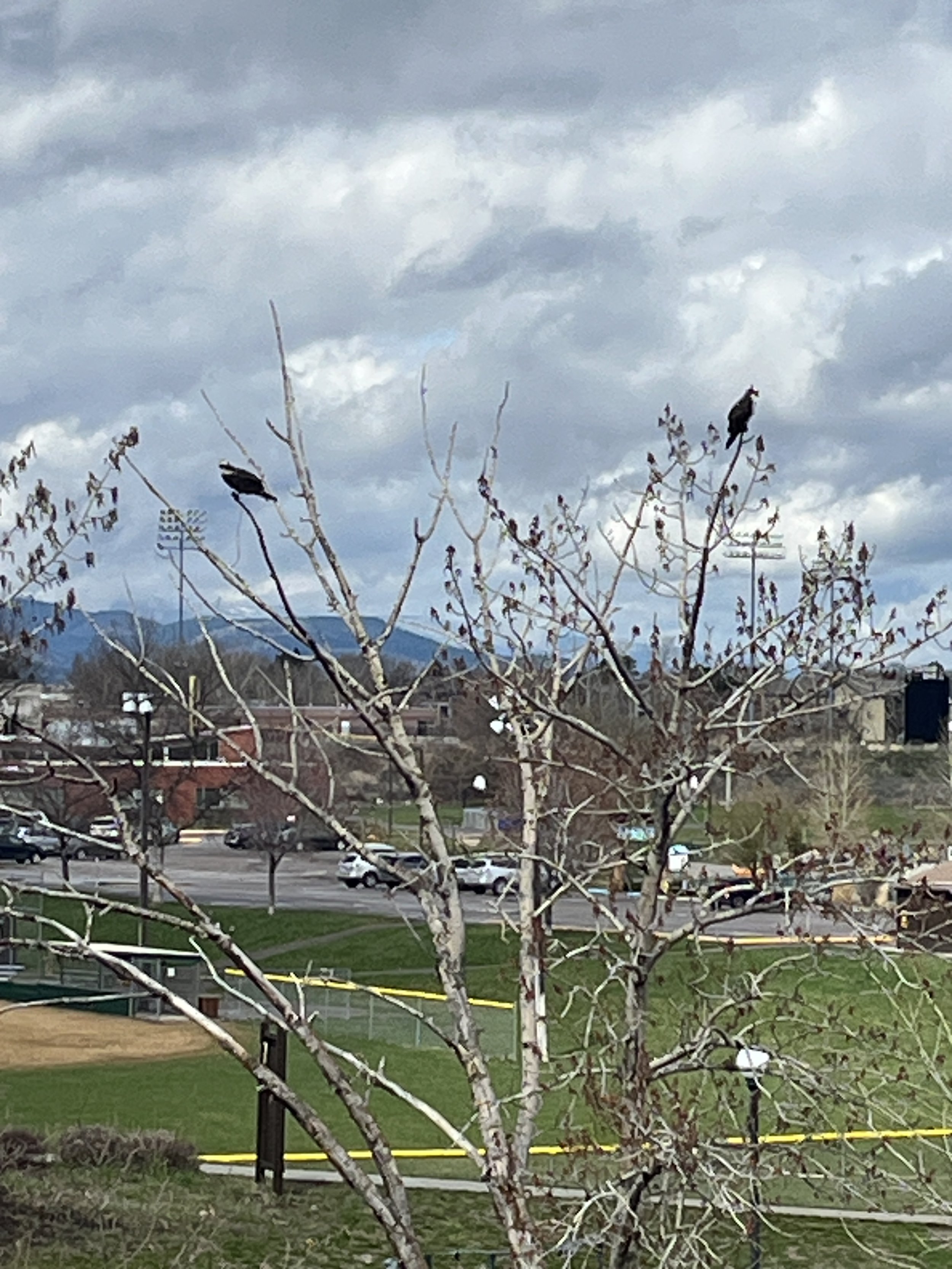
Ospreys seen frequently on Amanda’s walking commute.
How have your material choices changed over the years?
I used to think about environmentalism as a theme in my work only in terms of subject matter. More recently, I have been considering the long-term consequences of the materials I use in my work. While my material choices are not 100% environmentally sustainable, I try to repurpose pre-existing materials in my work. This is why having access to materials from Home ReSource and GAM was so impactful for my project – I was able to use materials that already had a first life before they became art.
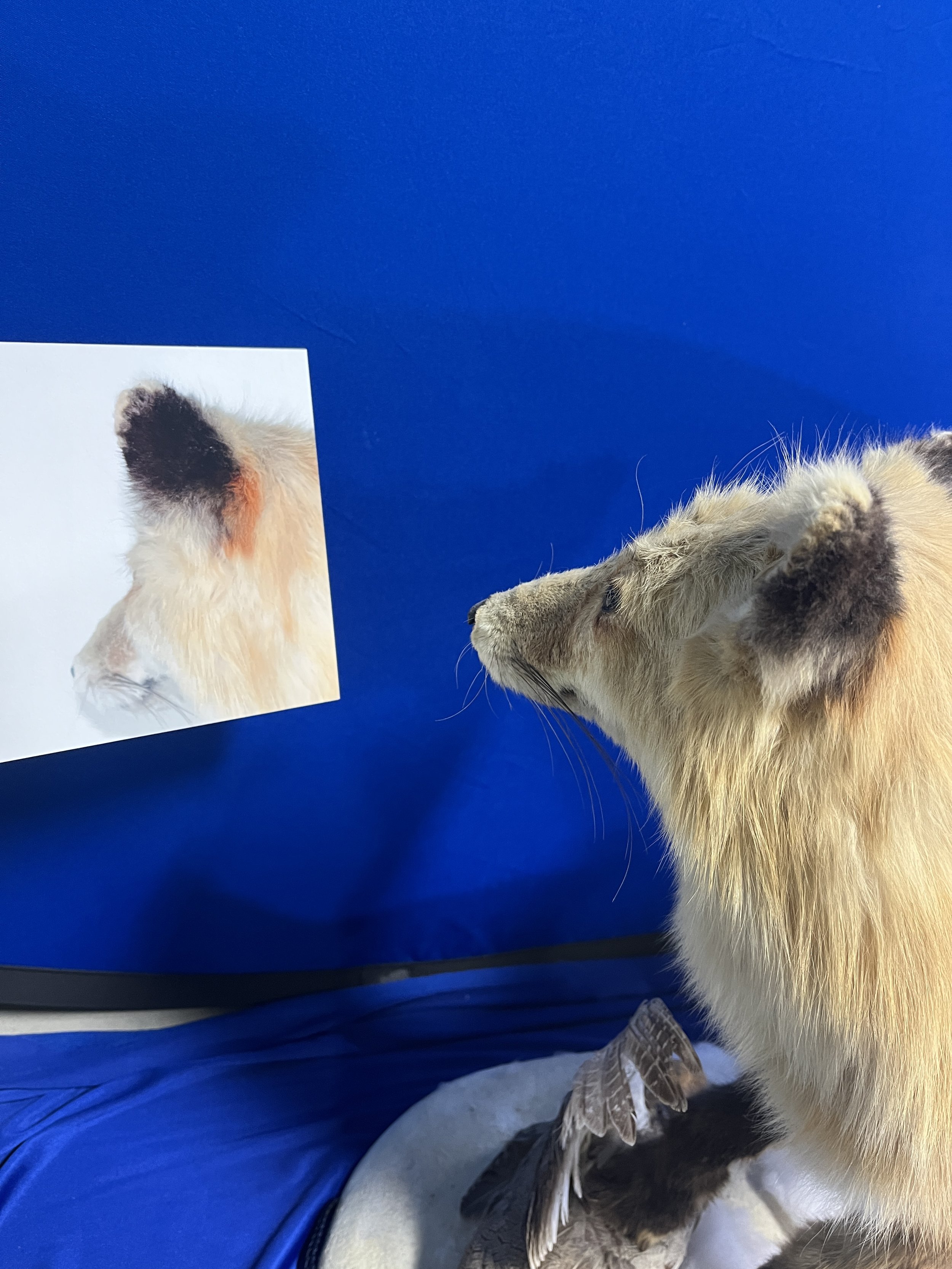
Fox Sees Itself
Can you break down the decisions behind a specific work from your residency, from the initial concept to the final details?
My artworks from my time with Open AIR are called Noaspherian Boyancy Devices. They are a science fiction play on the story of Noah’s Ark. They are hybrid image/objects that present photographs and screen-printed components that I composed using the taxidermy collection at MNHC and other pictures and representations of around Missoula.
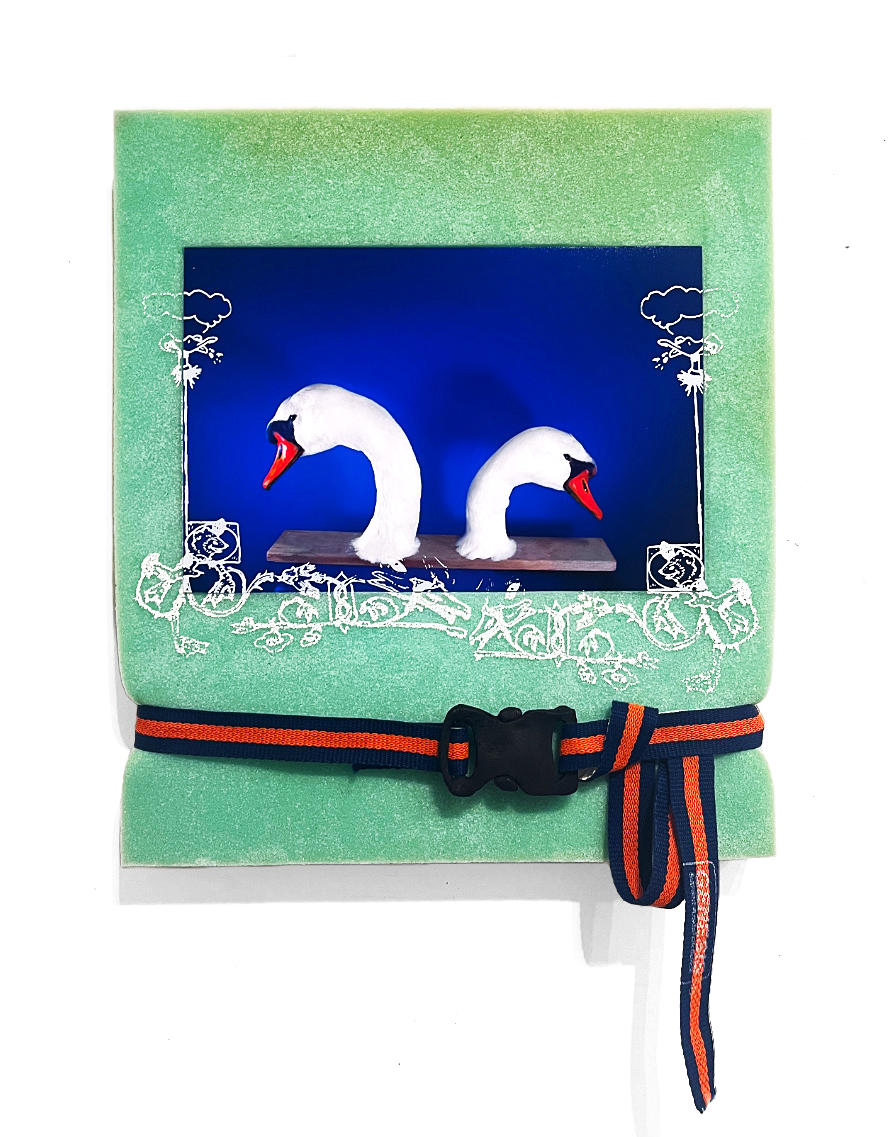
Noaspherian buoyancy device No. 002, FEEST
Screen printed foam, inkjet print with screen printing, screen printed webbing, polymer clay (buckle), wire, PVA adhesive
What were the major creative challenges, and what was your ah-ha moment?
A challenge I ran into in my work was to do a project using these old taxidermy specimens and document them in a way that brings them into a more speculative or science fiction type environment. I realized that I needed to somehow separate the objects from their context (of being at a natural history center). Something clicked while watching a favorite show of mine, PBS’ “Antiques Roadshow” – I thought of this saturated royal blue background that they always use for filming the antiques, and it all clicked. I could have the taxidermy floating in a field of royal blue, completely removed from their original setting.
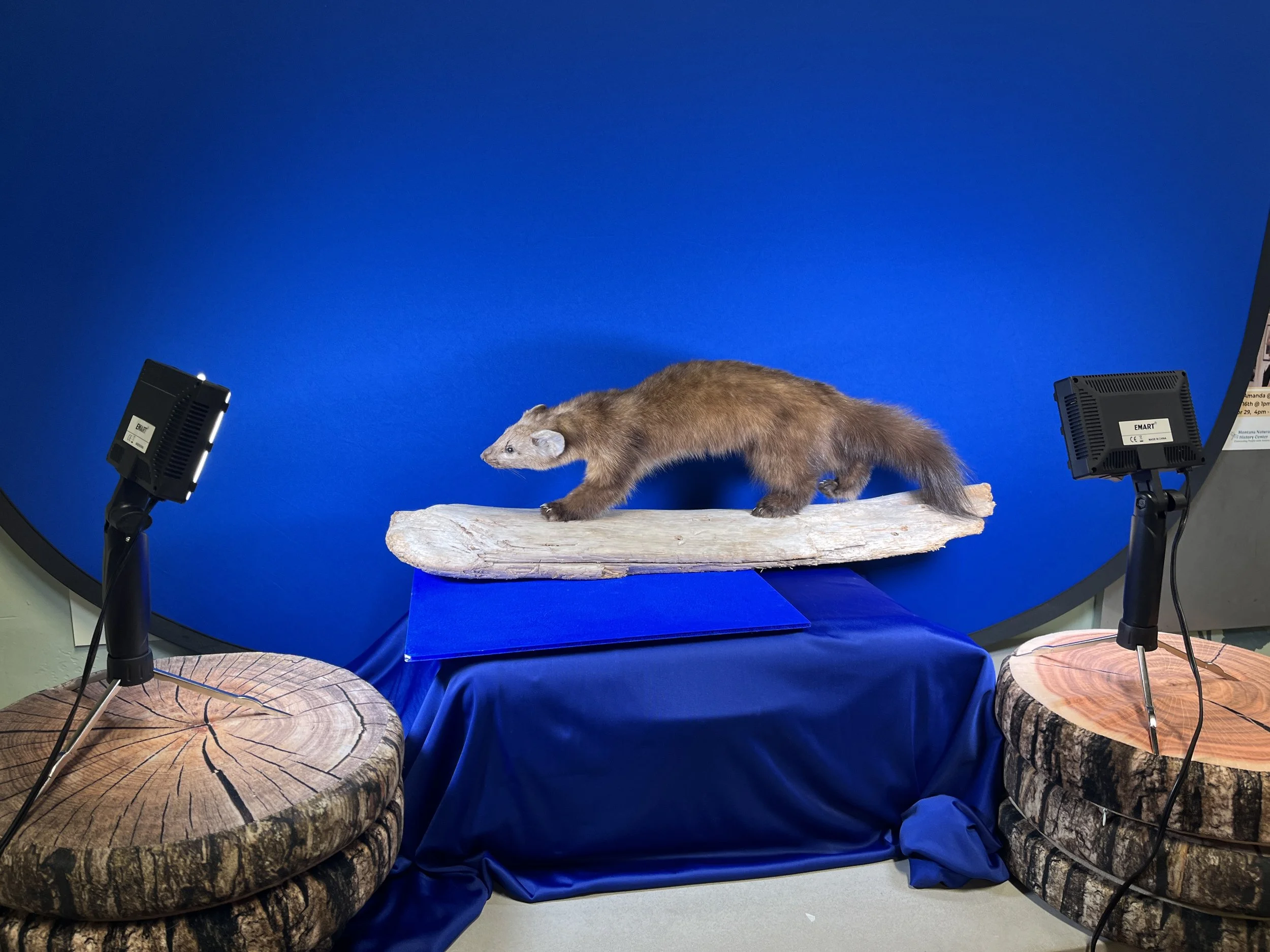
Amanda poses a weasel specimen in her royal blue background
What is the most significant difference between your role as the creator of the work and the experience of those engaging with it? How do you navigate the balance between personal expression and audience interpretation?
As an artist, I get to be a smuggler of context and information. I feel most excited when I watch people get surprised in real-time to see things like the fictional “Genesis Floatation” branding on webbing/straps, or the printed warning label, or realizing that a buckle is sculpted out of polymer clay (rendering it completely unusable).

Warning label on Noaspherian buoyancy device no. 001, "BAM-B1"
For you, what's the most rewarding aspect of being an artist or creative?
For me, being able to participate in programs like Open AIR and be connected with artists, creatives, and art enthusiasts is the most endlessly surprising and rewarding part of being an artist. I formed an awesome bond with the other artists at Open AIR. Also, having the opportunity to lead a printmaking workshop at MNHC was such an amazing way to meet local artists and creative people. It brought me so much joy to share my skills and enthusiasm for art and printmaking with the Missoula community. Open AIR does a great job of facilitating those rare, uplifting connections.
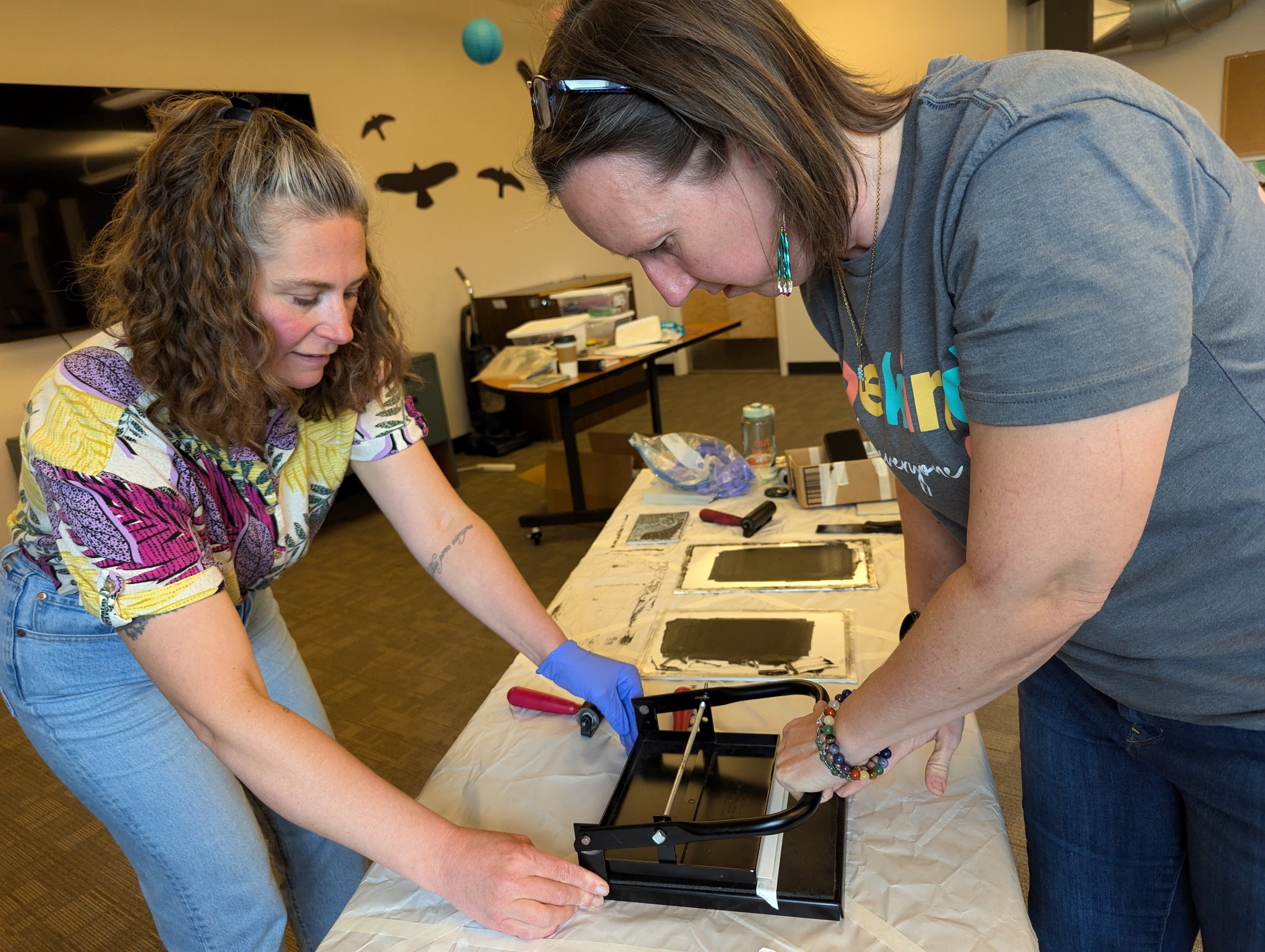
People printing at Amanda’s printmaking workshop.
How do you see your work contributing to the larger conversation within your field or community?
I hope my work makes people question our relationships to animals and nature, to imagine what the future of nature and wildlife preservation might look like, and what to do with the cultural artifacts of our past. I look forward to continuing with this body of work and creating many more Noaspherian Bouyancy Devices. I hope that this multiplicity of animals will make the work feel monumental, coalescing into one great post-apocalyptic Ark.
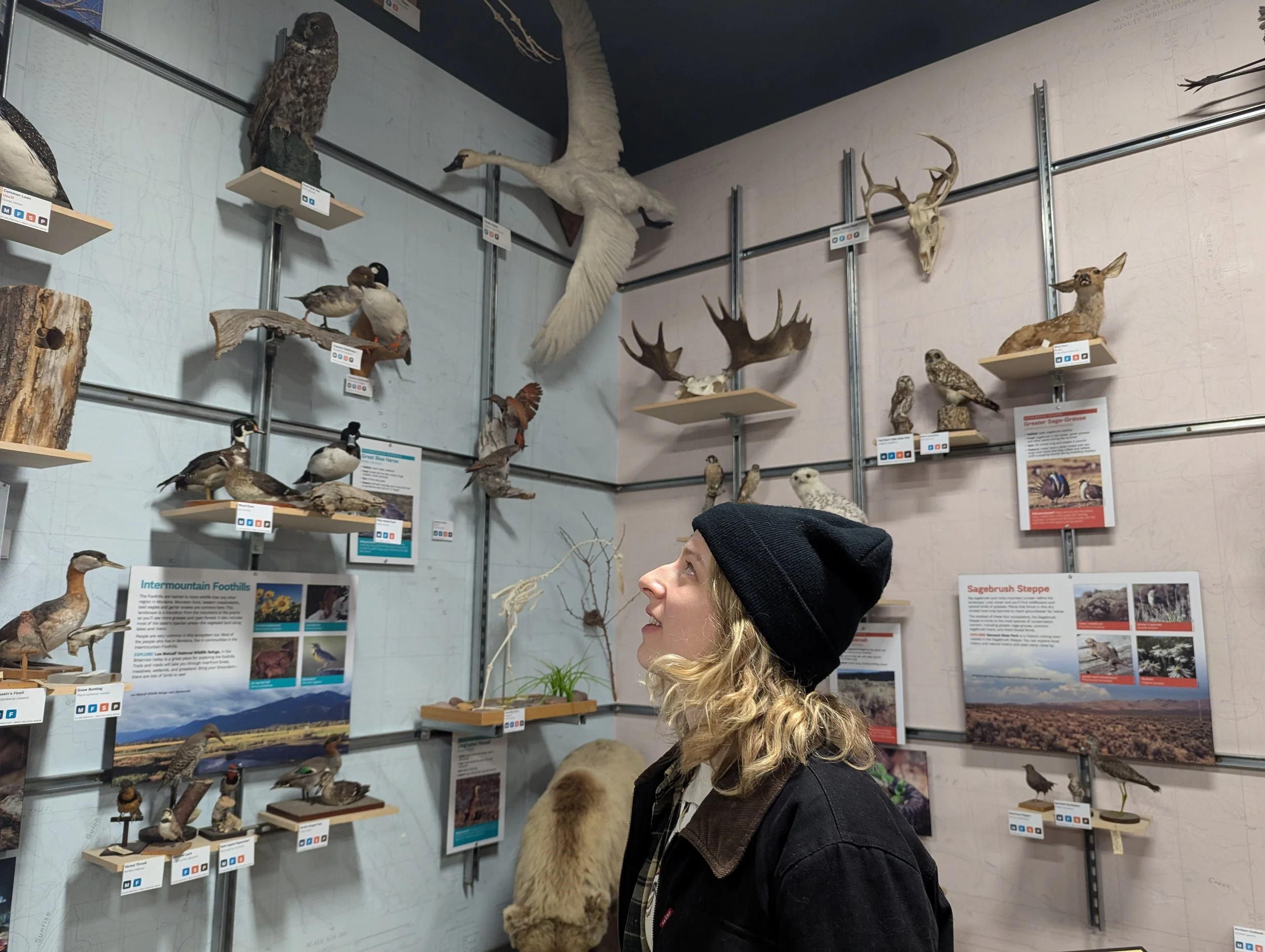
Amanda gazes at the animal collection at the Montana Natural History Center.
This interview has been edited slightly for clarity.
Visit These Links to Find Out More About Amanda Baker
Amanda’s Open AIR Artist Presentation