Deborah Dohne: Place Can Be Memory and Memory Can Be Place
Summer 2025 Artist-in-Residence at Rocky Mountain Gardens
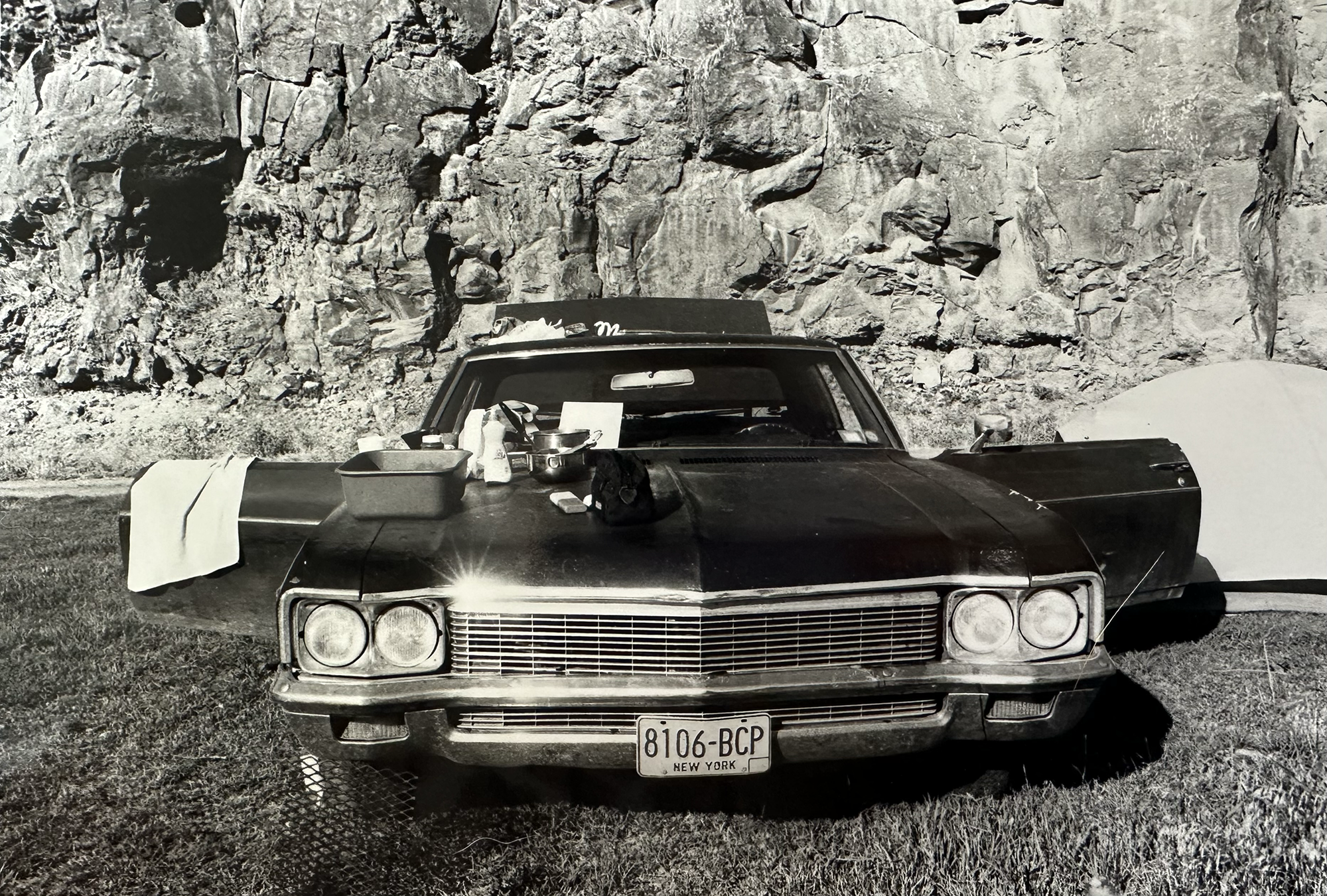
Deborah Dohne took her first trip to Montana in 1986 in this old blue Chevy Impala
Describe your Open AIR Residency experience. For example, how did you spend your time, construct your space, or engage with the community?
My residency experience was amazing! Open Air was my raison d’etre over the summer of 2025. When I applied for the residency, I had in mind that I would drive there from the east coast, and that this cross-country drive would be an important part of my creative process leading into my residency. I had a loose plan to revisit locations from my first trip to Montana back in 1986! We’d gone by car, my best friend and I, in an old blue Chevy Impala, tent camping along the way. I was curious about what kind of experience I’d have. What similarities and differences of place would I notice after these 39 years had passed? I wanted to look through the lens of time and lived experience, to see nature/place/country. What would I recognize, notice, think, or feel? I was especially keen to discover how I would understand the natural world, especially biodiversity defined by the presence of native birds and plants. My only agenda was to clear my mind, distance myself from ordinary life, and be receptive to new thoughts, feelings, emotions, and experiences. After drifting and wandering across the northern United States for 3 weeks, I was primed for my residency! I felt relaxed, inspired, and excited.
Once in Missoula, I got right into a routine. It was the same every day for six weeks. Every morning, I would get up, meditate, and have coffee. There was a big chalkboard, the real kind with colored chalk, in the place I was staying, and as I sat with my coffee, I’d draw on it and think about my ideas and plans. It turned out to be a working drawing that evolved over the time that I was there. I liked how large it was, and that I could sit back and look at my different ideas and see interconnections, and that it only showed what continued to be relevant.
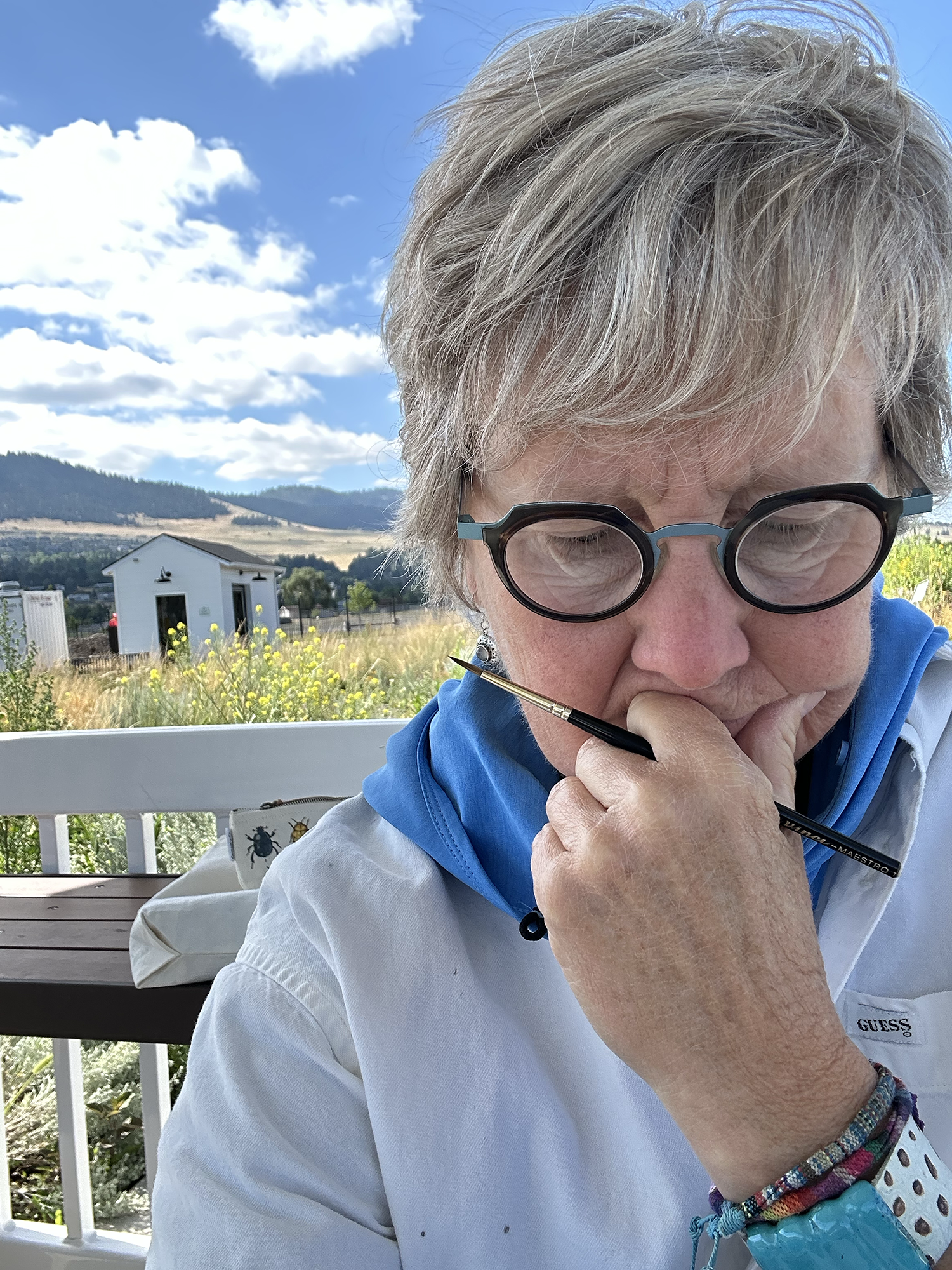
Deborah Dohne, Artist-in-Residence at Rocky Mountain Gardens, Summer 2025
My residency was at the Rocky Mountain Gardens, part of the Missoula County Department of Ecology and Extension (MCDEE). After my coffee and chalkboard drawing, I’d head over to the gardens to be there by 7:30. Morning in the gardens was an extended meditation, where I sat with an individual plant for hours. I would get to know it intimately, as an individual being, sometimes recalling seeing the same species while out hiking on my trip west, and then I’d draw one of its blossoms to show a particular stage of opening or closing, thus capturing and preserving a moment of its existence. I did this every day for six weeks, many times returning to the same blossom the following day. Each day was meditative and precious. In the final two weeks, I returned to do evening work. On Mondays, our cohort of artists met together with the Open Air folks for coffee at the Missoula Public Library, a ritual that I really enjoyed. We discussed our work and developed a sense of community and camaraderie that bonded us together. It was a key aspect of the residency for me.
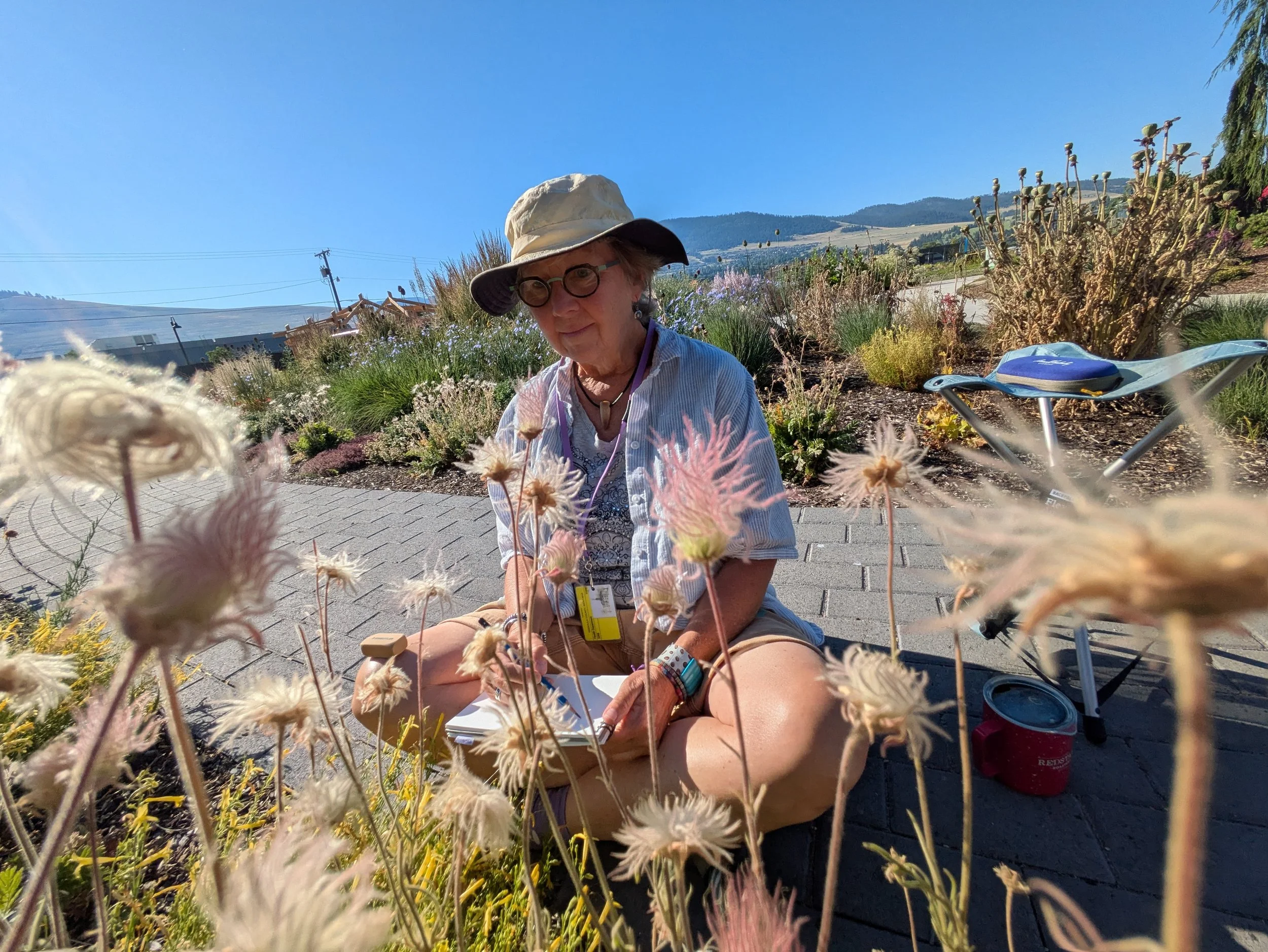
Deborah working in the gardens
How did the residency influence or change your artistic direction?
The most surprising diversion from my creative process was that I didn’t use a sketchbook during my residency! I have habitually carried around and used a sketchbook throughout my career. This omission from my process wasn’t really a conscious decision so much as an avenue to get art out into the world more quickly. I don’t foresee ever giving up on sketchbooks, but this experience made me realize that I can get lost in them, just as I can get lost in the quest for perfection. In retrospect, I realize the chalkboard was an unplanned stand-in for a sketchbook, and it worked very well for that purpose. And let's not forget the obvious: the Open AIR residency let me prioritize my art-making all day, every day, and paved the way for these advances. How wonderful!!! I am so grateful.
What role does place (both in terms of physical space and community) play in your work, especially during your time at Open AIR.
This loops back to the earlier discussion of my car trip. Place is the underlying theme that unifies the diversity of my work and encompasses the values, concerns, and joys of living and being an artist. I’m concerned by the effects of climate change that I’ve begun to see first-hand, specifically as a birder and nature-aware person. Effects of climate change were highlighted on my drive west when, after thirty-nine years, I returned to Glacier National Park. I had felt a deep connection to a particular area in the park on my first visit, and upon returning, I felt that same connection, but it was bittersweet. Things had changed on a scale big enough that I could see it. Climate change and an uncontrolled human-caused forest fire had altered the landscape.
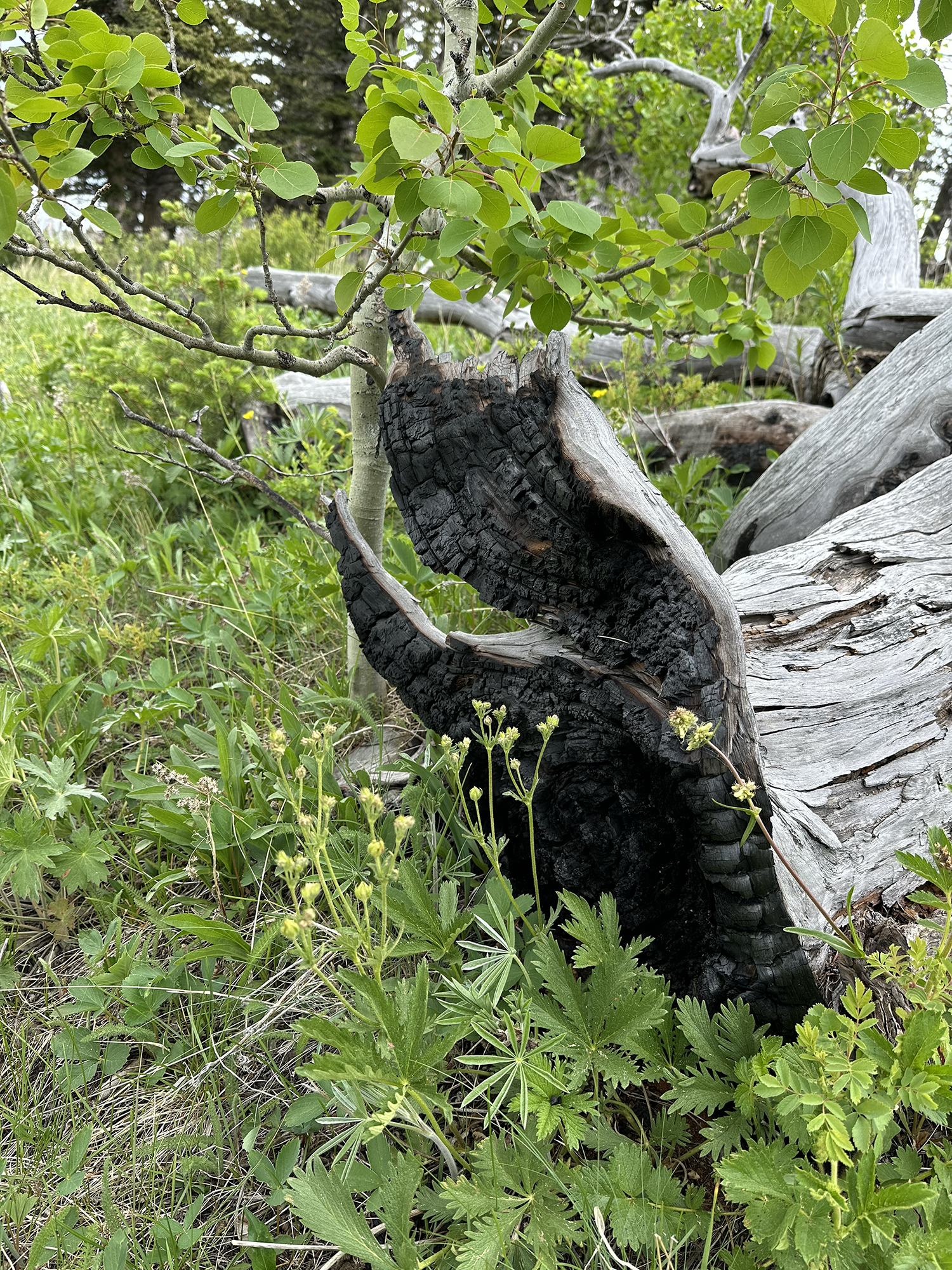
Detail of wildflowers growing around a tree casualty from the Red Eagle forest fire in Glacier National Park nineteen years ago. The fire started July 28, 2006. 36,000 acres were burned and spread onto the Blackfeet Indian Reservation burning 19,000 acres.
Experiencing this memory and aspect of place was a profound creative understanding for me. Place can be memory, memory can be place, a small patch of land can be a place, or a lake, or a region. My residency encompassed all of those, which I translated into a single sculpture, ‘Prairie Portal’, featuring a group of India ink and watercolor paintings. My experiences living in Montana for two months, in Missoula, hiking, and camping in a tent in Glacier National Park, have become part of my residency, part of my interpretation of place, and are preserved in my art.
This work, and really my future work as well, can only exist because of my first-hand experiences of these specific places and the memories that keep them alive. Through my residency, I discovered a connection between Rocky Mountain Gardens and Glacier National Park, channeled through the native plant species existing in both places, one through human care and understanding, and the other because of millennia of natural forces and ecology.
Thus, I left Missoula with a deeper understanding and more personalized interpretation of place and more ways to interpret them through my work. Place is something to document, but also to feel, care for, and remember.
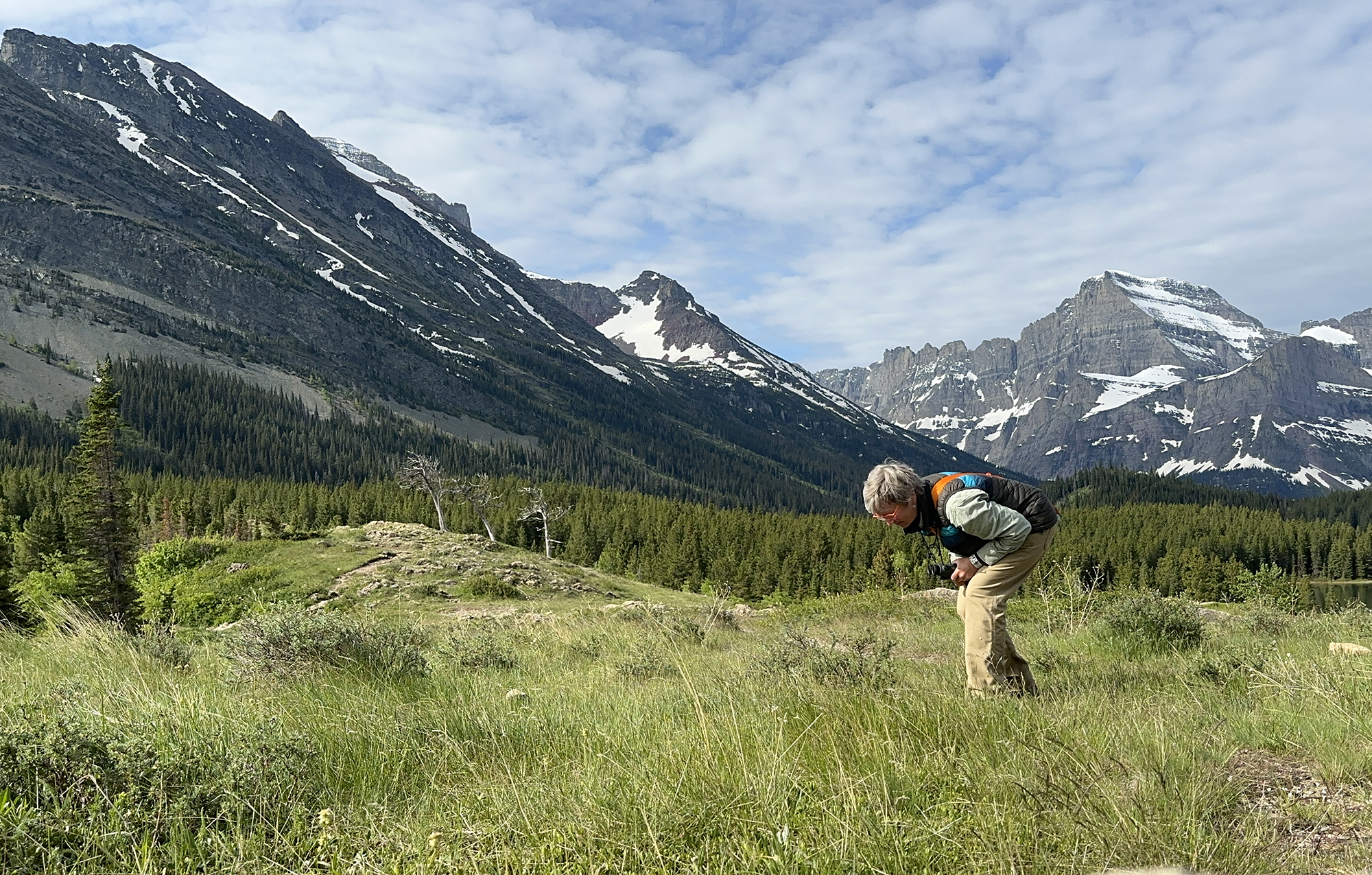
Deborah examining wildflowers at Many Glacier, Glacier National Park. June 2025
Why do the arts/artists matter?
Art can defy gravity!
Art matters because it expands definitions, it speaks beyond the limits of logic, it’s not constrained by practicality, it can make sense or not, and can exist with built-in contradictions, or it can be logical and communicate a clear message wrapped in creativity. Art helps us feel connected, opens us to seeing the world in a unique way, and lets us experience a range of emotions. We can have a private moment with it, meditate on it, or hide in it. We can experience memories elicited by it, or be catalyzed by it, or learn from it. To experience art is to be human, art is a gift born out of a labor of love from another human’s vulnerability, care, thoughtfulness, and soul searching. But to complete the circle art needs an art community, an audience willing to look, think, reflect, respond, and participate by receiving it; that’s the human element, that’s how art matters.
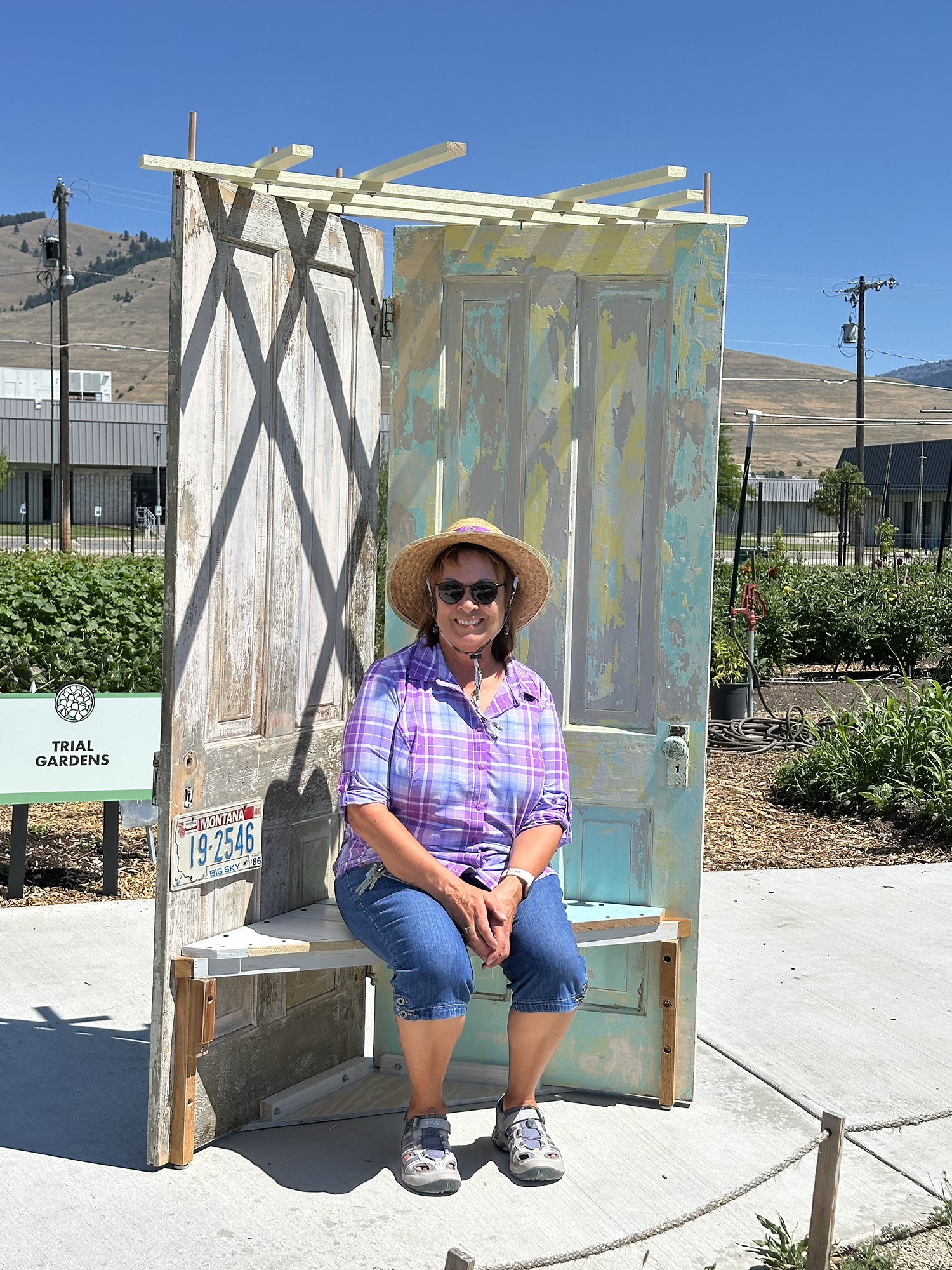
Sandy Perrin, plant clinic coordinator at MCDEE in the Nook view of ‘Prairie Portal’ facing the native plant area of the Rocky Mountain Gardens.
How do you see your work contributing to the larger conversation within your field or community?
I often think about what I have to offer back to the world. That’s the larger conversation. Through conscientious awareness and action, I have experienced gifts of reciprocity and want to perpetuate that with my audience. I believe small actions matter very much when they become collective. I want to pose questions: how can we cause the least harm to the environment, how can we understand and act as if we are a small part of an interconnected community/ecosystem comprised of countless other species? I love art because it can communicate ideas in ways that nothing else can, even though what an artist is saying can be a fantasy or impractical, and even though an artist isn’t an expert in another field, they don’t have to be, they can still help people to think about real life things in a new light, and to consider, question, or even alter their actions and ideas.
In the future I would like to publish a book of my place-based artwork and environmental engagement that includes the undercurrents of each work: deeper reflection, thoughts, and information on environmentally themed topics like sustainability, biodiversity, and reciprocity. I imagine the contents as a portal for readers to notice the beauty and fragility of nature, to see an example of one person paying attention, recognizing, and honoring the necessity of all creatures and species. I make place personal through my practice, including stewardship, first-hand experience, historical research, citizen science, and art. I hope to catalyze others to find meaning, cultivating their own awareness of place to discover the unique natural and human histories in their communities and place on the planet.
In your view, what can society do to best support artists, creatives, and a thriving creative ecosystem?
Help us meet and get to know other artists, find community, audience!!!!!!
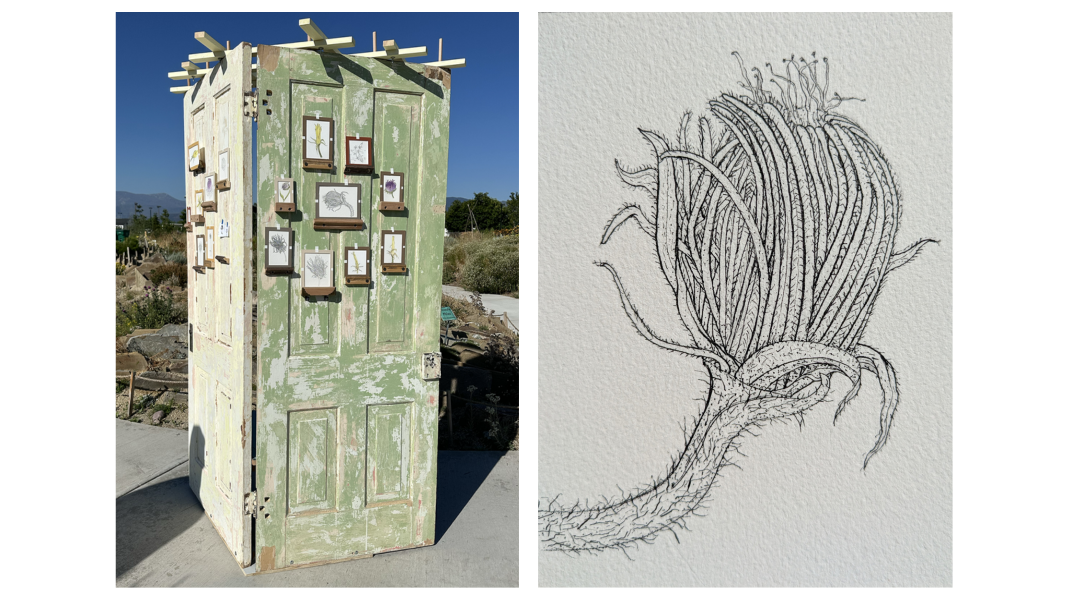
Left: Outside view of ‘Prairie Portal’, with framed India ink and watercolor art of native blooms
Right: one of the detailed ink plants featured within Deborah’s sculpture
This interview has been edited slightly for clarity.
Visit These Links to Find Out More About Deborah
Deborah’s website
Follow Deborah on Instagram
Watch Deborah’s Artist Presentation