Aubrey Edwards: A Fierce Advocate
Fall 2025 Artist-in-Residence
at Butte-Silver Bow Archives
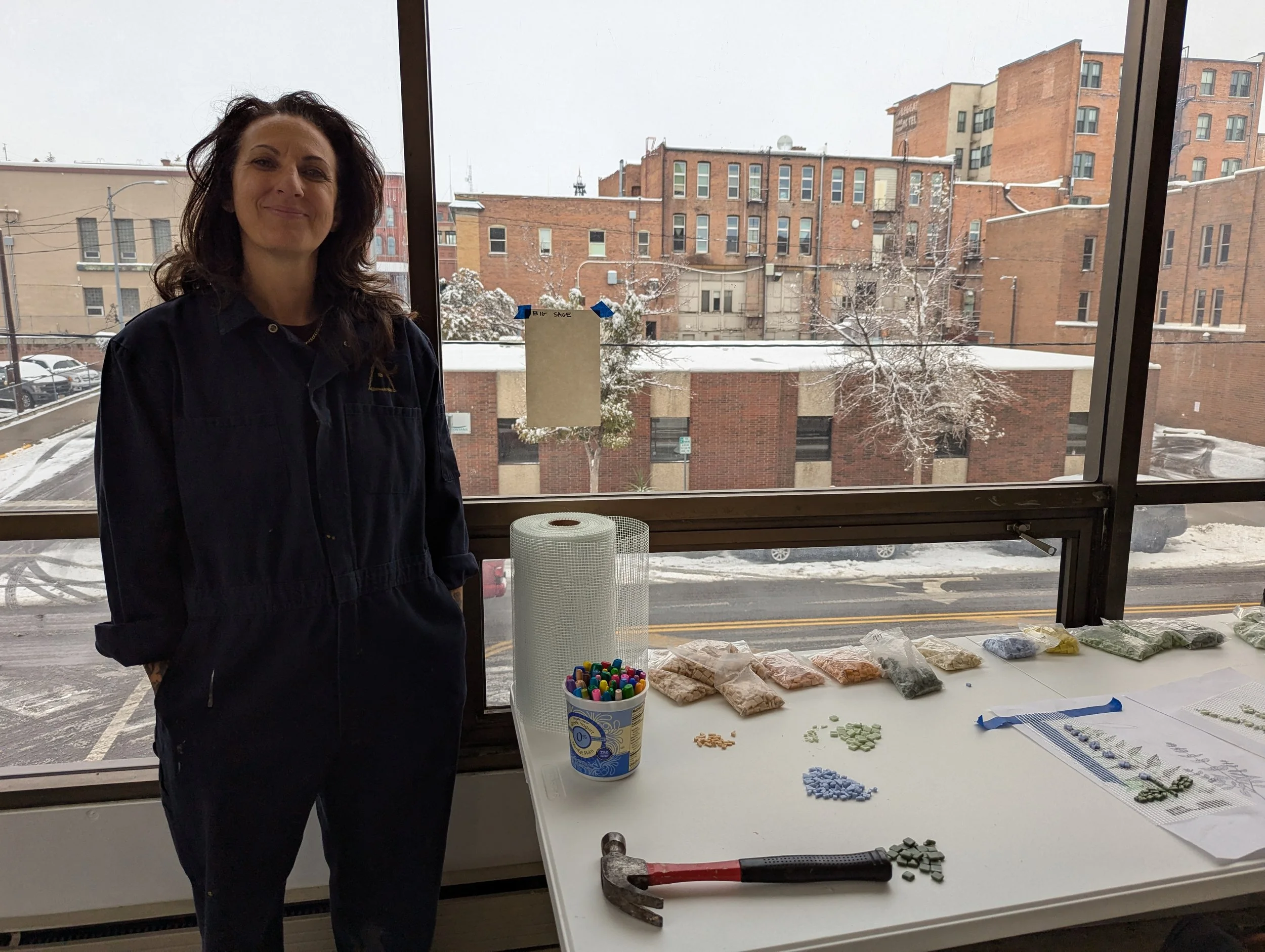
Describe your Open AIR Residency experience.
I spent a lot of time with friends of friends, a result of some pre-residency legwork that I had done to find connections with community members in Butte. I also spent a ton of time at locations that hold memory and history, standing on the same land that has bore witness to struggles and successes we read about in historical documents. Very powerful.
The length of this residency afforded me the time to research and conceptualize, which is such a joy. The initial introduction to the Butte-Silver Bow Archives was helpful in continuing to build that relationship with the archivists and the institution itself. The tour of Montana Resources was incredible, drawing a throughline from labor in the past to the present.
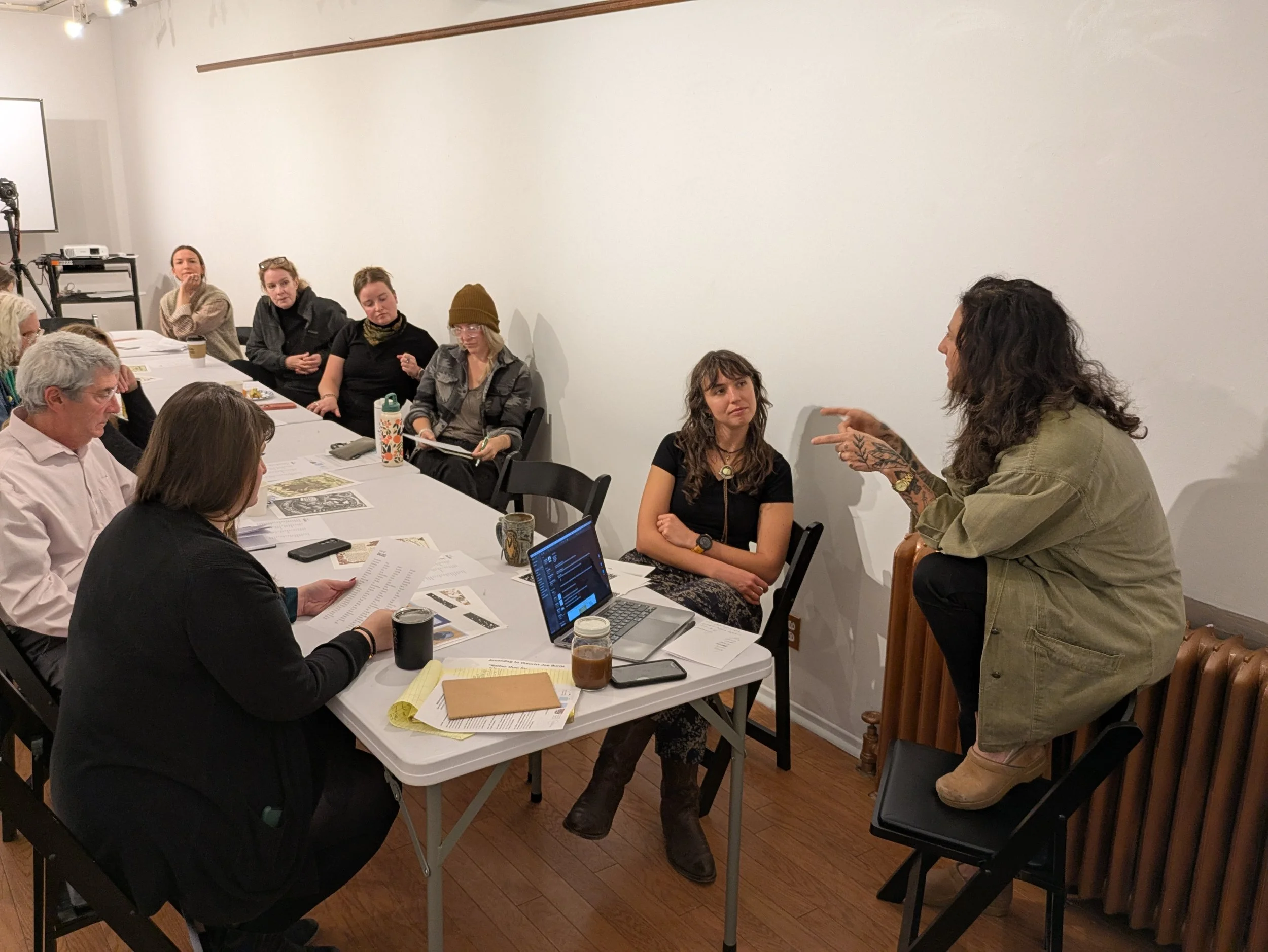
Aubrey presenting for the Open AIR Butte arts conference, held at the Clark Chateau.
This residency specifically “gave me permission” to spend time thinking and conceptualizing. The open-endedness of the residency allowed for play, inquiry, and research. Different artistic practices take different forms, timelines change, they are iterative. Given the ability to explore and the fact that Open AIR did not have expectations for a final product, I was able to spend deep time thinking and conceptualizing. Space I do not have in daily life.
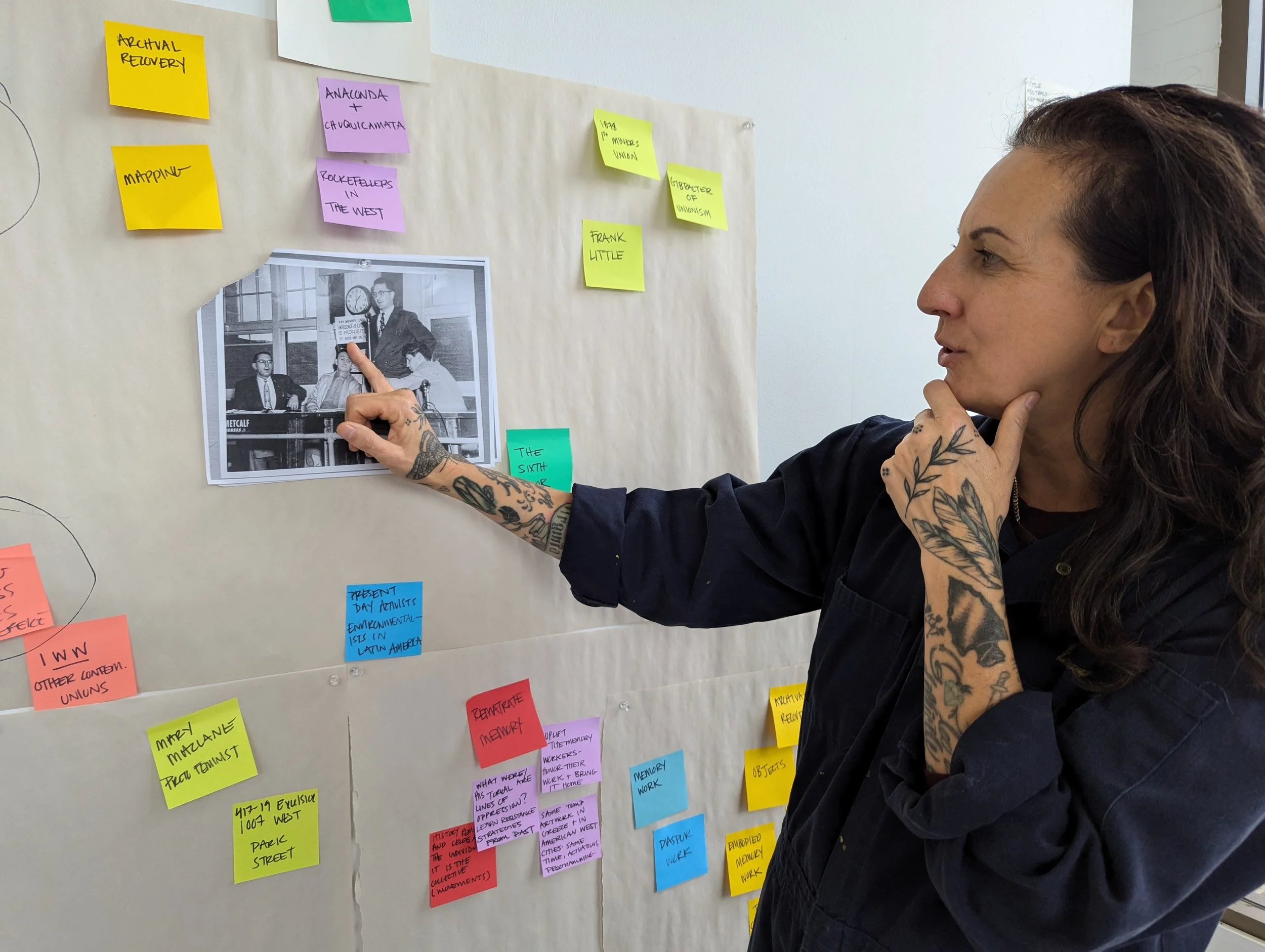
Aubrey spreads out in her studio to follow threads and connect timelines from her research.
During your residency, what did you read /watch /or listen to?
I was reading a lot of books and articles on labor, labor history, and the Industrial Workers of the World. I was watching whatever I could get my hands on that spoke for Butte, uplifting Travis Wilkerson’s An Injury to One. I was listening to Death in the West and a lot of J.J. Cale.
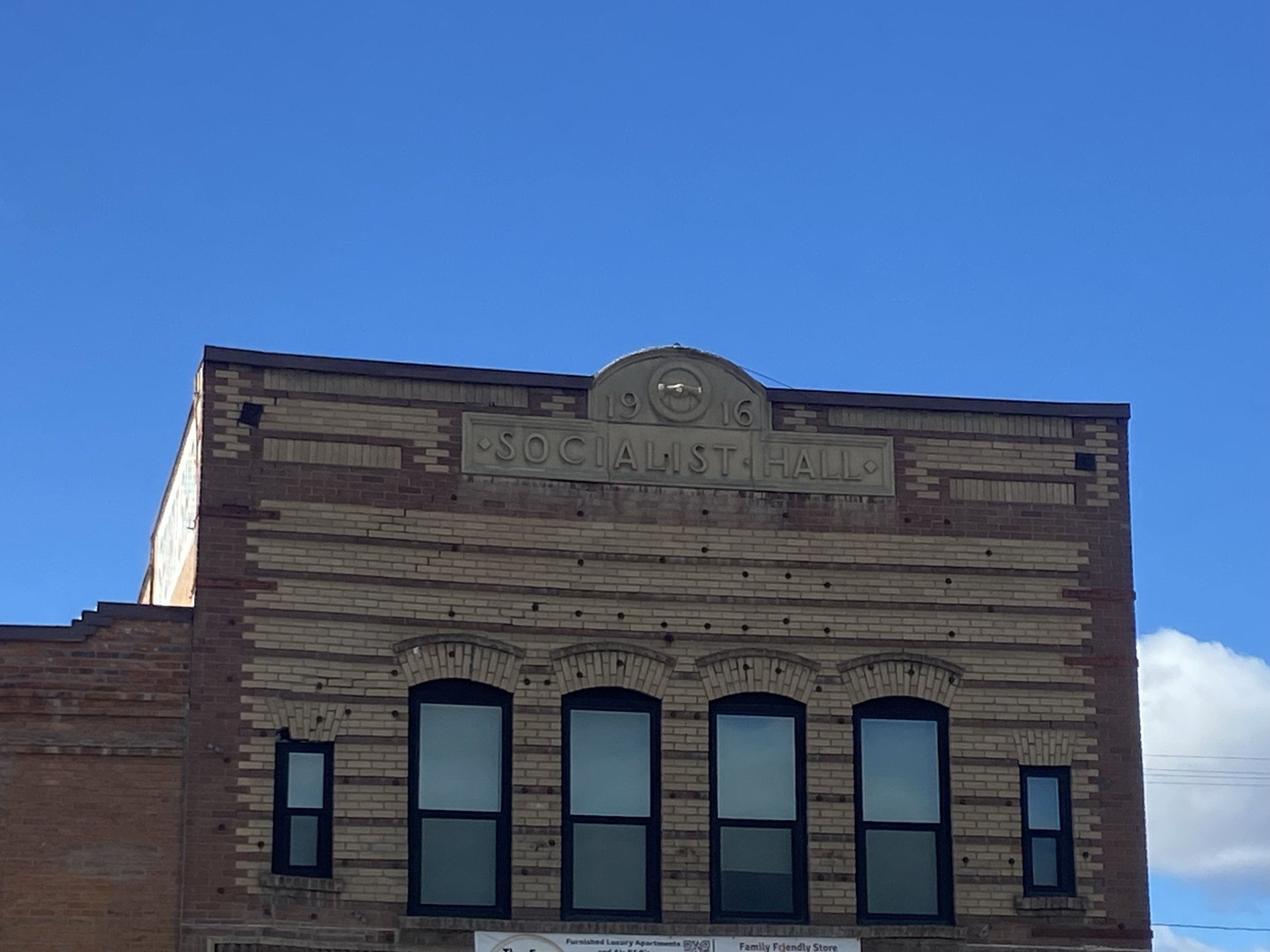
One of the few still-standing Socialist Halls in the United States.
What role does place (both in terms of physical space and community) play in your work, especially during your time at Open AIR.
I make site-specific and place-based work. I have been “researching” Butte for the past five years, and this residency finally gave me the space to conceptualize and create there. Moving forward, my month in Butte laid the groundwork for my studio practice over the next year. This residency gave me the time to conceptualize three full bodies of work, WOWZA!
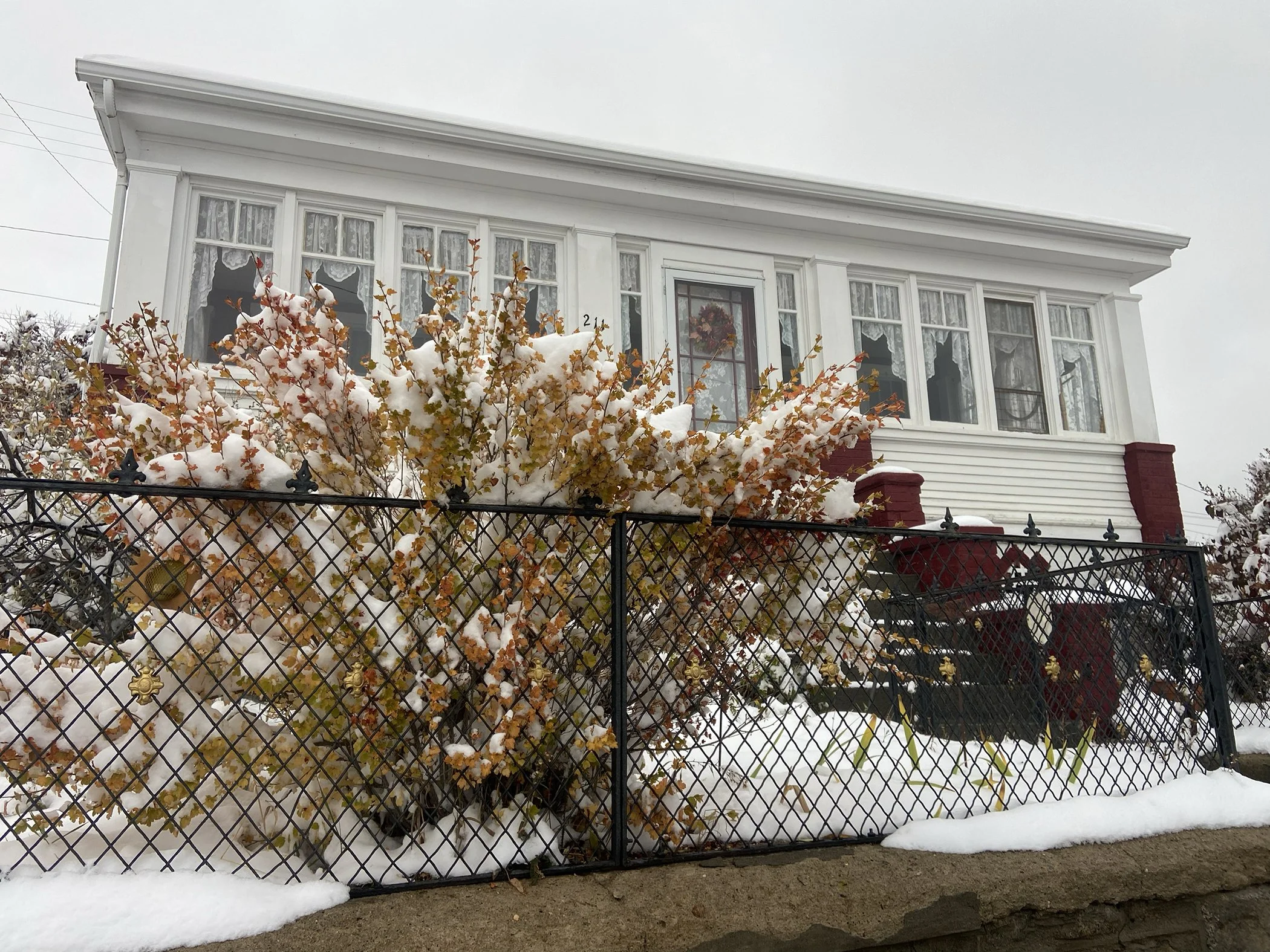
Former home of Bridget Shea, a feared and revered labor leader with the Women’s Protective Union, one of Aubrey’s main areas of research while in residency.
How would you describe the evolution of your work, and what subject do you find yourself returning to?
I identified as a photographer for nearly twenty years. That was my sole medium, and I had the joy of being a true working artist. That was how I made my living. However, after commodifying my art for so long, I was exhausted. I am still working to repair my relationship with photography, something I love that capitalism devoured. Now, I work interdisciplinary, always exploring new materials and mediums. Over the past five years, I have dedicated my practice to stories of labor, unionization, and mutual aid. In these ways, when people take care of each other within the meat grinder of late-stage capitalism, we are working together to build a better world. That is what I continue to return to: who has and does work to build this collective better world, and how can my artmaking be a meditative practice to sit with that work, embody that work, and then share these stories with a wider audience.
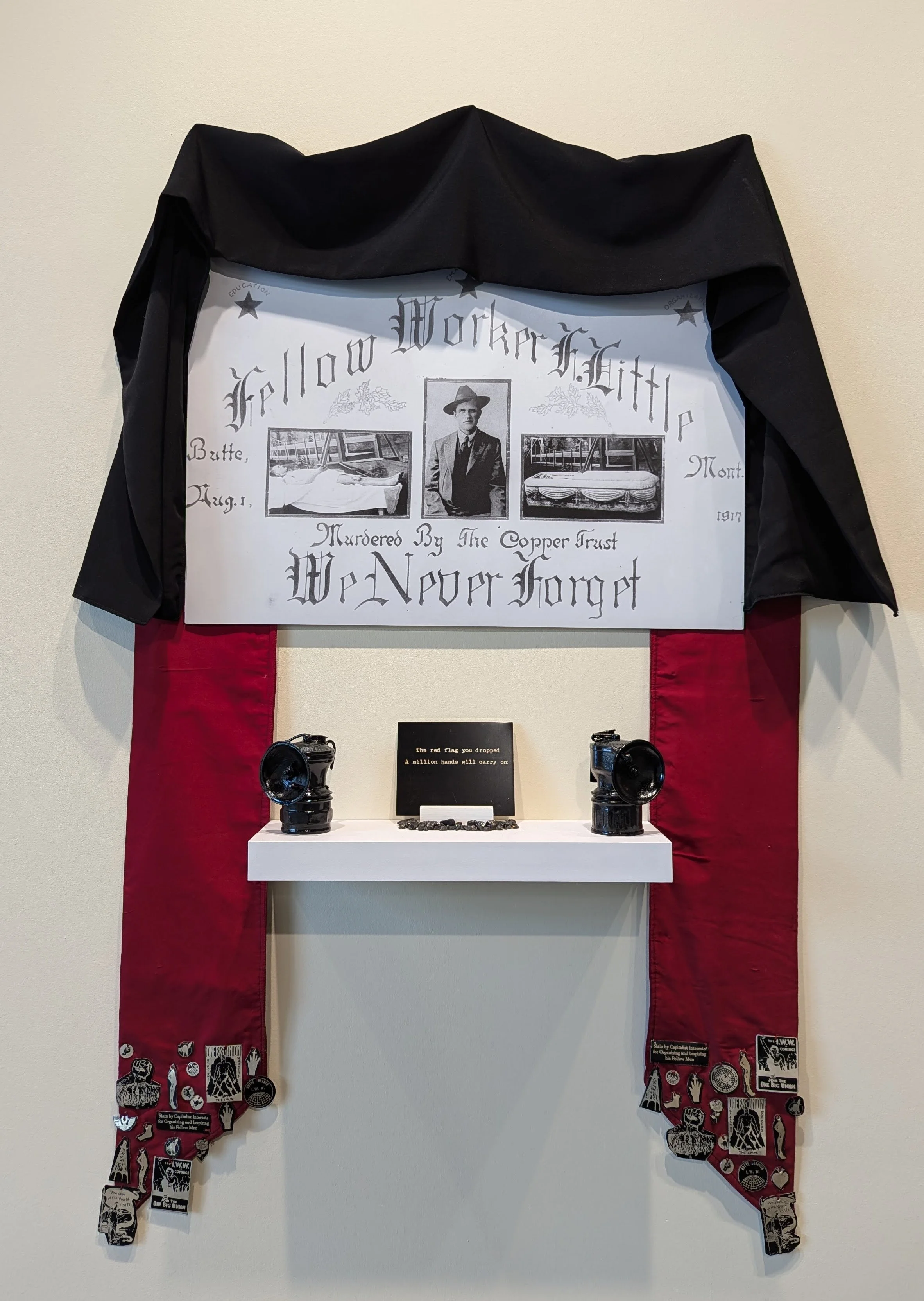
Aubrey’s installation for Open AIR’s recent show OTHERWISE at Bob’s Your Uncle.
How do you see your work contributing to the larger conversation within your field or community?
I work in the humanities in academia. Historically, there has been a sharp delineation between the arts and humanities, wherein academics view the arts as merely aesthetics and self-expression. My work—as an artist within the academy— is to fiercely advocate for the arts as more than aesthetics but as true forms and methods of knowledge making. When artists ground their process in multi-modalities of research, they then synthesize and analyze that research-derived data to create artwork. That is knowledge production. My research in my PhD program uplifts artists as knowledgemakers, and how artists can use their skills to help us interrogate the past, create community in the present, and envision our collective futures.
This interview has been edited slightly for clarity.
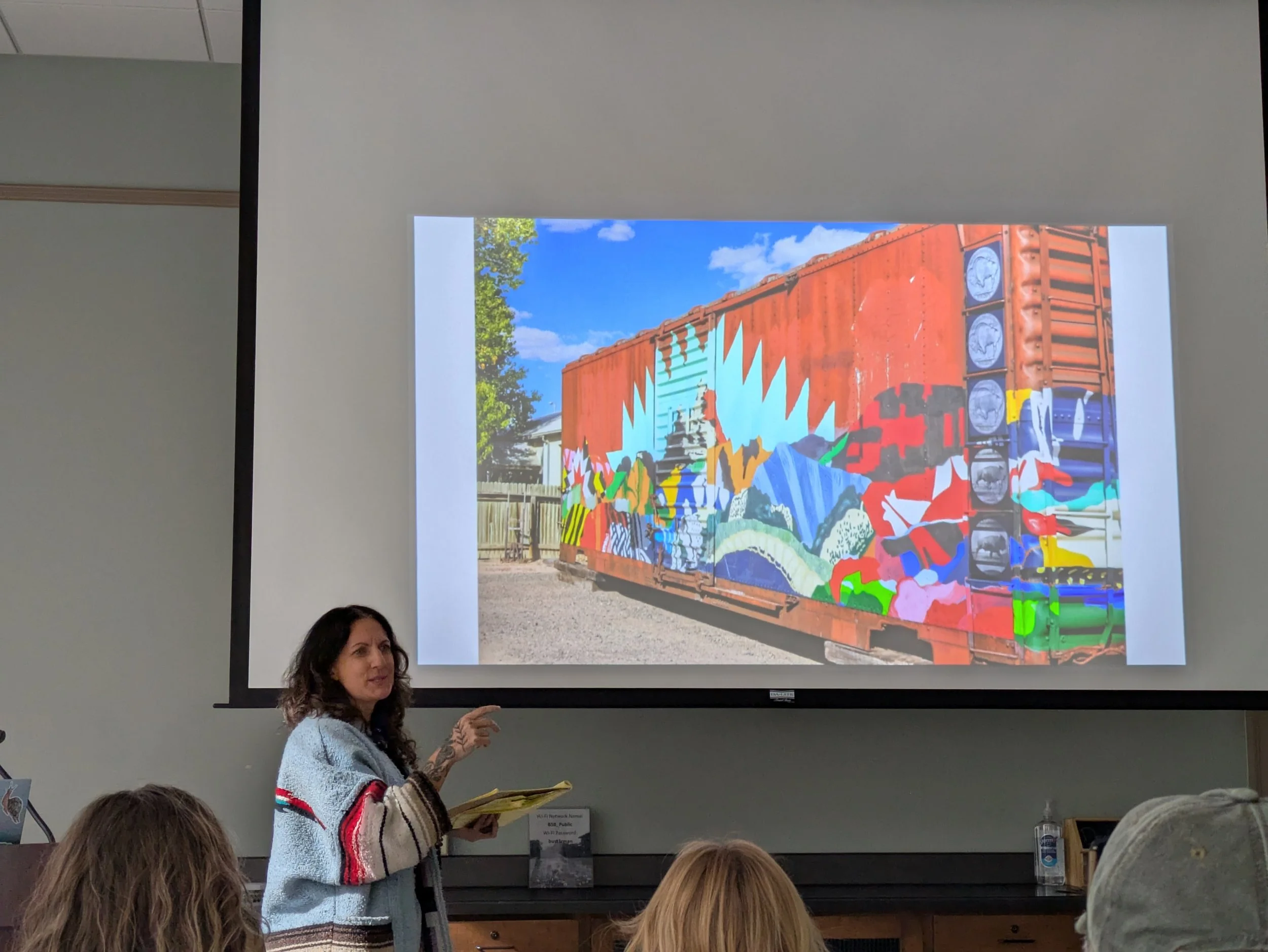
Aubrey presents at Butte-Silver Bow Archives’ Brown Bag Lunch series.
Visit These Links to Find Out More About
Aubrey Edwards!