Olivia Gorham: Sonically Rich
Fall 2025 Artist-in-Residence at Flathead Lake Bio Station
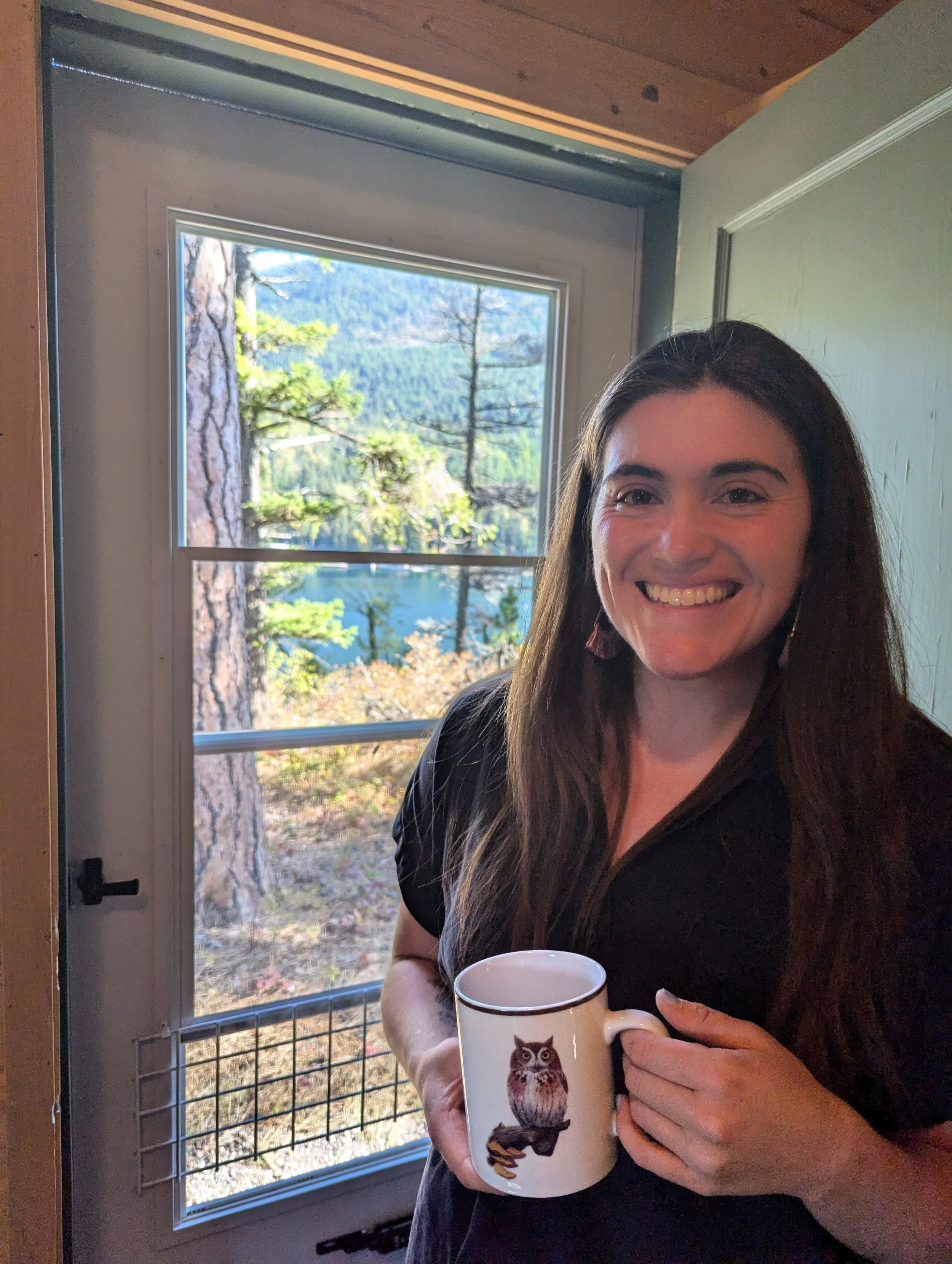
Olivia Gorham looking out her cabin’s door with an owl mug
Describe your Open AIR Residency experience. For example, how did you spend your time, construct your space, or engage with the community?
My residency took place at the beautiful Flathead Lake Biological Station, where I was surrounded by towering ponderosa pines swaying in the wind and lulled to sleep by the sound of lakeshore waves. On my first night on site, I was drawn outside by the recorded owl calls played by the Owl Research Institute as part of their nightly banding work. I spent many nights in the woods with their team, learning about owl migration, witnessing the research up close, and of course, filming.
During the days, I explored and filmed throughout the forest, encountering everything from bears and ladybugs to fungi, wildflowers, and songbirds. I often set out simply to see what might appear—and always returned with a wealth of sound and visual material. Very quickly, I decided to focus my residency on a poetic documentary about the northern saw-whet owl and its migration patterns, shaped by and intertwined with this remarkable place.
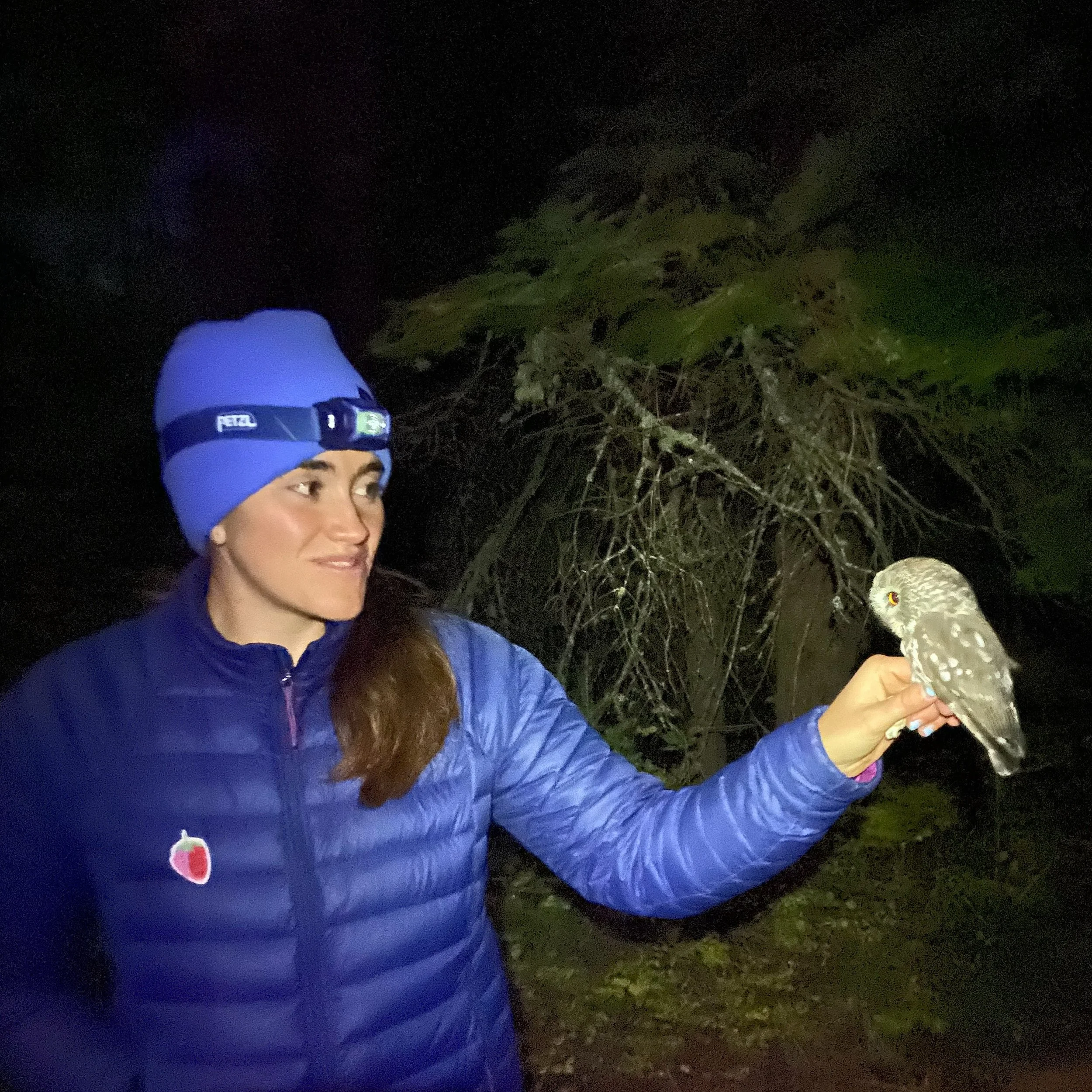
Olivia holding a northern saw-whet owl
Were there moments that surprised you or shifted your process?
One of the most surprising and impactful aspects of the residency was the number of field trips and research activities we were invited to join by the staff, faculty, and researchers at FLBS. Being welcomed into scientific fieldwork so generously became one of my favorite memories and deeply influenced both my creative process and my daily rhythm. I also spent abundant time with my cohort, swimming at the beach, gathering in the cabins, sharing meals in the dining hall, and adventuring around the area. We formed an unexpected but meaningful bond and are still in contact, regularly checking in on our group chat and even zoom hangouts.
The residency both aligned beautifully with my existing artistic practice and opened new avenues of inquiry. My work is rooted in place-based, immersive, sonically rich, and poetic nonfiction filmmaking. Flathead Lake offered a profoundly fertile environment in all those ways. Rich in sound, layered with ecological complexity, and alive with scientific curiosity. The experience also gently redirected me toward wildlife and science filmmaking, which has always been at the foundation of my education, though I had drifted from it towards more anthropological themes. I am deeply grateful that this residency brought me back to those roots, and I am so excited to continue working on my project.
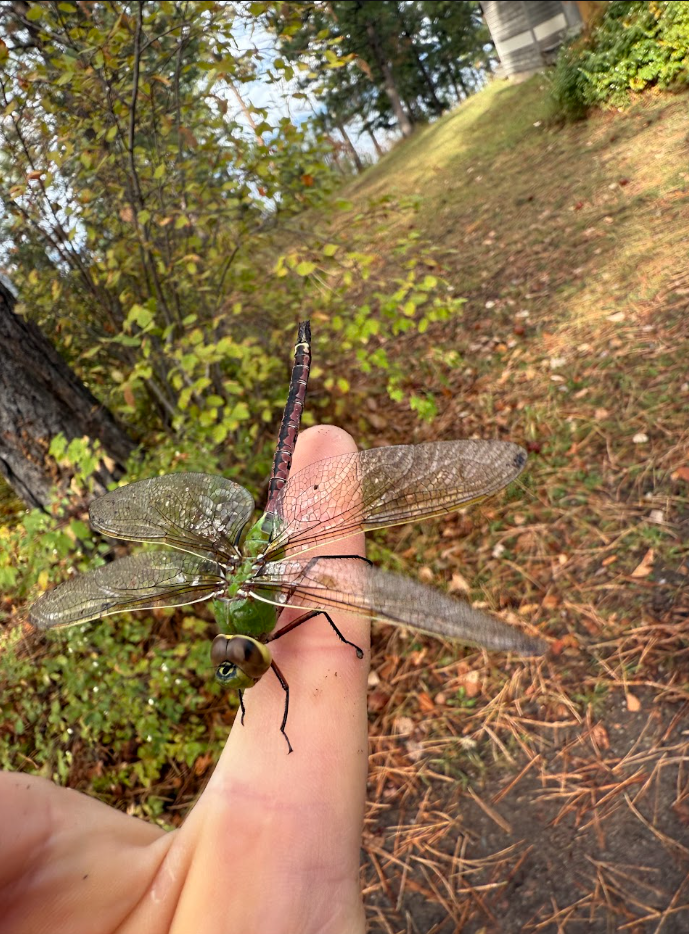
Olivia holding (a dragonfly?) at Flathead Lake Bio Station
What role does place (both in terms of physical space and community) play in your work, especially during your time at Open AIR?
Place plays multiple, intertwined roles in my work. First and foremost, my filmmaking is shaped by my lived experience within a landscape—its sights, sounds, stories, and subtle sensory details. Having the time and space during the residency to immerse myself fully in the environment allowed the character of the place to guide the direction of my film. For example, with the saw-whet owl project, I initially mistook the recorded owl calls from the banding station for real owls. That moment of revelation—of being tricked by the landscape—became foundational to how I now want to structure the film and shape the audience’s experience. In that way, my own evolving understanding of place becomes inseparable from the stories I tell.
‘That moment of revelation— of being tricked by the
landscape became foundational…’
Community is equally essential to my practice. As a documentary filmmaker, my work is rooted in the lives, practices, and generosity of the people who allow me into their worlds. I cannot make the films I do without genuine collaboration and trust. During the residency, I felt deeply supported not only by the scientists and field researchers who welcomed me into their work, but also by my Open AIR cohort, who formed a meaningful creative community. They have already offered to watch rough cuts and provide feedback as the project develops, and that continued sense of shared investment has been invaluable.
In both physical and communal terms, place is not simply a backdrop in my work—it is a co-creator, shaping my perception, guiding my storytelling, and grounding the relationships that make the work possible.
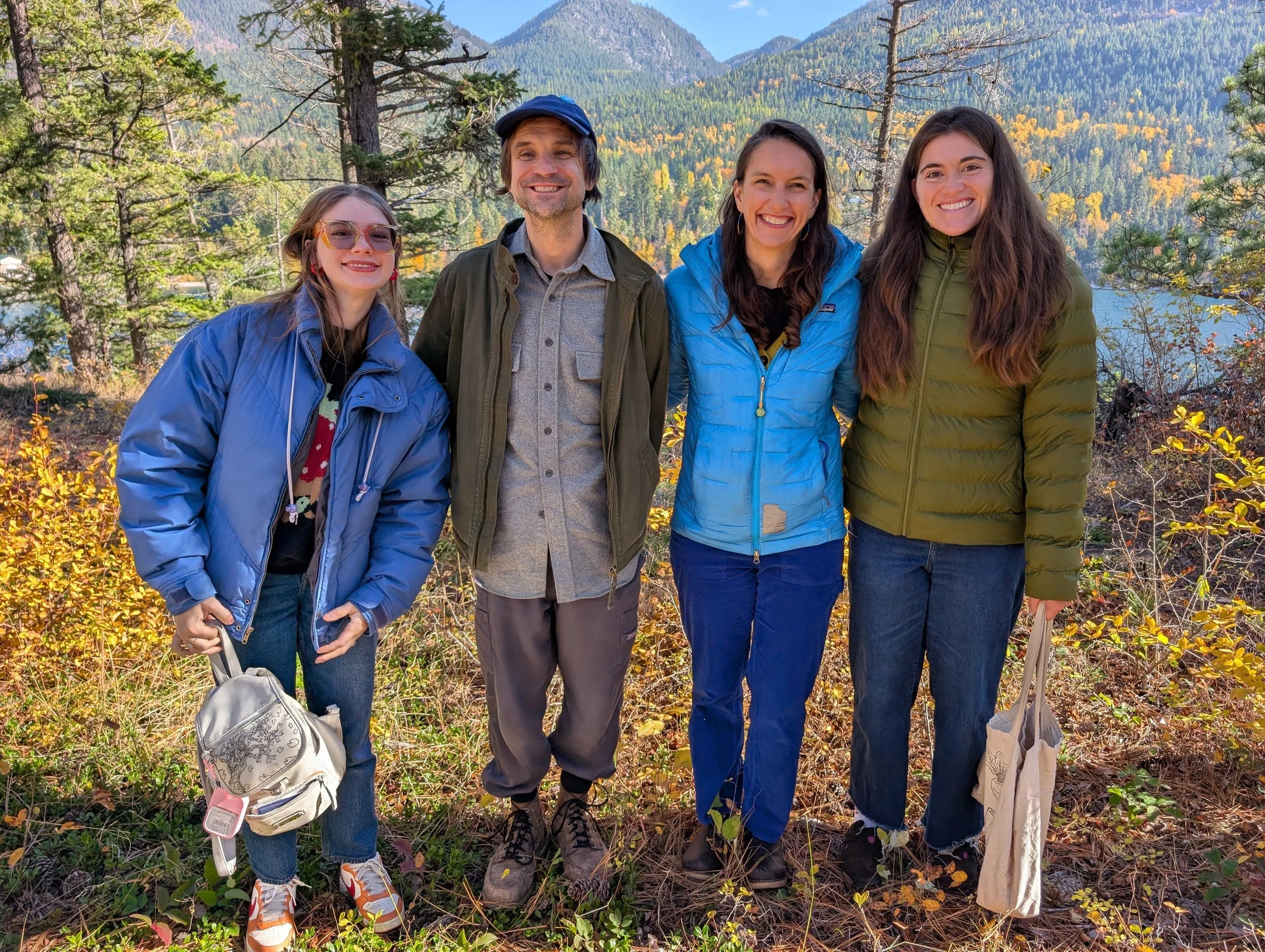
The Fall 2025 cohort: Annabelle, Terry, Eva-Maria, and Olivia at FLBS
For you, what's the most rewarding aspect of being an artist or creative?
I see my work contributing to a growing conversation around more ethical, immersive, and sensory-driven approaches to nonfiction storytelling. Rather than relying on explanatory narration or authoritative perspectives, my films invite audiences into embodied experiences of place, where meaning emerges through atmosphere, rhythm, and attention. I am particularly interested in challenging dominant documentary conventions that prioritize clarity, expertise, or narrative closure. Instead, I create space for ambiguity, curiosity, and personal interpretation, qualities I believe are essential when working across cultures, communities, or ecosystems that are not one’s own.
On a practical level, I prioritize collaboration with communities and scientific organizations, modeling a filmmaking approach based in reciprocity rather than extraction. Whether filming Tibetan Buddhist nuns for my film Ani or working with owl researchers during my residency, I see my practice as a form of quiet relationship-building that uplifts overlooked perspectives, invites ecological intimacy, and resists the impulse to explain a place from the outside. My hope is that this approach not only contributes to a richer cinematic language, but also encourages others to consider new ways of engaging ethically with the world through art.
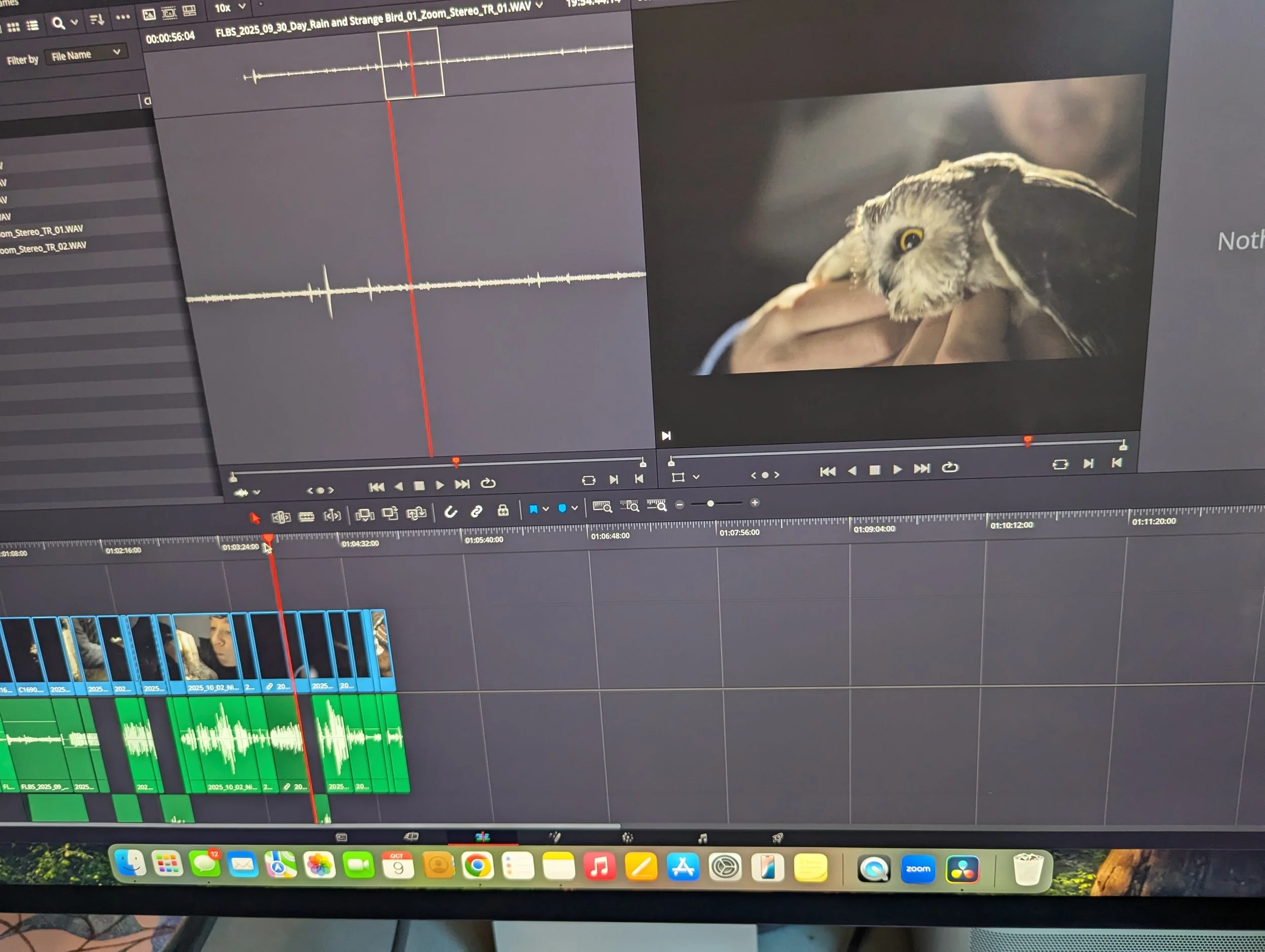
The beginnings of Olivia’s upcoming film on the northern saw-whet owl
What are you up to now (post Open AIR)?
I just finished editing another film, it is a family portrait of a ski guide out of Cooke City, Montana, and I am directing a film about a regenerative bison ranch in Shields Valley. Other than that, I am continuing to accept freelance work and just wrapped up my first semester as an adjunct professor at Montana State University, where I teach editing.
What are you reading/watching/or listening to?
I'm currently reading Sounds Wild and Broken by David George Haskell since I am about to leave for Central America for the next 3 weeks! I am spending 2 weeks in the rainforest in Costa Rica and 1 week in Nicaragua. The trip is just for fun (tagging along with my partner who is doing work down there), but I am bringing my film and sound gear and plan to collect some beautiful sounds and images which will hopefully inspire future projects of my own!
As far as listening - this summer, I always come back to "Handyman" by Esther Rose. It just sounds like Montana sunshine to me!
This interview has been edited slightly for clarity.
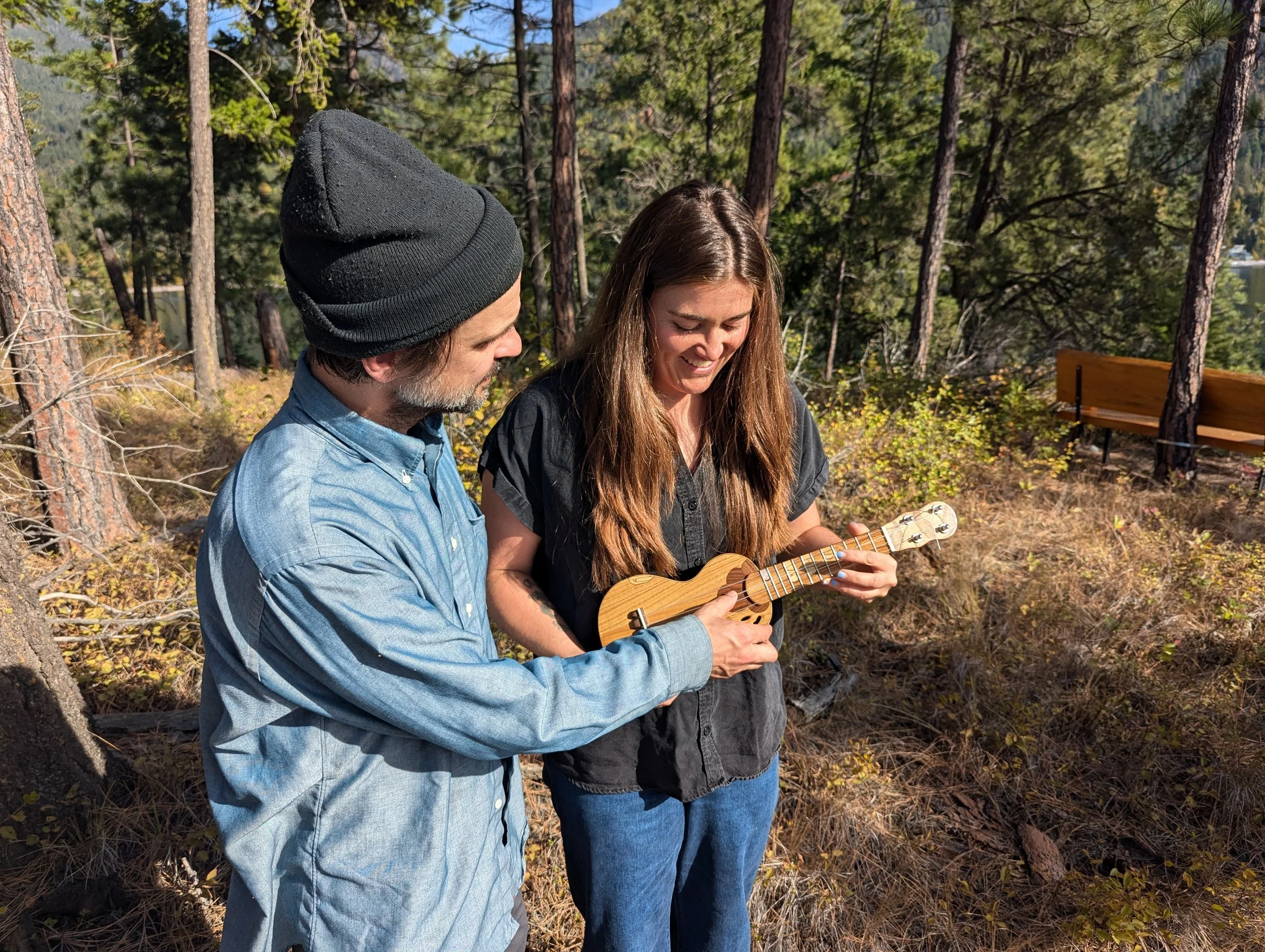
Sonically rich in a different way: Olivia and fellow artist-in-residence, Terry Conrad
Visit These Links to
Find Out More About
Olivia Gorham
Follow Olivia on IG
Olivia’s website
Olivia’s Artist Presentation