Eva-Maria Maggi:The yes shaped everything after…
Fall 2025 Artist-in-Residence
at Flathead Lake Bio Station
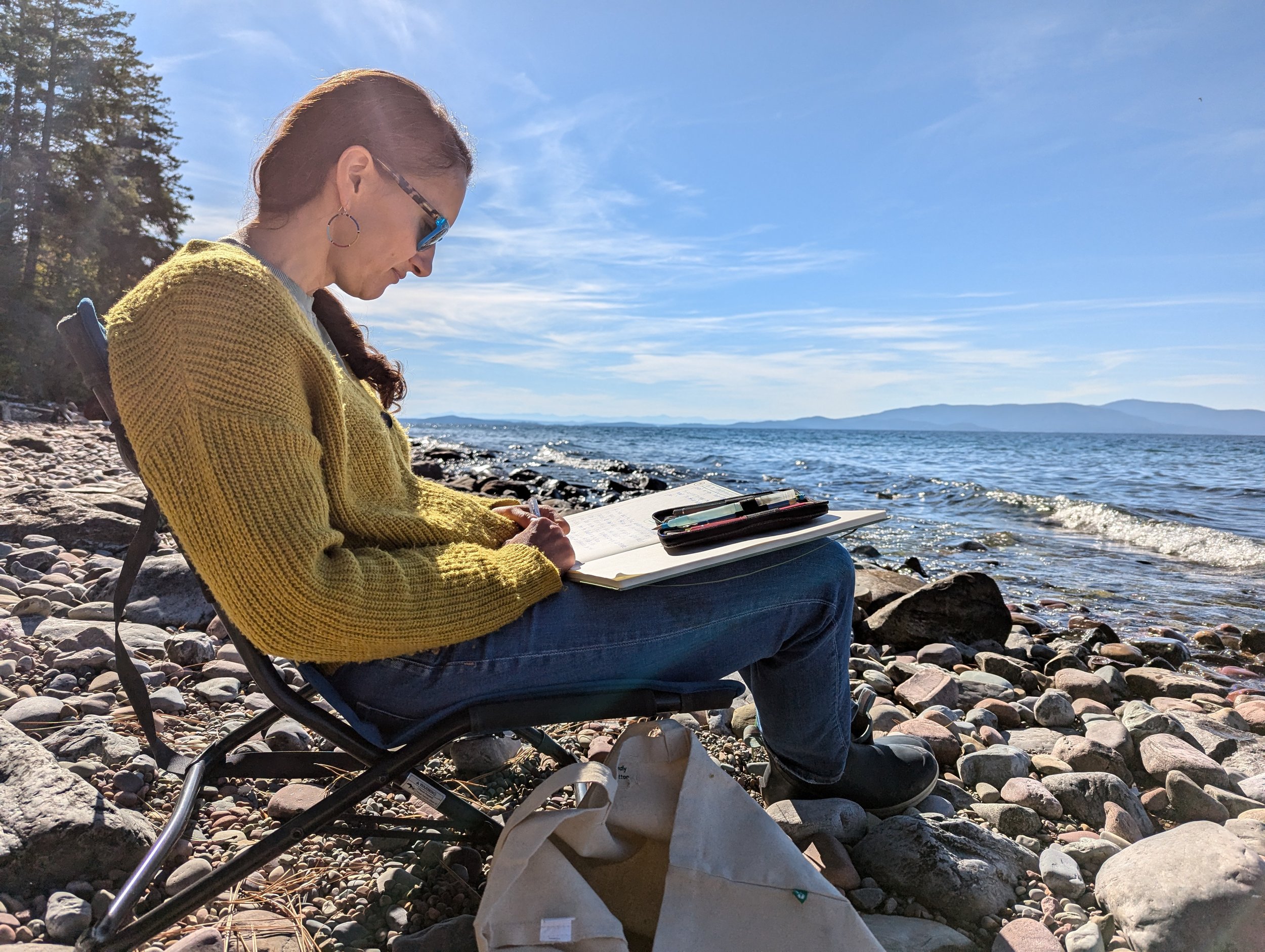
Eva-Maria journals on the beach, Flathead Lake Bio Station, in Yellow Bay.
Describe your Open AIR Residency experience.
I began each morning early with a swim in the lake—rain, wind, or sunshine—before settling into the cabin to write until midday. If the weather held, I spent the afternoons on the beach making notes, sketching, or taking photos. During my time in-residence at the Flathead Lake Biological Station, I discovered that I was deeply drawn to photography, a medium I had never considered central to my practice. At the residency, I was able to permit myself to follow those impulses.
In late afternoons, I returned to the cabin to write a bit more and made sure to watch every sunset. Often, we artists gathered at the swimming beach at that hour, sharing our days and making plans for the evening. At night, I slipped back into writing, drawing, or painting—another medium I rediscovered there.
I arrived at the residency because of a decision I made almost on instinct—a leap I described in my newsletter. I didn’t overthink it. I didn’t fall into the usual rabbit holes of the kids need me or now isn’t the right time. I simply said yes. And that “yes” shaped everything that followed.
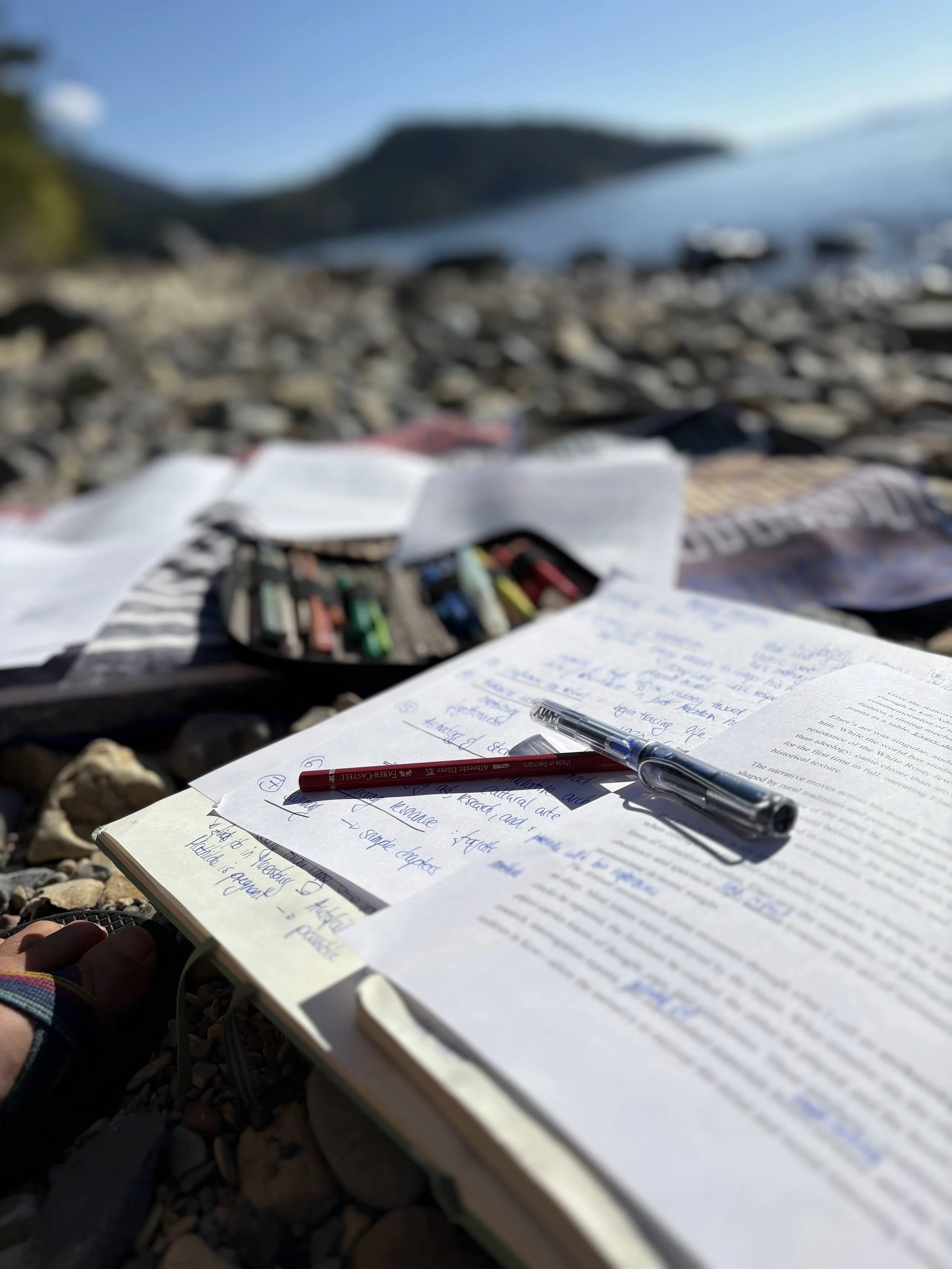
As a biographer, I find what we write about almost as revealing as how we write it. - Eva’s Residency Journal, Week 2
How did the residency influence or change your artistic direction?
It helped me find my voice in a deeper, more grounded way. The conversations with researchers—which I hadn’t anticipated would affect my writing so directly—filtered immediately into my work. Learning about the lake’s ecology sharpened my sense of place; it made the world around me feel textured in a new way. Combined with the sensory quiet of the station, the residency became the ideal space for writing with full presence. It felt like clearing a landing strip for creativity—something I now try to create every day at home.
Were there moments that surprised you or shifted your process?
Yes. Within a day, I fully connected with the land, not as something to use, but as something to be in relationship with—a very special kind of communion. I was also surprised by how central journaling became the backbone of practice, the place where ideas sneak in sideways. I became the “journal preacher” at the station, encouraging anyone who would listen to keep one.
The other surprise was the community. I arrived expecting solitude; instead I found a cohort that became a small, bright constellation in my life. Friends for life, truly.
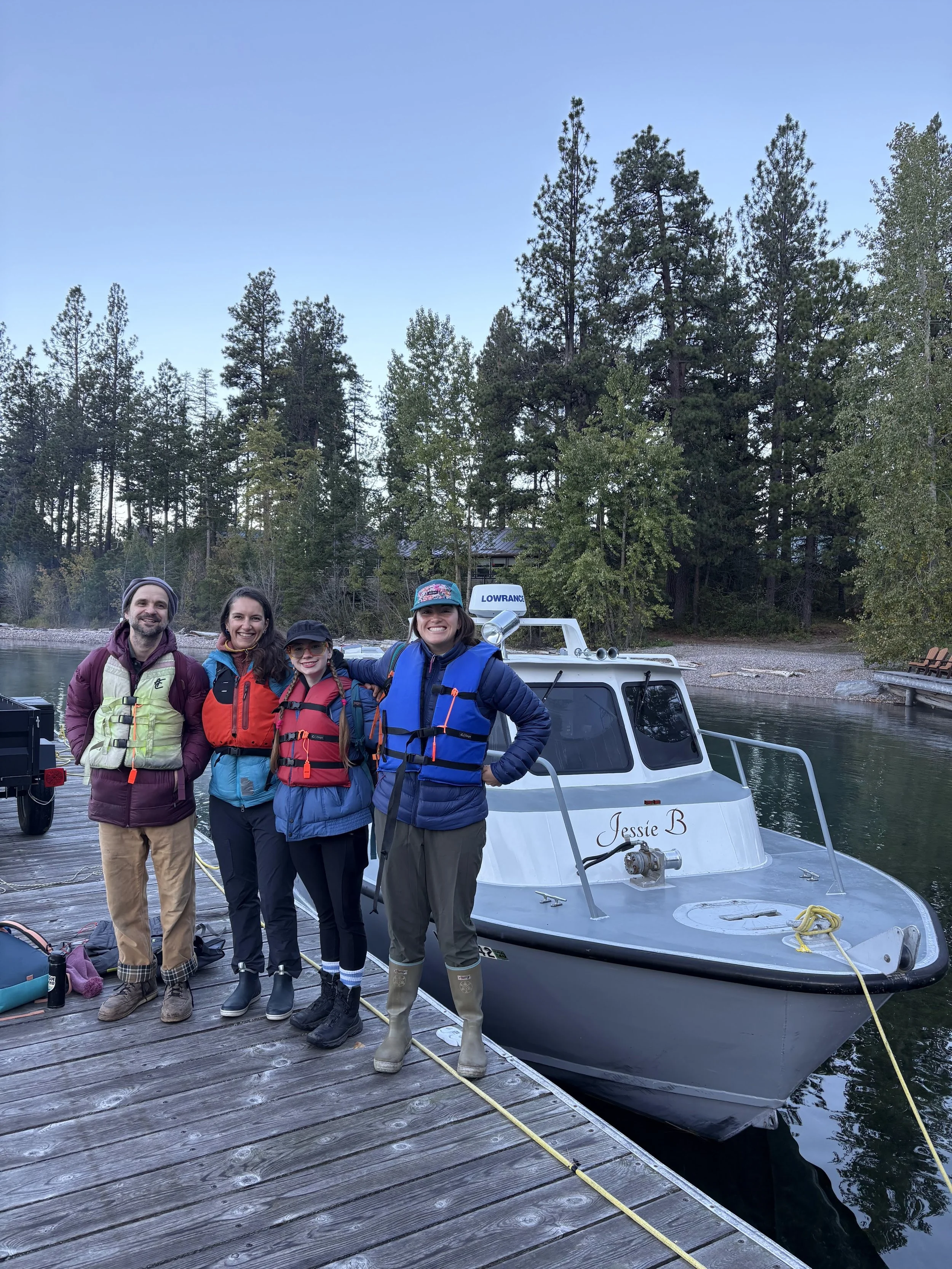
Terry Conrad, Eva-Maria Maggi, Annabelle Sigmund, + Olivia Gorham, Fall 2025 Cohort at Flathead Lake Bio Station.
Can you share how the residency connected to your ongoing practice or opened new avenues for exploration?
I came to understand something that had been true in my work for years but unnamed: the stories objects tell. I’ve started calling this the “archaeology of story”—the idea that physical things hold as many stories as we do, if we’re willing to listen closely. I had been working in this manner in my current historical biography, especially since many primary sources were lost or destroyed; however, the residency allowed me to see and truly own this method for the first time.
What are you reading/watching/listening to?
I’m still reading Art Work by Sally Mann—a memoir I started at the station. I pick it up whenever I feel discouraged or worry, I haven’t done enough; she always steadies me. Horses are central to her life, which makes her instantly my best friend.
I’m also reading North Sun by Ethan Rutherford, a finalist for the National Book Award, out in paperback from a small Texas press. It’s a beautifully written novel about the waning days of the whaling industry—unexpected and immersive.
I keep The Lost Journals of Sacajewea by Debra Magpie Earling close by. What she does with language is extraordinary; each sentence is an instruction in courage. Truly, one of the most important writers in American literature.
Musically, I’ve been listening to the new Hania Rani album—her compositions are the perfect landscape to write inside of.
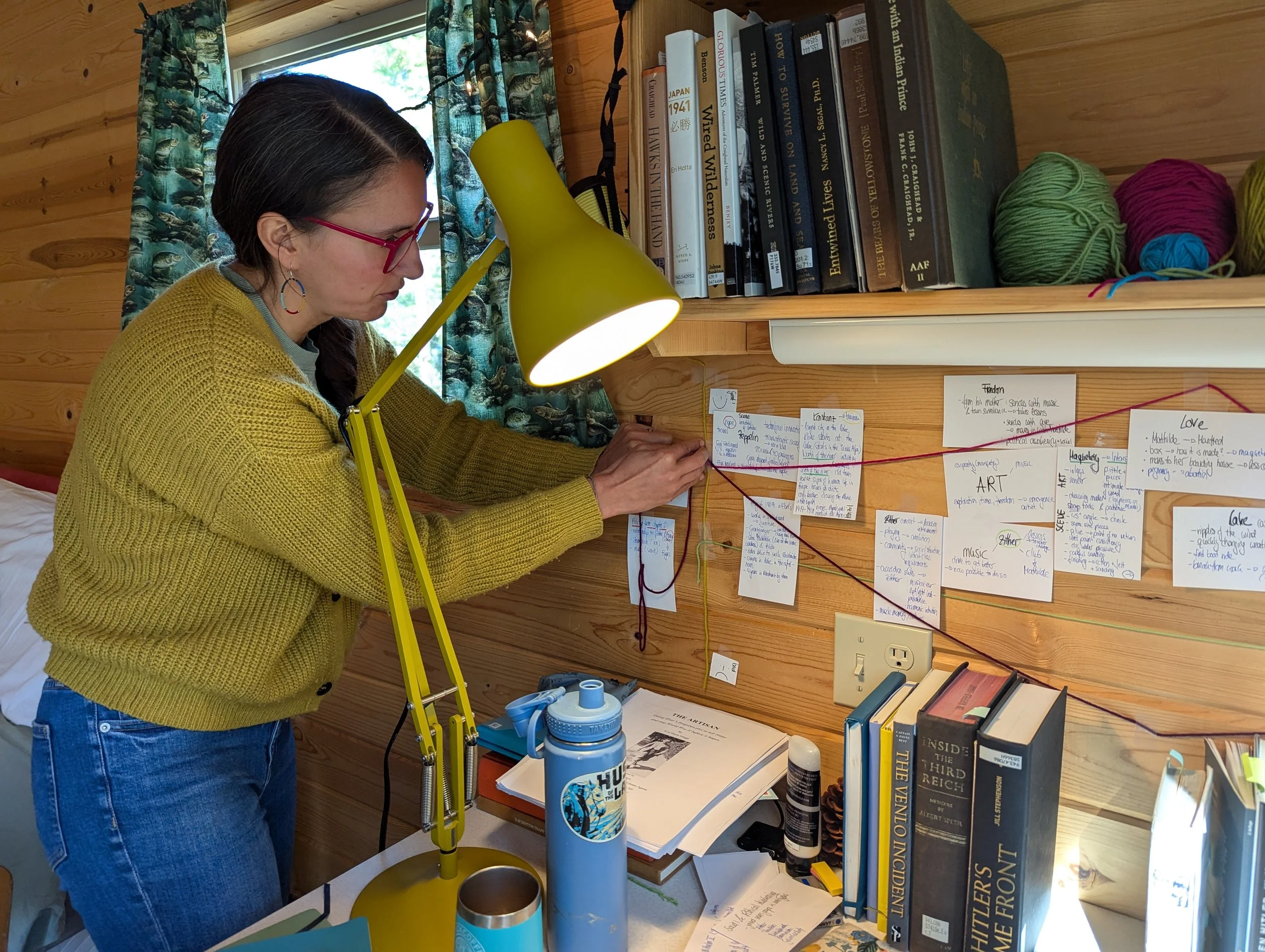
Eva during her studio/ cabin visit with Open AIR staff
What were the major creative challenges, and how did you resolve them?
My biggest challenge has been learning to see myself the way others see me—letting my own accomplishments matter enough to give me the strength I need. During the residency, I began writing down two “wins of the day” in my journal. They could be tiny: “great sunset,” “wrote one good sentence”; or big: “finished the chapter,” “landed a publisher.” It’s become a gentle practice of gathering the harvest, rather than rushing past it.
What’s a lesson you had to unlearn, and what’s the backstory?
I am constantly unlearning how to be my own harshest critic. In historical nonfiction, that internal voice—whom I call Helga—is useful to get the facts right. But Helga is less helpful when it comes to courage, imagination, and taking creative risks. I’ve recently invited her to switch seats: Agatha, my creative voice, now rides shotgun and helps me read the map. Helga still comments, but from the back seat. It’s a more sustainable arrangement.
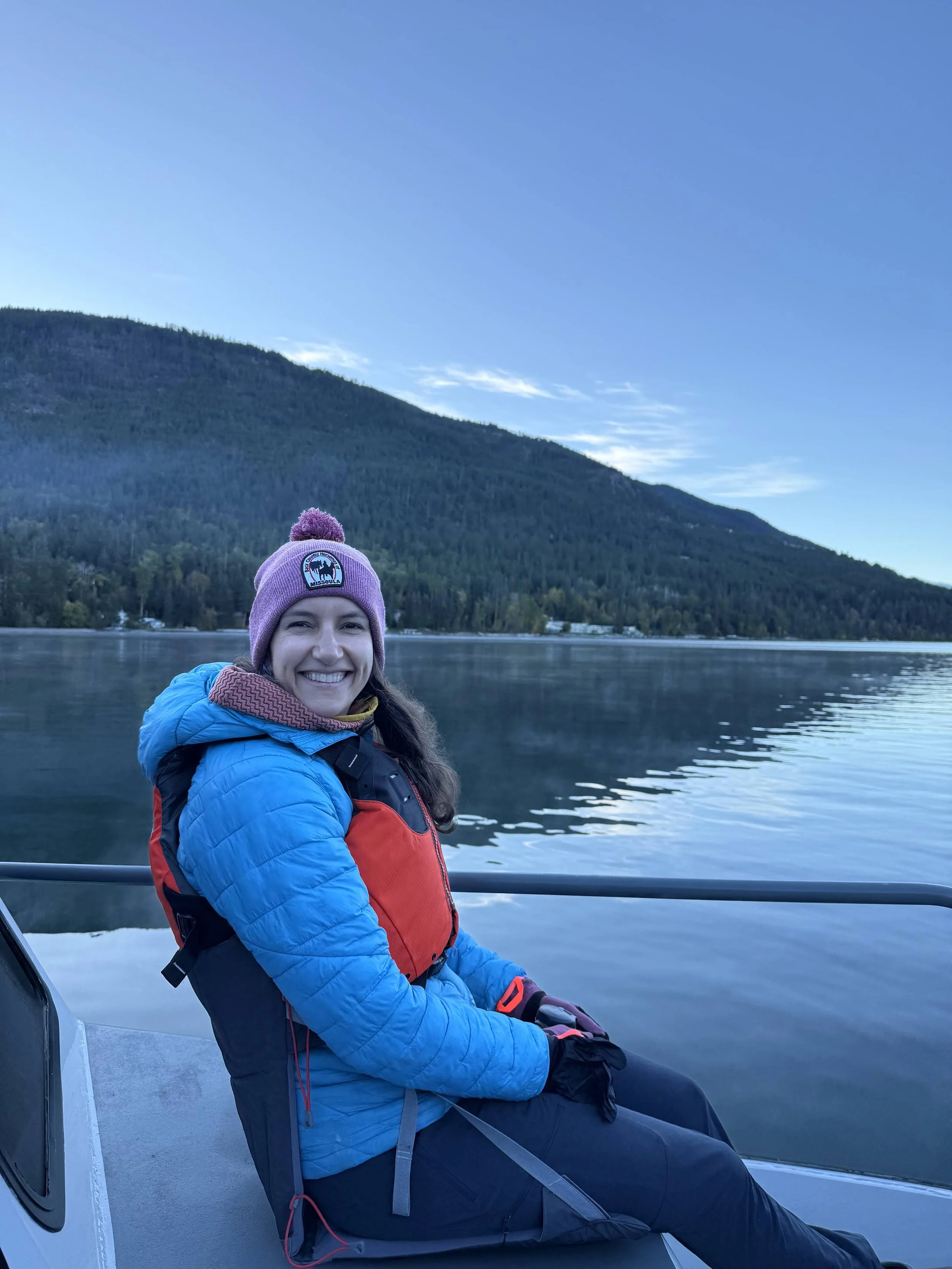
Follow Eva-Maria, based in Missoula, for many fun opportunities to come
What are you up to now (post–Open AIR)?
Since returning to Missoula, I’ve been trying to carry something from Open AIR back into daily life: a more intentional way of making space for art inside the chaos of family, teaching, animals, deadlines, and laundry. I think of it as creating a well-lit “landing strip” for creativity most days. Right now, that means deep work on my new narrative nonfiction book, The Artisan, about Georg Elser, the forgotten German carpenter and Nazi resister who came within thirteen minutes of killing Hitler in 1939.
When I’m driving my kids to soccer or dance after school, I remind myself of something Sally Mann wrote: “All life is Art.” It has become a kind of mantra. Sally, if you ever read this, come to Montana and we’ll go on a ride!
The book proposal I was finishing at the lake is now on its way to publishers, and I’ve also been venturing into the strange and beautiful world of magazines, submitting essays on resistance, belonging, memory, and some unexpected stories that stayed with me.
I loved teaching the experiential writing class “Writing with Mules” for Open AIR last winter, and recently had an online storytelling event with Smoke Elser that was a lot of fun. This summer will be full, too: I’ll head to New York City for the Biographers International Conference, then return to Montana to teach “Wild Stories,” my University of Montana summer course, which includes a five-day horse-and-mule pack trip into the Bob Marshall Wilderness. After that, I’ll travel to London and Berlin for more research and to visit family.
I also continue to write Between the Lines, my newsletter, which has become a place where I can write freely, without worrying too much about where a piece will end up. It’s been a gift.
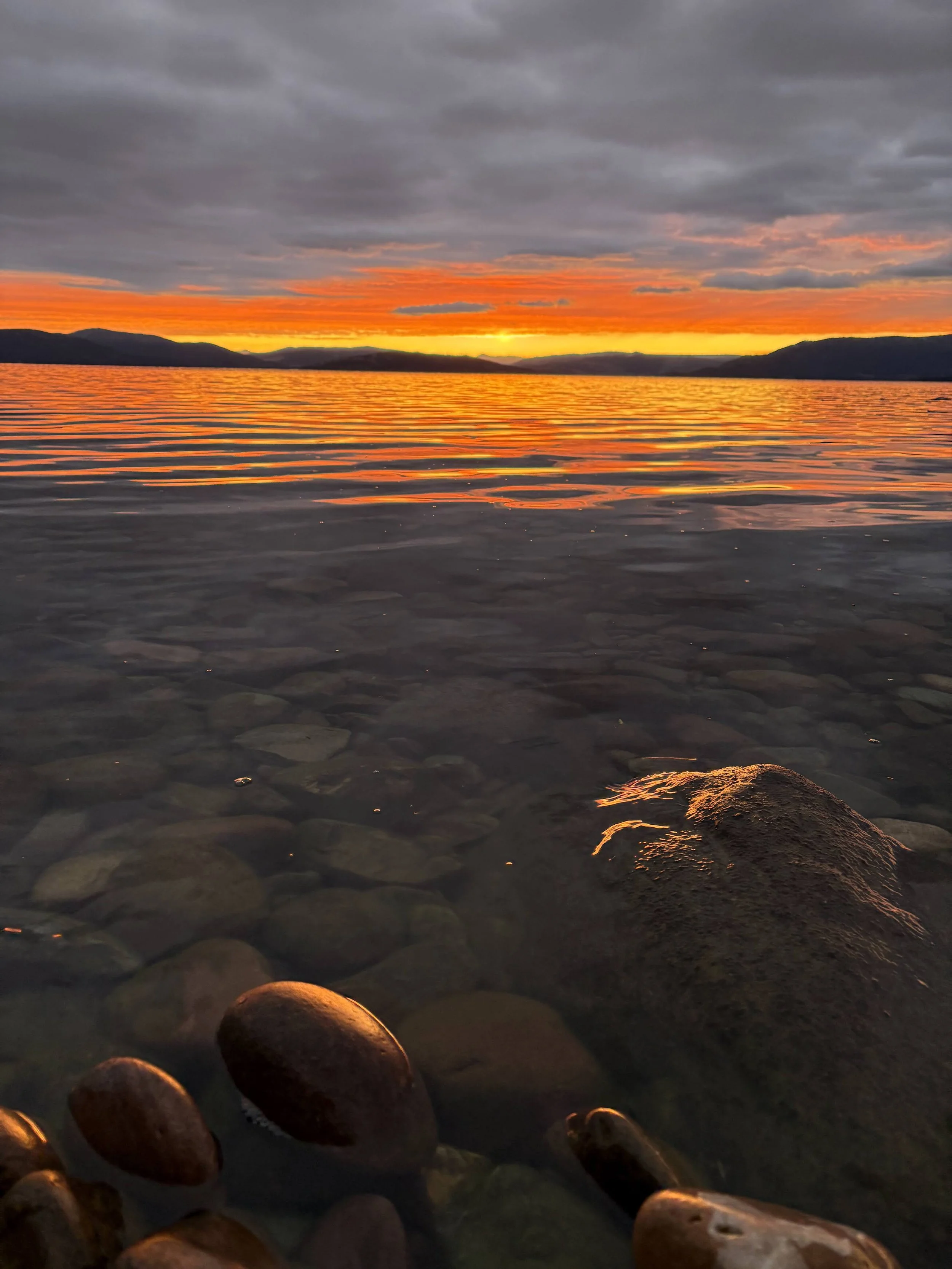
Sunset in Yellow Bay, Flathead Lake Bio Station, photo by Eva-Maria Maggi
Visit These Links to Find Out More About
Eva-Maria Maggi
Eva’s Open AIR Artist Presentation
Eva’s Website and Newsletter
Eva’s Residency Journal: Week 1
Eva’s Residency Journal: Week 2
Eva’s Residency Journal: Week 3 at Flathead Lake
Eva’s Residency Journal: A Final Journal from Flathead Lake
Buy Eva’s Book: Hush of the Land