Fall 2025 Artist-in-Residence in Butte
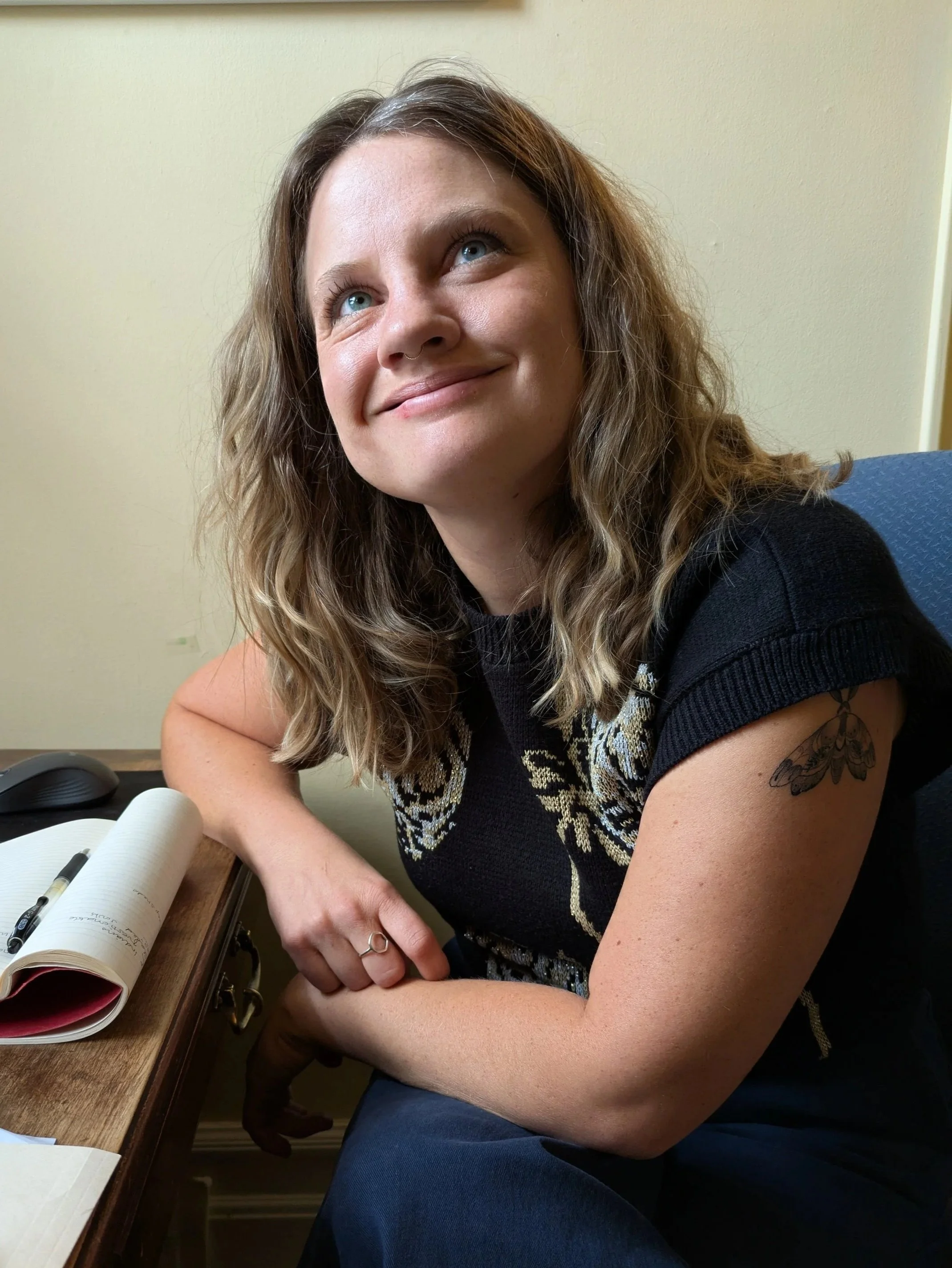
Tess Fahlgren in her office at the Historic Clark Chateau - she also spent
time at the Butte-Silver Bow Archives while in-residence.
Describe your Open AIR Residency experience. For example, how did you spend your time, construct your space, or engage with the community?
Although I had a private studio space in the Clark Chateau, was welcome at the Archives, and even had a large desk in my room at the Hodgens Ryan Mansion, my best work happened in my room while seated on the antique ottoman beneath the curved-glass window with the deep windowsill serving as my writing desk. After that, I’d follow my nose -- perhaps read newspapers from the 1880s in the Archives, write at Oro Fino, walk to a headframe, or drive to a hot spring.
I’d arrived in Butte with the intention of beginning a project about HH Nelson, the man who built and designed the Milk River irrigation system. I’d gotten a copy of his biography, unpublished but written by his daughter, and my first goal was to read it. From there I went to the archives and learned as much as I could about his world.
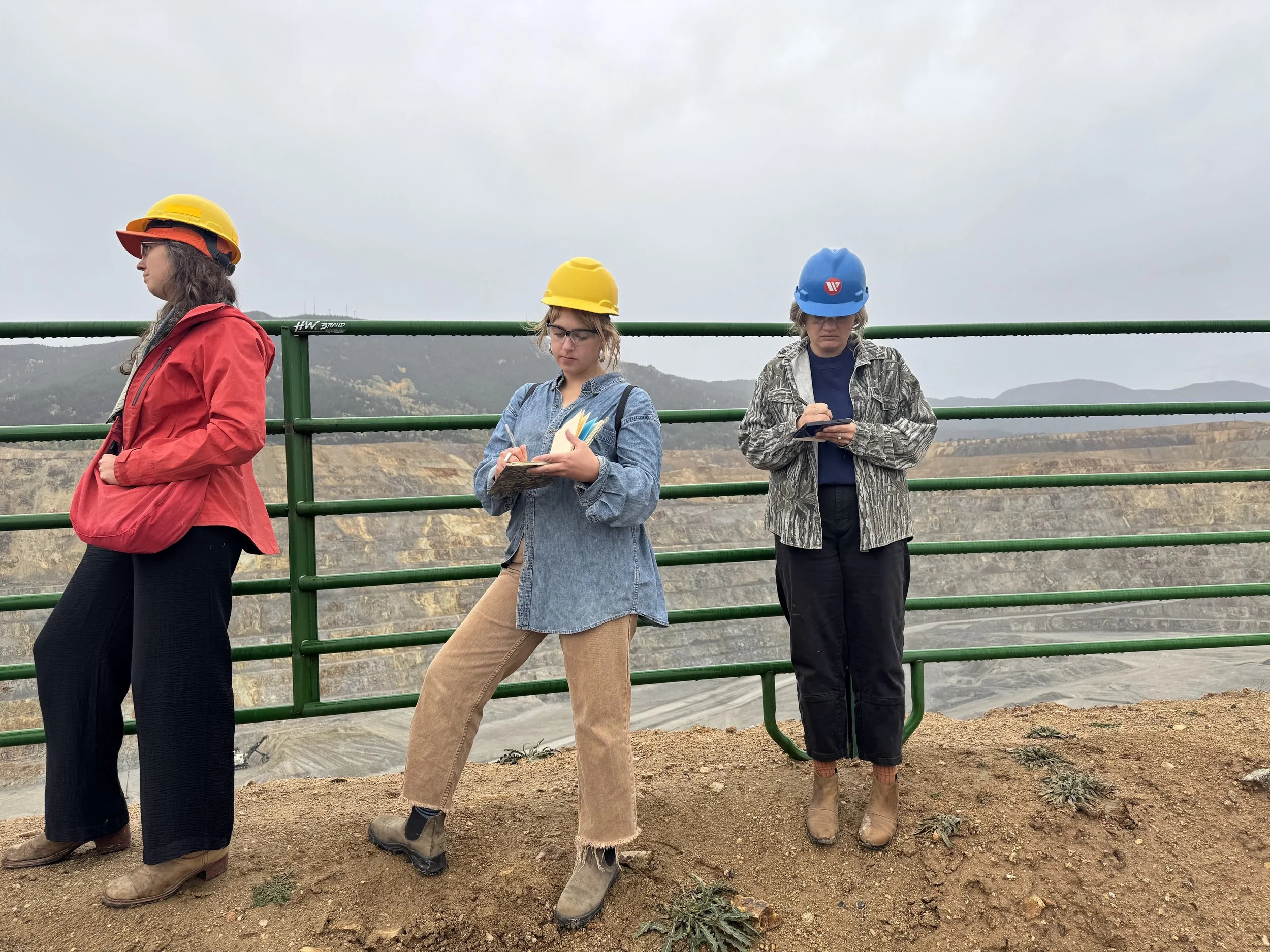
Ilona Wilde (Clark Chateau), Artists-in-Residence Olivia Berkey, and Tess Fahlgren take notes during a tour of the mining operation in Butte.
Can you share how the residency connected to your ongoing practice or opened new avenues for exploration?
Being in Butte and therefore constantly reminded of Montana’s mining history provided an unexpected but necessary context for the Montana Territory to which Nelson arrived in 1881. The wealth found in Montana’s mines was the catalyst for everything that came after it. What good was copper-rich ore if it couldn’t be smelted? How do you transport that ore to a smelter? Or get the materials needed to build one? They needed shipping routes and trains, which impacted the buffalo and land still home to many Indigenous communities. The trains needed people, the people needed land and the land was dry. HH Nelson helped build the irrigation system so that more people -- people like my great-grandparents -- would populate all of Montana.
The context is essential. As I researched, I saw undeniable reflections in our current world. What was perhaps most striking for me was being constantly surrounded by the most beautiful architecture in Montana and knowing that many of the buildings were empty. I saw a warning in Butte’s relatively short history, and recognized HH Nelson as a kind of representational figure for how Butte’s influence was felt statewide. While Butte is not the primary setting of my project, its influence will be felt throughout.
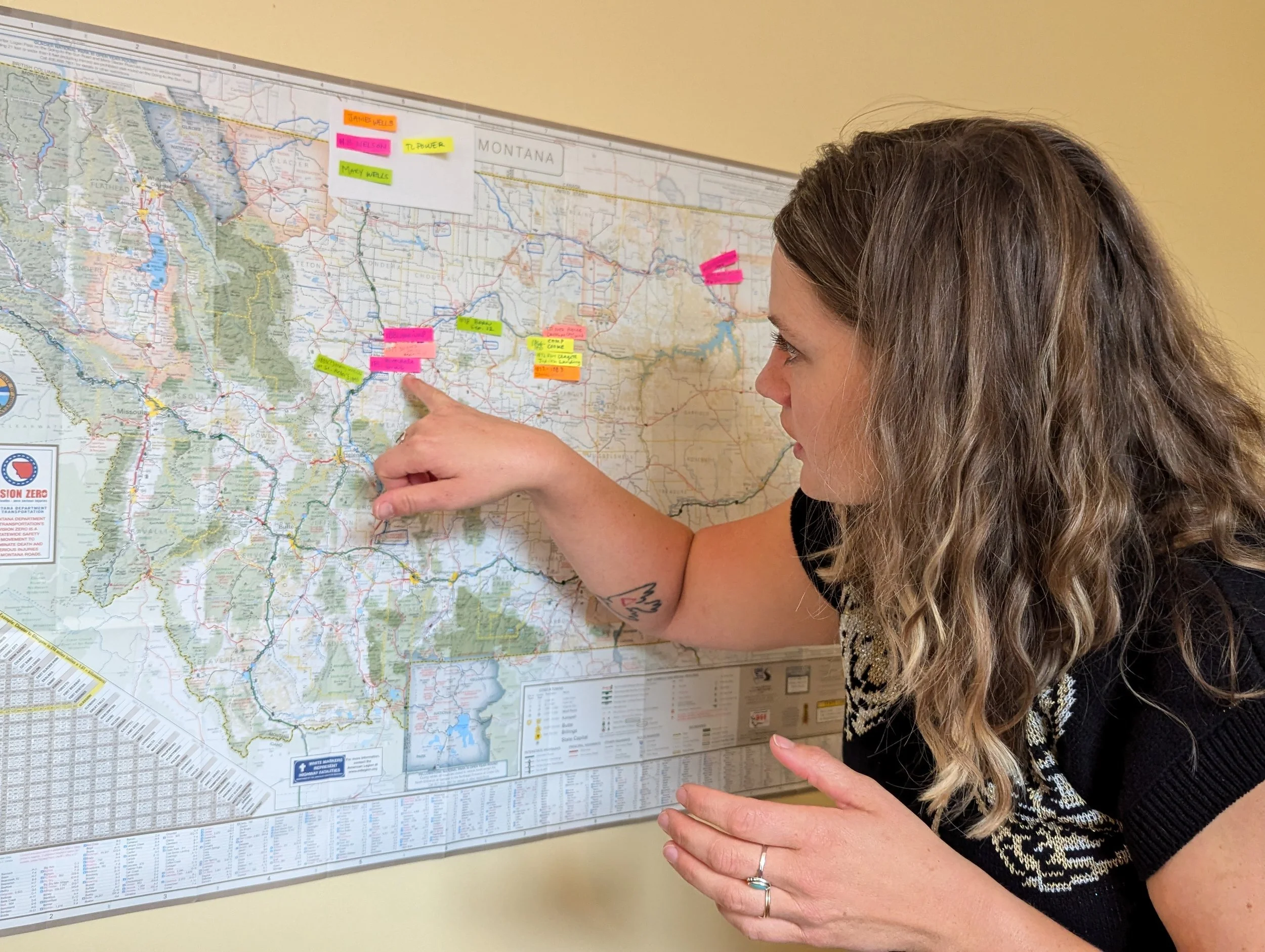
Tess maps out key timelines and places throughout the state for her research.
What role does place (both in terms of physical space and community) play in your work, especially during your time at Open AIR?
Place has always been an essential part of my practice. Through art making, I am able to experience Montana with all parts of myself at once. I relate to the artist and rancher from Grass Range, Bill Stockton, who said his “main interest has been and always will be the harsh, abstract, semi-wilderness qualities of central Montana. Why? Because I was born and raised here, I guess.”
Experiencing the world this way does not stop when I leave my side of the state -- my surroundings permeate my writing explicitly, because it is through my experiences that I contextualize whatever makes it onto the page. While I might be researching a person who died over a hundred years ago in a place two hundred miles away. While I learn about them, I talk with a friend, I go on a walk, I smell bread. I might read in a newspaper from 1884 about the men who shipped goods from Fort Benton to the mines. And then, I look out the window at a building from 1885, and I see the cause and effect. It is immensely powerful to live in two worlds at once and try to understand the ways they mirror and distort each other.
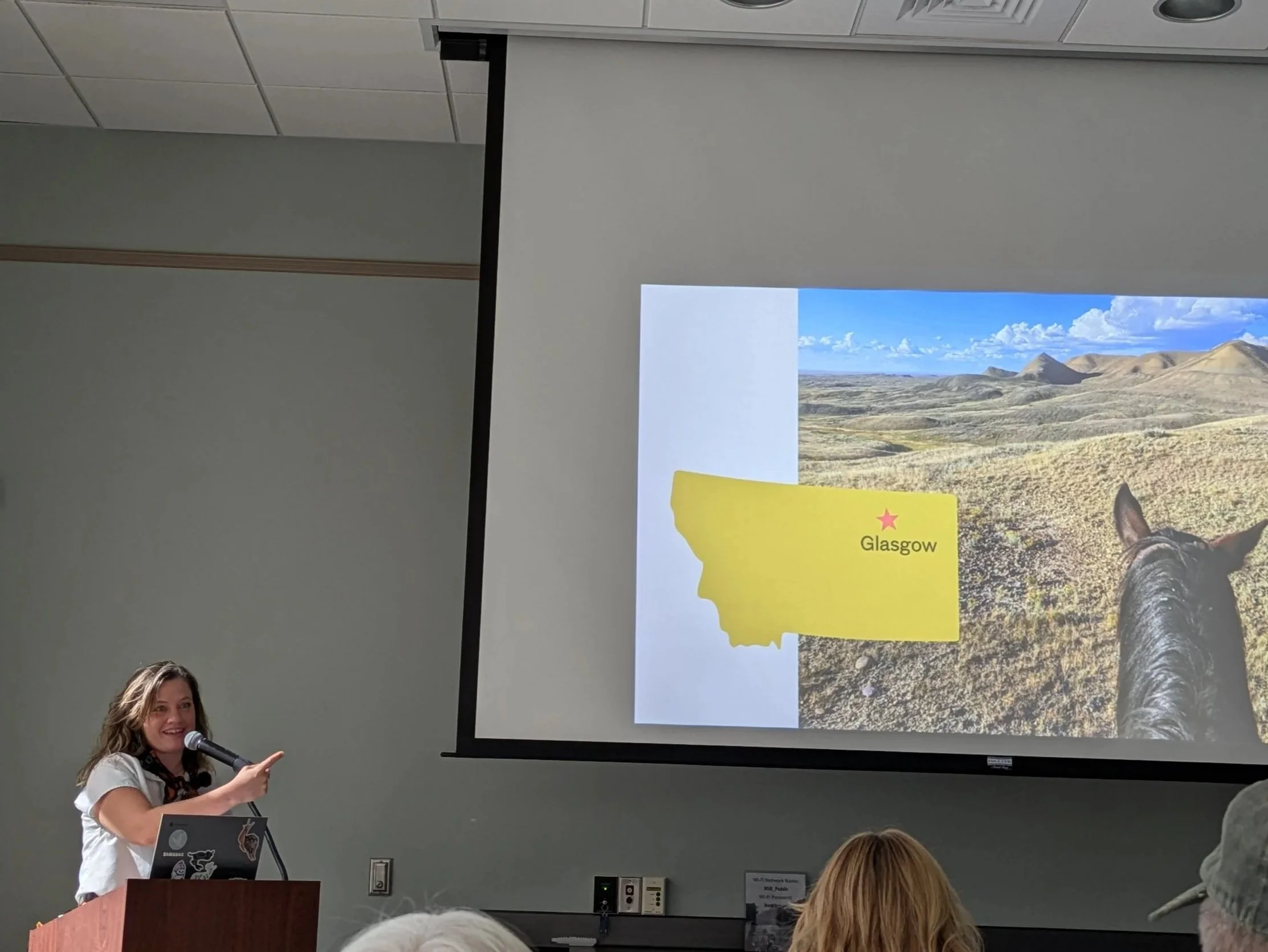
Tess talking about her hometown, Glasgow at the Brown Bag lunch presentations, hosted by the Butte-Silver Bow Archives on Wednesdays.
Tell us about your most recent solo exhibition/performance/publication.
My essay “Fueling Jim Hill” was published in the Fall 2025 issue of Montana Quarterly Magazine. It started, as my work usually does, with a dozen points of interest constellating around a phenomenon. In this case, that phenomenon was the presence of the railroad in the daily life of those who live in my hometown of Glasgow on the Montana hi-line.
The railroad cuts through the middle of town and trains are often sitting on the tracks, cutting off the only path for semi-trucks and RVs. To get to my family’s farm, I cross the tracks twice. My friends, family, and I have ridden many days’ worth of Amtrak rides across the country, and many people I know are employed by the railroad.
My entry point with the essay was through the art found on the train, specifically the white illustrative signatures, or monikers, usually left by train hoppers. I researched the history of the railroad and learned about James Hill, the man who owned the Great Northern and therefore founded our town. But even though the railroad adds so much to our lives and we can even thank it for our very existence, I also saw how it had damaged the ecosystem and the lives of the land’s original people. When an old friend and his wife were killed in a train collision, the train was simply terrifying.
As my work often is, it’s a messy and meandering essay, but so is the way most of us perceive the world.
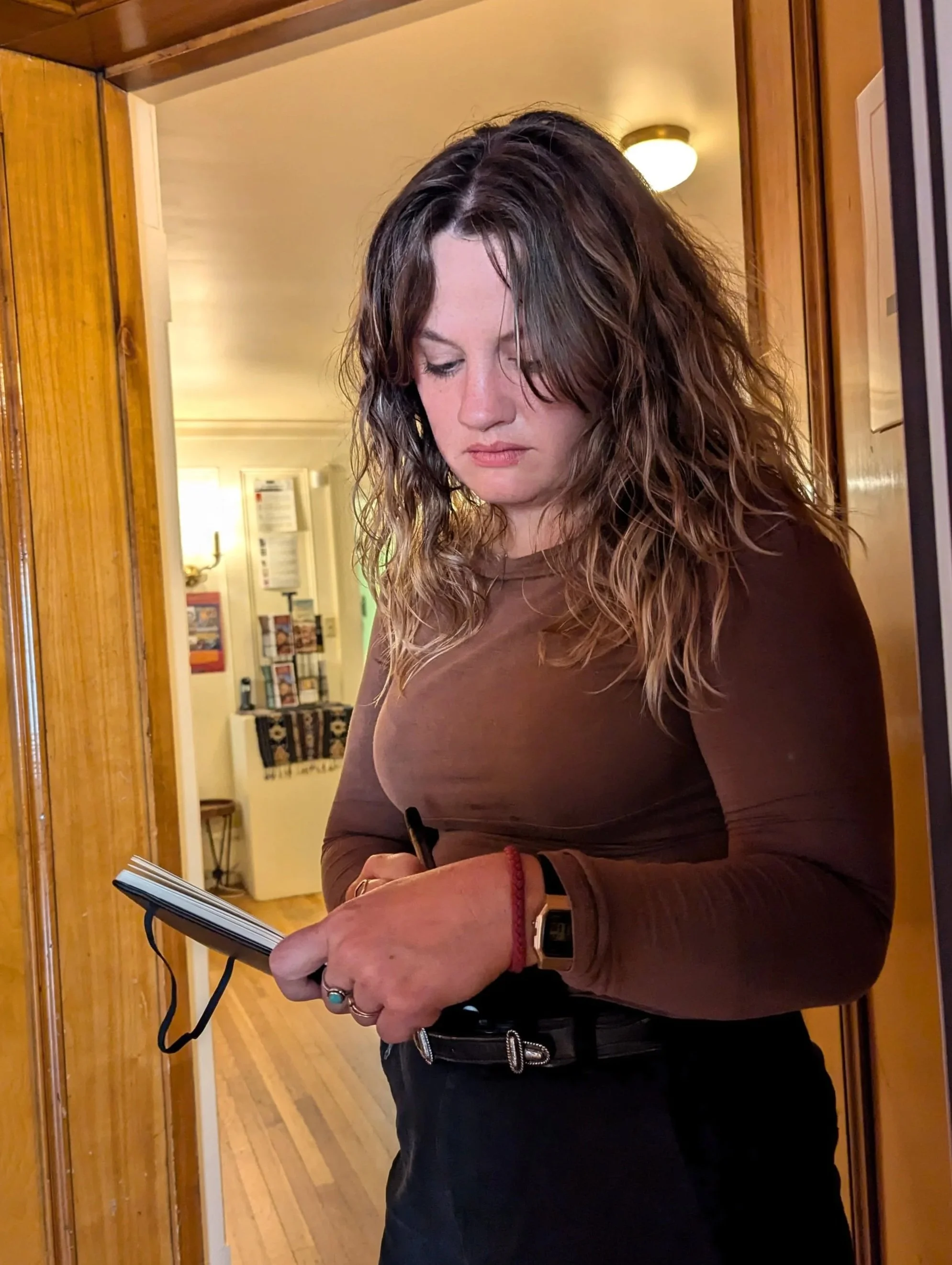
Tess during the Clark Chateau orientation session
What are you reading/watching/or listening to?
Reading:
Oranges by John McPhee
Why Fish Don’t Exist by Lulu Miller
Short Nights of the Shadow Catcher by Timothy Egan
Watching:
A Different Man (2024 film)
Listening to:
Forever is a Feeling by Lucy Dacus
Bucka Bucka Forcey by Clayton Spur and the Roughstock Riders
Tess’s June 2 Update:
Tess Fahlgren won the Democratic primary on June 2nd and is running to be elected for the Montana House District 29 in the 2026 election. You can learn more at YesOnTess and follow her race here.
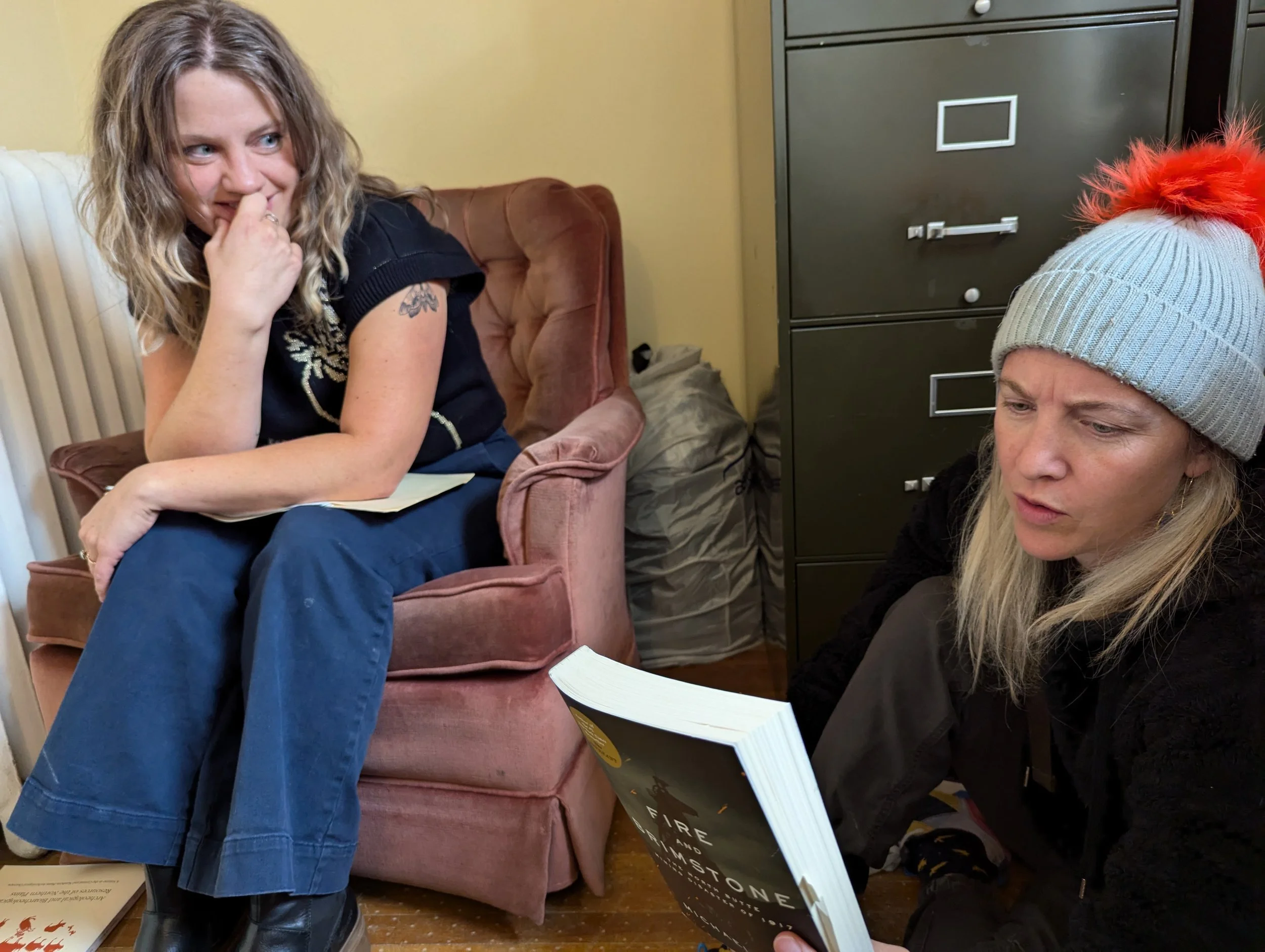
Stoney Samsoe, Open AIR E.D., and Tess talk books!
Pictured: Michael Punke’s book Fire and Brimstone, about a 1917 mining disaster.
Visit These Links to Find Out More About
Tess Fahlgren
Tess’s Artist Presentation
Treasure (a zine written in-residence)
Tess’s Artist website
Bringing a skatepark to Glasgow
Follow Tess on Instagram